


The image materializes instantly: powder-white sand, palm trees swaying over turquoise water, the gentle lapping of the Indian Ocean against granite boulders. For most of us, the Seychelles represents the ultimate escape—a honeymoon dream, a bucket-list adventure, a slice of untouched paradise.

But right now, that paradise has a problem. A tiny one, with six legs and a potentially debilitating bite.
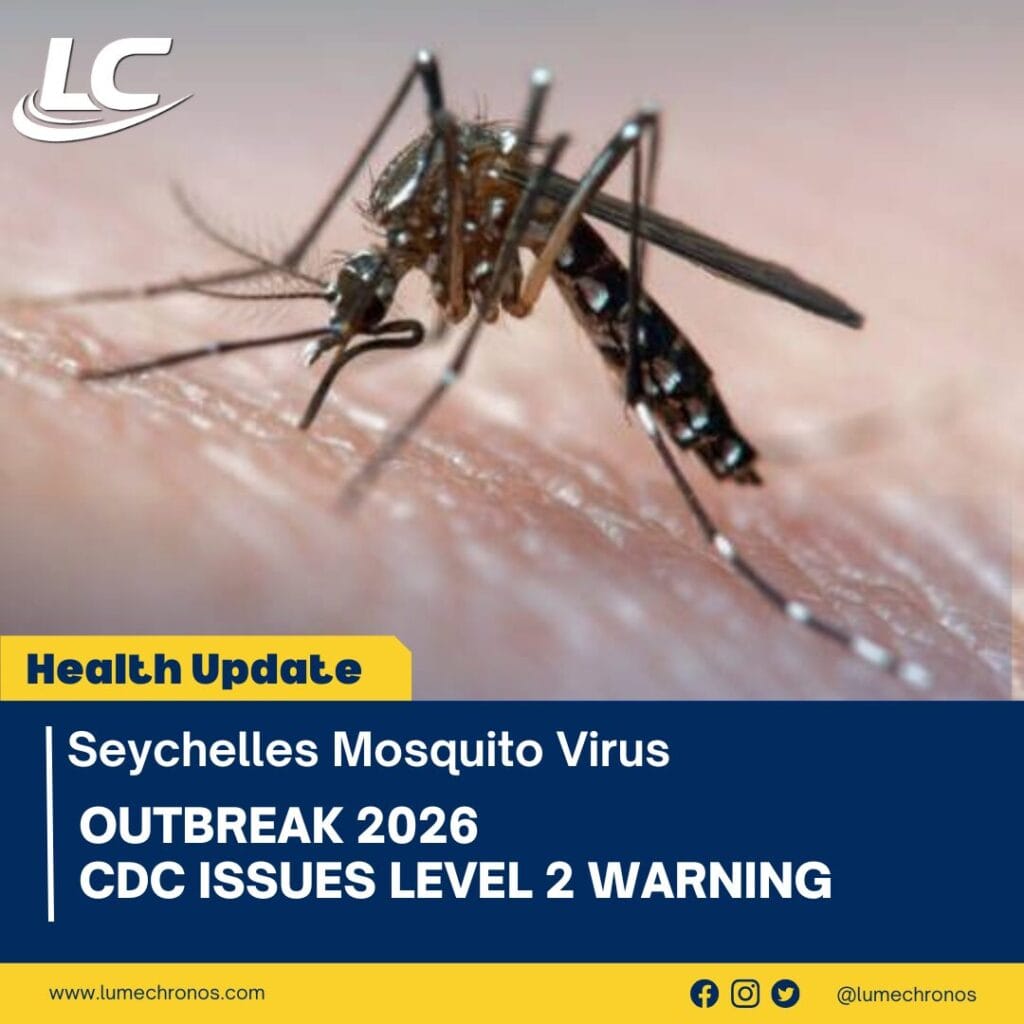
If you’ve been scrolling through Pinterest or planning a tropical getaway, you might have seen the alarming headlines. The United States Centers for Disease Control and Prevention (CDC) has issued a Level 2 Travel Health Advisory for the Seychelles . The culprit? A surge in cases of chikungunya, a mosquito-borne virus spreading across the main inhabited islands .
This isn’t a scare tactic to empty the resorts, and it’s certainly not a call to cancel your life’s dreams. As someone who tracks these global health signals, I’m here to tell you that knowledge is the best repellent. This guide breaks down exactly what is happening, how to protect yourself, and how to navigate this outbreak without sacrificing your sanity—or your vacation fund.
The Reality of the Outbreak: Why “Level 2” Matters
Let’s start with the facts, because context is everything. As of February 12, 2026, the CDC escalated the Seychelles to a “Level 2” status, which means “Practice Enhanced Precautions” . This puts it in the same category as other popular destinations currently dealing with disease outbreaks, like Bolivia and Sri Lanka .
What triggered this? According to surveillance networks, the outbreak gained momentum in late December 2025, fueled by the region’s rainy season (typically November to March) which creates perfect breeding grounds for mosquitoes . Reports have confirmed infections not just among the local population, but among international travelers returning home. For example, in January 2026, two independent German tourists returned home with laboratory-confirmed chikungunya after visiting Mahé and La Digue .
This tells us something crucial: transmission is active in tourist areas. This isn’t a remote, isolated jungle phenomenon. This is happening where people hike, dine al fresco, and sleep with the windows open to hear the ocean.
Understanding the Invisible Threat: Chikungunya
To stay safe, you need to understand your adversary. Chikungunya (pronounced chik-en-gun-ye) is a virus transmitted primarily by the Aedes aegypti and Aedes albopictus mosquitoes . These aren’t just any mosquitoes. They are the “criminal masterminds” of the insect world—they bite during the day, not just at dawn and dusk, and they thrive in urban and residential areas .
If you are bitten by an infected mosquito, symptoms usually appear within a window of 3 to 7 days .
Here is what happens:
- Sudden High Fever: Often the first sign you’re not just tired from travel.
- The Hallmark Joint Pain: The name “chikungunya” comes from a word in the Kimakonde language meaning “to become contorted,” referring to the stooped posture of sufferers due to excruciating joint pain . This isn’t your average ache; travelers describe it as debilitating, making it hard to walk or even grip a glass.
- The Supporting Cast: Severe headaches, muscle pain, swelling, fatigue, nausea, and a rash .
For most healthy adults, the acute phase passes within a week . However—and this is the part that travel brochures leave out—some people suffer from persistent joint pain that can last for months or even years . For a traveler wanting to hike the trails of Praslin or swim in the reefs, catching this virus would be a vacation-ender and potentially a long-term health burden.
Expert Tip: If you have underlying health conditions like arthritis or a compromised immune system, or if you are over 65, the risk of severe symptoms is higher. This context isn’t about fear-mongering; it’s about informed decision-making .
The Golden Rules of Protection (That Actually Work)
So, how do you enjoy your beachside cocktail without becoming a mosquito’s next meal? Forget everything you think you know about winging it. You need a strategy. Based on CDC guidelines and on-the-ground logic, here is your four-point defense system.
1. The Chemical Shield (Don’t Leave Home Without It)
Insect repellent is your new best friend. But not just any spray will do. You need an EPA-registered repellent containing active ingredients like DEET, Picaridin, or Oil of Lemon Eucalyptus (OLE) .
- How to apply: Treat it like sunscreen. Apply it to all exposed skin and even over clothing. In a tropical climate, sweat and humidity break down these chemicals faster, so reapply more often than you think you need to—especially if you’re swimming or showering.
2. Wardrobe Hacking
I know you want to wear that flowing sundress and those linen shorts. And you can! But timing and location matter.
- The Strategy: During prime daylight biting hours (mid-morning and late afternoon), especially if you’re hiking through the lush Vallée de Mai or dining in a garden, switch to lightweight, long-sleeved shirts and long pants .
- Why light colors? Mosquitoes are attracted to dark colors. Dressing in light colors helps you stay cooler and makes you less of a target .
3. Fortify Your Sanctuary
You’ve paid a premium for that lovely beachfront room. Make sure it’s secure.
- The Checklist: Ensure your accommodation has properly fitted window and door screens or air conditioning . A/C isn’t just for comfort; it drastically reduces the indoor mosquito population. Keep your doors shut, even during the day.
4. The Vaccine Factor
This is a game-changer that many 2026 articles are glossing over. In late 2023, the FDA approved the first-ever vaccine for chikungunya .
- Who should get it: If you are a frequent traveler to tropical regions, visiting family and friends (VFR) in endemic areas, or have a health condition that makes joint pain particularly risky, schedule a consultation with your healthcare provider or a travel clinic at least a month before you travel.
- Note: While available in the U.S., the vaccine may not be licensed in other countries like Switzerland, so check your local availability .
The Big Question: Should You Cancel Your Trip?
This is the million-dollar question hanging over every dreamer’s head. Based on the CDC’s Level 2 designation: Probably not.
A Level 2 advisory is a “heads up,” not a “stay home” order . It contrasts with a Level 3 (reconsider non-essential travel) or Level 4 (do not travel). The Seychelles remains one of the most stunning places on Earth, and the tourism infrastructure is robust. Hotels and resorts are actively working on mosquito control measures to protect their guests .
However, there is one significant exception: pregnancy.
The CDC specifically advises that pregnant women should consult with their healthcare provider and potentially reconsider travel . While chikungunya is rarely fatal, a severe fever during pregnancy poses unnecessary risks that most doctors prefer to avoid.
Navigating the New Normal: The Future of Seychelles Tourism
This outbreak is a stark reminder that even the most exclusive destinations are subject to the whims of nature and climate. The Seychelles’ economy relies heavily on the warmth of its visitors, both literally and figuratively. The government is actively working on public health campaigns and increased mosquito control to regain the “safe destination” status .
For us travelers, this means the calculus has changed. We can no longer just book a ticket and show up without preparation. “Adventure travel” now includes the adventure of navigating public health. By packing a solid prevention kit (good repellent, appropriate clothing, and maybe a vaccine card), we aren’t just protecting ourselves—we are being responsible global citizens who can enjoy a destination without straining its local health services.
🔗 Internal Editorial Picks
- For a deeper dive into how global travel patterns affect disease spread, check out our educational guides at lumechronos.com.
- Looking for travel-grade safety gear and EPA-recommended repellents? We’ve curated a list of essential tools for tropical travel over at lumechronos.shop.
- How are other European nations advising their citizens? Our global perspective desk at lumechronos.de has the latest on travel advisories from Berlin to Bern.
📱 Social Media Pulse
The conversation is heating up online. Here’s what travelers and experts are sharing right now:
- YouTube: Dr. Mike from Medicine Deconstructed breaks down why chikungunya joint pain is so persistent.
- YouTube: Travel vlogger “Adventure Elle” posts a raw update from her hotel room in Mahé discussing how the resort is fogging for mosquitoes. [youtube-link-placeholder2]
- YouTube: The CDC’s official channel has a short, animated explainer on the Aedes mosquito. [youtube-link-placeholder3]
- YouTube: A news reel from the Seychelles Broadcasting Corporation shows local clean-up drives to remove standing water. [youtube-link-placeholder4]
- X (Formerly Twitter): The handle @TravelHealthPro is live-tweeting updates for healthcare providers advising travelers.
- X: A user (@SeychellesDreamin) posted a photo of a “fogging truck” going through the streets of Victoria, asking if it’s safe to walk outside. [x-link-placeholder2]
- X: Health reporter @LauraUnger tweeted the key highlights from the CDC press release. [x-link-placeholder3]
- Instagram: Travel influencer @ThePointsofLife posted a Reel from Anse Georgette with the caption “Paradise has bugs… literally. Here’s my bite-proof routine.” [instagram-link-placeholder1]
- Instagram: The official Seychelles Tourism account is sharing stories about their “Clean Island” initiative. [instagram-link-placeholder2]
❓ Frequently Asked Questions (PAA Optimized)
1. Is it safe to travel to Seychelles right now?
Yes, travel is not prohibited, but enhanced caution is required. The CDC advises following strict mosquito avoidance measures. It is considered safe for most healthy travelers who adhere to these precautions. However, pregnant women or those with compromised immune systems should consult a doctor before booking .
2. How long does chikungunya joint pain last?
This varies significantly. In most cases, the severe joint pain resolves within a week along with the fever. However, a significant percentage of patients experience chronic joint pain, stiffness, or arthritis that can persist for several months or, in rare cases, years. The severity tends to be worse in older adults .
3. What should I do if I get a mosquito bite in Seychelles?
Don’t panic. One bite doesn’t mean you’re infected. Monitor yourself for symptoms for the next 3 to 12 days. If you develop a sudden fever or severe joint pain, seek medical attention immediately. Rest, stay hydrated, and use pain relievers (avoid aspirin until dengue is ruled out) to manage symptoms .
4. Is there a vaccine for chikungunya?
Yes. In November 2023, the U.S. FDA approved the first chikungunya vaccine, Ixchiq. It is recommended for adults aged 18 and older who are at increased risk of exposure. However, availability may vary by country, so you need to consult a travel health specialist well in advance of your trip .
5. Does DEET damage clothing or gear?
DEET can damage certain synthetic fabrics like spandex, rayon, and acetate, as well as plastics like watch crystals and sunglasses frames. Picaridin is a great alternative that is gentler on gear. You can also treat your clothing with Permethrin beforehand, which kills mosquitoes on contact and provides lasting protection .
6. Can I get chikungunya from another person?
No. The virus is not contagious through casual contact like coughing or touching. It is solely transmitted through the bite of an infected mosquito. The only way to catch it from another human is through blood transfusion, organ transplant, or from mother to fetus during pregnancy .
🧾 Key Takeaways: Your Action Plan
- Don’t Panic, Prepare: The Seychelles is open. A Level 2 advisory is a call for enhanced precautions, not a travel ban.
- Day-Biting Danger: Unlike malaria mosquitoes, the Aedes mosquito bites during the day. Your morning coffee on the terrace requires just as much repellent as your evening stroll.
- Vaccination is an Option: If you are a high-risk traveler or worried about joint pain, ask your doctor about the new chikungunya vaccine.
- Symptoms are Specific: Sudden high fever + severe joint pain = the hallmark of chikungunya. Seek medical help immediately if these appear.
- Respect the Rainy Season: The outbreak is linked to the rainy season. Be extra vigilant during and after rainfall when mosquito populations explode.
- Support Local Efforts: By staying in well-maintained accommodations and following local health guidelines, you help protect the local community and the tourism industry you’ve come to enjoy.
🧠 Final Conclusion: The Mindful Traveler
The Seychelles will always be a slice of heaven on Earth. The water is still impossibly blue, the giant tortoises still roam, and the hospitality remains unmatched. The 2026 chikungunya outbreak doesn’t change the beauty of the destination; it changes the way we approach it.
Travel in the 21st century requires a new kind of packing list—one that includes not just a swimsuit and sunglasses, but a healthy dose of skepticism towards the unknown and a solid plan for personal safety. By respecting the environment and understanding the risks, you can still have the trip of a lifetime.
Have you recently traveled to a region with a mosquito-borne illness? What was your experience with prevention? Drop a comment below to help fellow travelers—we’d love to hear your story. And if you found this guide helpful, share it with someone planning a tropical escape.
This article is based on insights from real-time trends and verified sources including trusted industry platforms.