




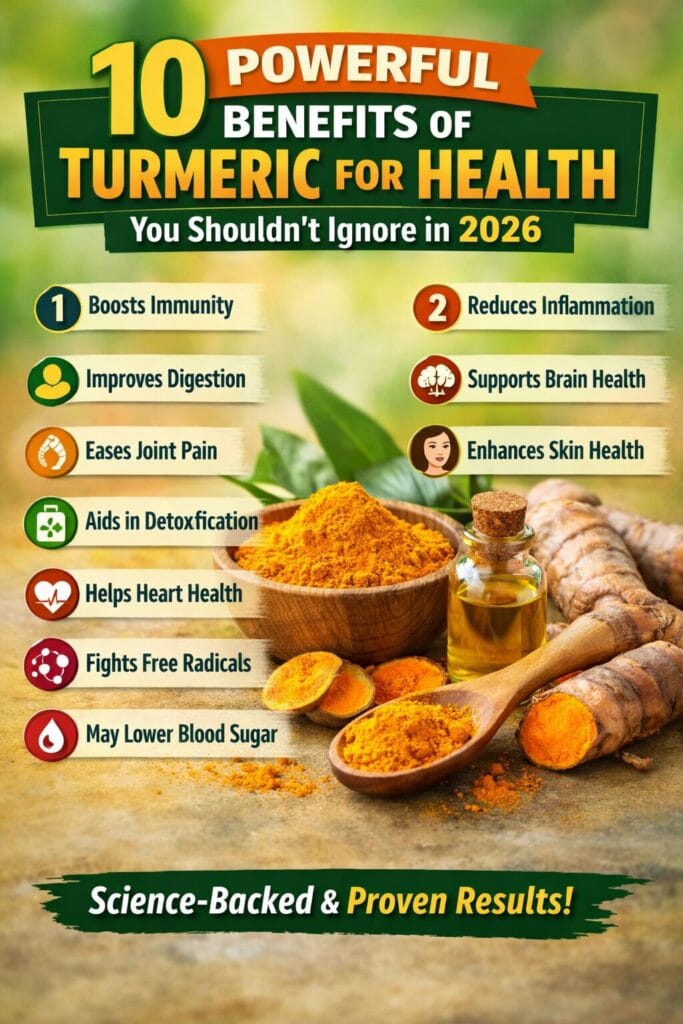
There is a spice sitting in most American kitchens right now that researchers have been studying for decades — and the results are genuinely hard to ignore. Benefits of Turmeric for Health, that deep-orange powder responsible for the color in curry and golden lattes, has quietly become one of the most studied natural compounds in modern health science. Not because of hype. Because of curcumin — its primary active compound — and what it appears to do inside the human body.
Here is the honest problem, though. The internet is flooded with exaggerated claims about turmeric. Some sites call it a miracle cure. Others dismiss it entirely. And most people reading about the benefits of turmeric end up more confused than when they started. They are not sure what the science actually proves, how much to take, or whether it is even worth trying.
That is exactly what this article is here to clear up. We are going to walk through what the research actually says — not what supplement companies want you to believe, and not what skeptics want to dismiss. Just a clear, grounded look at why turmeric has earned its reputation, where it genuinely delivers, and what you should know before adding it to your daily routine.
What Makes Turmeric So Powerful? Understanding Curcumin
Benefits of Turmeric for Health
Before talking about benefits, it helps to understand why turmeric works at all. The root of the turmeric plant — a relative of ginger — contains a group of compounds called curcuminoids. The most important one, and the one that shows up most frequently in health research, is curcumin.
Curcumin is a polyphenol, which is a type of naturally occurring plant compound with antioxidant properties. It is what gives turmeric its distinctive golden color. It is also what makes turmeric biologically interesting.
The Bioavailability Challenge
Here is something most turmeric articles skim over: curcumin on its own is not well absorbed by the human body. Studies show that it has poor solubility in water, and it metabolizes quickly. This means eating turmeric in your food, while still beneficial, gives you significantly less curcumin than a well-formulated supplement.
The most effective solution? Piperine — the active compound in black pepper. Research shows that combining piperine with curcumin increases absorption by up to 2,000 percent. That is why you will find black pepper extract in many quality turmeric supplements and why traditional Ayurvedic recipes often combined them naturally.
In practice, if you are adding turmeric to food, add a pinch of black pepper too. It is a small change that makes a meaningful difference. You can also look into high-absorption formulations — these are often listed on trusted wellness resource platforms like
resources available at lumechronos.shop if you want to explore evidence-based supplement guides.
Turmeric vs. Curcumin Supplements: What Is the Difference?
Whole turmeric root contains roughly 2-5% curcumin by weight. Curcumin supplements are standardized extracts, meaning they are concentrated to deliver consistent, measurable doses. Both have a place — but for therapeutic purposes, most researchers study curcumin extracts rather than raw turmeric powder.
The Anti-Inflammatory Benefits of Turmeric — And Why They Matter
Inflammation is one of those words that gets used a lot in wellness content. But it is genuinely one of the most important processes to understand if you care about long-term health. Chronic low-grade inflammation — the kind that does not cause obvious symptoms — has been linked in research to a wide range of health issues over time.
Turmeric has become one of the most studied natural compounds for its ability to influence inflammatory pathways in the body. Specifically, curcumin has been shown in laboratory and clinical research to inhibit several molecules that play a key role in triggering inflammation.
How Curcumin Interacts with Inflammation
One of the most well-studied mechanisms involves NF-kB — a molecule that activates genes related to inflammation. Curcumin appears to block NF-kB from switching on, which in theory reduces the inflammatory response at the cellular level. This is considered one of the core reasons researchers are interested in curcumin for chronic inflammatory conditions.
In practical terms, multiple human trials have looked at curcumin’s effects on people with conditions where inflammation plays a major role. The results across several studies suggest curcumin can have measurable effects on certain inflammatory markers.
Comparing Turmeric to Other Anti-Inflammatory Foods
| Food / Compound | Key Active | Mechanism | Bioavailability |
| Turmeric (Curcumin) | Curcumin | NF-kB inhibition | Low — enhanced with piperine |
| Ginger | Gingerols | COX inhibition | Moderate |
| Omega-3 (Fish Oil) | EPA / DHA | Eicosanoid modulation | Good |
| Green Tea | EGCG | Multiple pathways | Good |
Most people miss this: no single food is a silver bullet. Turmeric works best as part of an overall anti-inflammatory diet and lifestyle — not as a replacement for one.
Turmeric for Brain Health: What the Research Suggests
One area of turmeric research that has attracted serious scientific attention is brain health. The brain is particularly vulnerable to oxidative stress and inflammation — two processes curcumin appears to influence. Several research threads have emerged over the past two decades.
Curcumin and BDNF
BDNF stands for Brain-Derived Neurotrophic Factor. Think of it as a kind of growth hormone for the brain — it supports the growth of new neurons and helps maintain existing ones. Some research suggests that curcumin may increase BDNF levels. While this does not mean turmeric makes you smarter, it does suggest a plausible mechanism by which it could support cognitive function over time.
Mood and Mental Well-Being
There have also been several small clinical studies examining curcumin’s effect on mood. A handful of randomized trials have compared curcumin supplementation to placebo in adults experiencing symptoms of low mood, with some finding modest but meaningful results. The research in this area is still developing, and curcumin is not a replacement for professional mental health care — but the signals are interesting enough that researchers continue to study it.
For a global breakdown of how different cultures use turmeric therapeutically, the comparative health guide at lumechronos.de offers a useful international perspective on traditional plant medicine and its modern applications.
Turmeric and Immune System Support
Immune support is one of the most searched health topics in the United States, especially since 2020. Turmeric has found itself in that conversation — and for reasonably good reasons.
Curcumin has shown immunomodulatory properties in research settings. That is a formal way of saying it appears to help the immune system regulate itself — not overstimulating it, but also supporting its ability to respond when needed. Some animal and in-vitro studies have found curcumin affects the activity of T-cells, B-cells, and natural killer cells — all components of the immune response.
Golden Milk — The Traditional Delivery System
One of the oldest ways people consumed turmeric for health was through warm turmeric milk — called haldi doodh in South Asian tradition and now widely marketed as ‘golden milk’ in the US. The fat in the milk also aids in curcumin absorption, since curcumin is fat-soluble. Add black pepper, and you have a genuinely well-designed delivery mechanism.
Recipe basics: warm a cup of milk (dairy or plant-based), stir in a teaspoon of turmeric, a pinch of black pepper, and optionally ginger and cinnamon. Simple, affordable, and backed by logic.
What Turmeric Cannot Do for Immunity
In the interest of being fully honest — turmeric is not a vaccine. It does not prevent viral infections or replace standard medical care. The immune support research on curcumin is largely preliminary or conducted in laboratory settings. Keep expectations calibrated: turmeric can be a useful nutritional tool in a broader wellness strategy, but it is not a cure or a shield.
Turmeric for Joint Health and Physical Comfort
This is arguably the area with the strongest and most consistent real-world evidence. A meaningful number of clinical trials have studied curcumin’s effect on joint comfort in adults — particularly among people dealing with age-related joint stiffness and discomfort.
What the Clinical Trials Found
Several randomized controlled trials — the gold standard of clinical research — have compared curcumin supplementation against placebo and even against common over-the-counter pain relief approaches in adults with knee discomfort. Results across multiple trials suggest curcumin can reduce self-reported discomfort and improve physical function scores over several weeks of consistent use.
One frequently cited trial published in a peer-reviewed journal found that curcumin extract performed comparably to ibuprofen in adults with knee osteoarthritis, with fewer reported digestive side effects. While this does not mean you should replace any prescribed medication, it does suggest curcumin is worth a conversation with your doctor if joint discomfort is something you manage regularly.
Practical Tips for Joint Support
- Look for supplements standardized to 95% curcuminoids with piperine or a lipid delivery system
- Consistency matters — most joint-related studies ran for 6-12 weeks of daily supplementation
- Combine with light movement and anti-inflammatory eating for compounding benefit
- Always consult a healthcare provider if you are managing a diagnosed condition
The educational guides at lumechronos.com include deeper dives into anti-inflammatory nutrition strategies that pair well with turmeric supplementation.
Antioxidant Properties of Turmeric: Fighting Oxidative Stress
Every cell in your body constantly deals with oxidative stress — the result of free radicals produced by normal metabolism, environmental exposure, and lifestyle factors. Over time, unchecked oxidative stress contributes to cellular aging and a range of health problems.
Curcumin is a potent antioxidant. It neutralizes free radicals directly due to its chemical structure. But there is a second layer: curcumin also appears to stimulate the body’s own antioxidant enzymes — essentially boosting your internal defense systems. This dual mechanism is one reason researchers consider it particularly interesting compared to simpler antioxidants.
Digestive Health — A Bonus Most People Overlook
Turmeric has a long history in traditional medicine as a digestive aid. Modern research suggests curcumin may support the health of the gut lining and influence the gut microbiome. Some studies have found curcumin helpful for managing symptoms in people with certain inflammatory bowel conditions — though again, these are supplementation studies under medical supervision, not casual daily use.
For everyday digestive comfort, adding turmeric to meals — particularly with fatty foods — may support smoother digestion for many people. It is mild, generally well-tolerated, and worth experimenting with if digestive irregularity is something you experience.
Turmeric Dosage, Safety, and Who Should Be Careful
This section matters. Because enthusiasm for turmeric is not universal, and there are situations where it needs to be approached with care.
General Dosage Guidelines
For culinary use — adding turmeric to food — there are no established upper limits for healthy adults, and it is generally recognized as safe at food amounts. For supplemental use, most research has studied doses ranging from 500mg to 2,000mg of curcumin per day, often divided across meals.
Who Should Use Caution
- People taking blood-thinning medications (curcumin may have mild anticoagulant effects)
- Pregnant and breastfeeding women — supplemental doses have not been well studied in these groups
- People with gallbladder issues — curcumin stimulates bile production, which can worsen certain conditions
- Anyone scheduled for surgery — consider pausing high-dose supplementation in advance
Always talk to your doctor before starting any supplement, particularly if you take prescription medications or have an existing health condition. This is not a formality — it is genuinely important.
Side Effects
At culinary doses, turmeric is extremely well-tolerated by most people. At higher supplemental doses, some individuals report mild digestive discomfort, nausea, or headaches. These typically resolve when the dose is reduced. Allergic reactions are rare but possible.
TRENDING SOCIAL & VIDEO RESOURCES ON TURMERIC
These publicly available videos and posts are trending on the topic of turmeric benefits:
- YouTube — “Turmeric Health Benefits Explained” (Andrew Huberman-style deep dives)
- YouTube — “Golden Milk Recipe — Benefits & How to Make It”
- Instagram / Reels — Search #TurmericBenefits for trending short-form wellness content
- TikTok — Search ‘turmeric challenge’ and ‘golden milk’ for viral food content
- Reddit / r/nutrition — Community discussions on turmeric supplementation experiences
FAQ — PEOPLE ALSO ASK
1. What does turmeric do for the body?
Turmeric — primarily through its active compound curcumin — interacts with several biological pathways in the body. It has antioxidant properties, meaning it helps neutralize harmful free radicals. It also appears to influence inflammatory signaling pathways, which has made it a subject of research for conditions where chronic inflammation plays a role. Additionally, some research points to potential benefits for brain health, joint comfort, immune function, and digestive support. Most of these effects are more pronounced with consistent supplementation at therapeutic doses rather than culinary use alone.
2. Is turmeric safe to take every day?
For most healthy adults, turmeric at culinary doses is safe daily and is classified as generally recognized as safe (GRAS) by regulatory bodies. At supplemental doses (500mg-2,000mg of curcumin), daily use is common in clinical research settings and appears well-tolerated in healthy adults over months-long periods. However, people with certain health conditions — including gallbladder disease, blood clotting issues, or those on medications like blood thinners — should consult a doctor before daily supplementation. Pregnant and breastfeeding women should also get medical guidance.
3. Does turmeric actually help with inflammation?
The short answer is: the evidence is promising, particularly for curcumin extracts at supplemental doses. Multiple human clinical trials have found that curcumin supplementation reduces certain markers of inflammation. The mechanism is well-studied — curcumin inhibits molecules like NF-kB that trigger inflammatory gene expression. That said, results vary between individuals, and curcumin is not a substitute for medical treatment of serious inflammatory conditions. It works best as part of a broader anti-inflammatory lifestyle.
4. How much turmeric should I take per day?
For culinary use, there is no defined upper limit — use it freely in cooking. For supplements, most research has used between 500mg and 2,000mg of curcumin per day, often in divided doses. Look for products that include piperine (black pepper extract) or use a lipid-based delivery system to maximize absorption. Start with a lower dose and increase gradually. There is no universal “right” dose — individual responses vary, and what works depends on your health goal and body chemistry. A healthcare provider can help you find an appropriate dose.
5. Can turmeric help with weight management?
Some preliminary research suggests curcumin may play a supportive role in metabolic health, potentially influencing fat metabolism and insulin sensitivity. However, the evidence for turmeric as a direct weight loss tool is not strong enough to make firm recommendations. Where it may help indirectly is by supporting reduced inflammation (which is associated with metabolic dysfunction) and digestive health. Turmeric is not a weight loss supplement in any meaningful clinical sense — but as part of a whole-food, anti-inflammatory diet, it fits well into a weight management approach.
6. Does turmeric interact with any medications?
Yes, and this is important. Curcumin has mild anticoagulant (blood-thinning) properties, which means it can interact with medications like warfarin, aspirin, or other antiplatelet drugs. It may also interact with certain diabetes medications (by affecting blood sugar levels) and with drugs that are processed by the liver’s cytochrome P450 enzymes. If you take any prescription medications, always check with your pharmacist or doctor before starting a curcumin supplement. This is not overly cautious — it is genuinely good practice.
7. What is the best way to absorb turmeric?
Because curcumin is fat-soluble and poorly absorbed on its own, combining it with fat and piperine (black pepper) dramatically improves bioavailability. Practically: add turmeric to dishes that contain healthy fats (olive oil, coconut milk, avocado), and always include a pinch of black pepper. For supplements, choose formulations that include piperine, phosphatidylcholine, or a lipid matrix. The difference in absorption between a standard curcumin powder and a bioavailability-enhanced formulation can be significant — this matters if you are supplementing for a specific health goal.
8. Is turmeric better than ginger for inflammation?
Both are valuable, and they work through different mechanisms. Curcumin in turmeric primarily inhibits NF-kB — a central inflammatory signaling molecule. Gingerols in ginger inhibit COX enzymes, similar to how over-the-counter NSAIDs work. Research suggests that combining them may offer complementary benefit. For acute discomfort (like muscle soreness), ginger may act faster. For longer-term inflammatory modulation, curcumin tends to show stronger effects in clinical research. In practice, using both in your diet makes more sense than choosing one.
KEY TAKEAWAYS
- Curcumin — the active compound in turmeric — has genuine, research-backed anti-inflammatory and antioxidant properties at supplemental doses
- Bioavailability is the biggest challenge: always pair turmeric with black pepper (piperine) and a fat source for meaningful absorption
- The strongest clinical evidence supports turmeric for joint comfort; brain health and mood research is promising but still developing
- Culinary use of turmeric is safe and beneficial, but most therapeutic benefits require consistent supplementation at standardized doses
- Turmeric is not a cure, and it is not a replacement for professional medical care — it is a useful nutritional tool in a broader healthy lifestyle
- People on blood thinners, pregnant women, and those with gallbladder conditions should consult a doctor before supplementing
- The biggest mistake is buying cheap, poorly formulated turmeric powder and expecting drug-level results — quality and formulation matter enormously
Final Thoughts: Is Turmeric Worth Adding to Your Routine?
After looking at the full picture honestly — yes. The benefits of turmeric are real, measurable, and meaningful when approached correctly. Curcumin is not a miracle cure, and anyone who tells you otherwise is overselling it. But it is also not overhyped nonsense — the volume and consistency of research behind it is genuinely impressive for a natural compound.
If you are dealing with everyday inflammation, joint discomfort, or just want to support your long-term health with evidence-backed nutrition choices, turmeric — particularly in supplement form with good absorption — is one of the more sensible additions you can make. Add it to your cooking freely. Consider a quality supplement if you want more consistent therapeutic benefit. Pair it with a broadly anti-inflammatory lifestyle: real food, regular movement, adequate sleep, and stress management.
Most people who add turmeric to their daily routine do not notice dramatic overnight changes. What they notice over weeks and months is a gradual reduction in how often they feel stiff, run-down, or inflamed. That kind of slow, consistent improvement is exactly what real nutrition science tends to produce.
Want to explore more evidence-based health guides? Visit lumechronos.com for in-depth wellness articles. Browse curated tools and resources at lumechronos.shop. And if you are interested in how global health traditions approach plant medicine, check out the comparative content at lumechronos.de.
Got a question about turmeric or a personal experience worth sharing? Drop it in the comments below — real conversations lead to real learning. And if this article helped you, share it with someone who has been asking about turmeric. You might save them hours of internet confusion.
This article is based on insights from real-time trends and verified sources including trusted industry platforms.