






In today’s hyperconnected world, it’s easy to feel overwhelmed by the constant stream of notifications, emails, and online updates. We often forget to pause and reconnect with ourselves and the real world. A digital detox is a deliberate break from screens – intentionally unplugging from smartphones, computers, and social media – to reset your mind and improve mental health. For context, research shows the average person checks their smartphone around 100 times a day[1], making constant connectivity the norm. Breaking that cycle even briefly can significantly reduce anxiety and restore focus.
What is a Digital Detox?
At its core, a digital detox means stepping away from electronic devices for a set time. As one expert explains, “a digital detox is a period during which an individual refrains from using digital devices. The goal is to disconnect from screens and reconnect with the real world”. In practice, this might mean taking short breaks from social media, turning off notifications, or even spending entire days screen-free. The purpose is to give your mind a rest from constant digital stimulation and to rekindle more mindful, in-person experiences.
Why Digital Detox Improves Mental Health
Too much screen time has been linked to stress, anxiety, sleep problems, and even depression. Research shows that unplugging can reverse some of these effects. For example, a 2024 meta-analysis found that digital detox interventions “significantly reduce depressive symptoms”. In other words, even a week off social media can help lift your mood and alleviate depression. Similarly, a major clinical trial reported that cutting down screen time for just three weeks led to marked improvements in sleep, mood, and overall well-being.
Beyond mood, studies show improved focus and clarity after a detox. Health experts note that many people are able to “focus better” and experience increased mental clarity once they unplug. A recent Frontiers review highlights cognitive benefits too: digital breaks offer “improved attention [and] stress reduction”. Reducing multitasking and silencing notifications means you can concentrate on one task at a time. For example, instead of constantly switching between social media apps and tasks, you might spend that time focusing on one task deeply or enjoying a hobby.
Taking a break from screens can help you sleep more soundly and wake up feeling refreshed.
Better Sleep: Screens and blue light before bed can keep your brain wired at night. By turning off devices in the evening and keeping phones out of the bedroom, many find they fall asleep faster and stay asleep longer. In fact, Cleveland Clinic notes that unplugging “may even help improve your sleep”. Research confirms that improved sleep quality translates into reduced anxiety and a brighter mood the next day.
Reducing screen time and social media can dramatically lower stress and anxiety levels.
Lower Stress: Constant pings, news alerts, and endless scrolling keep your stress response switched on. Unplugging even briefly lets your nervous system settle and restores balance. Studies confirm this benefit: a review observed measurable stress reduction in people who took tech breaks. Likewise, Cleveland Clinic reports that people who cut back on news and social feeds often feel calmer afterward.
In practice, the first day or two of a digital detox can feel challenging. You might notice urges to check your phone or even feel anxious, which is normal as your brain adjusts. After the initial urge passes (often by day 3), many people report a sense of relief and calm that lasts the rest of the week.
7-Day Digital Detox Plan
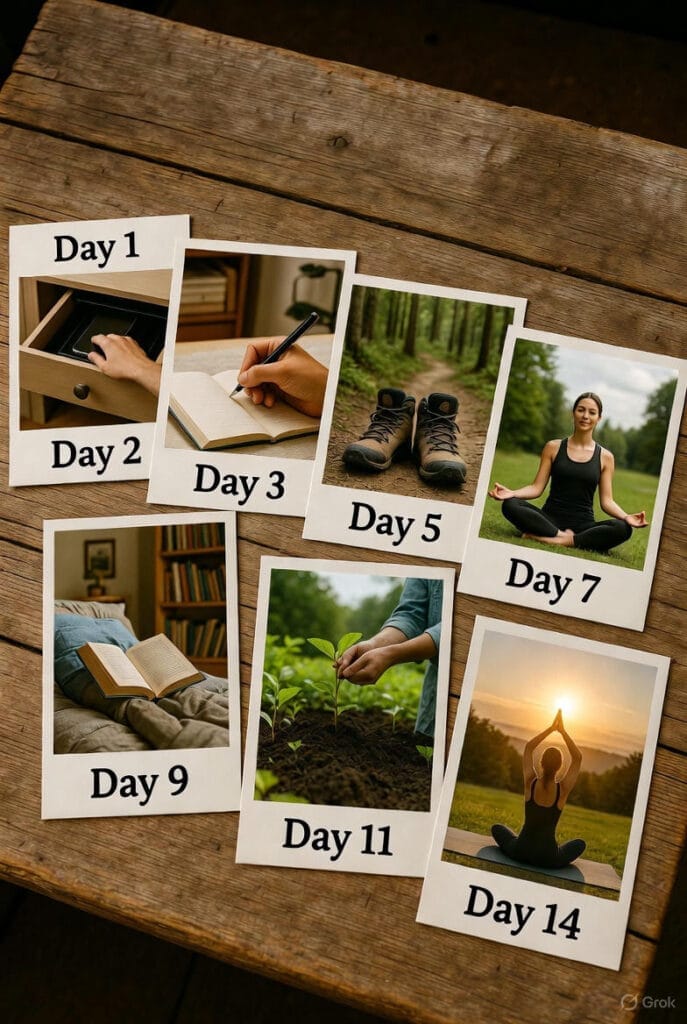
How do you put this into practice? One popular approach is a gradual 7-day challenge:
– Day 1: Unplug for 1 hour. Plan that hour for something fulfilling (like a walk, reading a book, or catching up with a friend). Use this time to reflect on what you enjoy when not on your phone. Mentally prepare to reduce screen time a little more each day….
– Day 2: Unplug for 2 hours. Try leaving your phone in another room or turning it off during errands, cooking, or crafting. Notice how being away from the screen makes you feel more present.
– Day 3: Turn off notifications and go 3 hours device-free. You decide when to check in—each time you resist a ping, you strengthen your willpower.
– Day 4: Create tech-free zones. Eat meals without devices and keep screens out of the bedroom for at least 4 hours. This encourages real conversation and a more restful night’s sleep.
– Day 5: Go social-media free for the day (aim for 5 hours without apps). This step focuses on mental health – heavy social media use is linked to anxiety and loneliness, so taking a break can greatly reduce those pressures.
– Day 6: Delete time-sucking apps (6 hours off devices today). Identify your biggest distractions (games, news feeds, or entertainment apps) and remove them. This simplification frees up your time for more meaningful activities.
– Day 7: Full digital fast (7–24 hours). For the grand finale, go offline for as long as possible—ideally on a day with few obligations. Spend the day outdoors, with loved ones, or pursuing a tech-free hobby. This complete break helps solidify new habits and proves you can thrive without constant screens.
By the end of the week, these small steps add up. You’ve significantly cut screen exposure and given your brain a chance to rest. Many people feel calmer, more focused, and more in control of their time. According to experts, after a detox “you may find that you’re able to focus better” and experience heightened mental clarity.
Other Benefits of Unplugging
- Sharper Focus & Productivity: Without constant pings and pop-ups, your brain can concentrate on one task at a time. After a detox many people notice they can “focus better” and feel mentally clearer.
- Enhanced Mood: Taking breaks from social media and endless news feeds often boosts happiness and self-esteem. A review found that digital detoxes significantly reduce depressive symptoms[3], meaning you may feel more positive and content.
- More Control Over Your Time: A detox helps break compulsive checking habits. On average, people check their phone ~96 times per day. By unplugging and resisting that reflex, you reclaim your schedule and stop feeling “always on.”
- Mindfulness: Unplugging invites you to be present. Activities like reading, walking outdoors, or meditating become easier and more enjoyable. This heightened awareness and calmness further support mental well-being.
- Rediscovered Hobbies: With fewer digital distractions, you may have time to reignite old passions or try new activities (like reading, art, or exercise). These hobbies naturally lift your mood and keep your mind happily engaged.
- New Perspective: Time away from the online world often helps you realize which digital pressures are unimportant. Many people return appreciating everyday moments more, which reduces anxiety.
- Better Self-Esteem: Without constant social comparison on social media, many people feel more confident. A break from scrolling can help stop the comparison cycle and improve how you feel about yourself.
Reconnecting with others in person can boost happiness and reduce isolation.
Reconnect with Others: When phones are put away, family and friends get your full attention. Cleveland Clinic experts note that without devices at meals or gatherings, people often experience deeper, more meaningful interactions. These real-life connections greatly improve mood and reduce loneliness, further supporting mental health.
Tips for a Successful Detox
- Set Clear Goals: Before starting, decide why you’re doing this detox (less stress? better sleep? more family time?). Having a purpose will keep you motivated.
- Inform Friends & Family: Let people know you’ll be offline so they aren’t surprised by delayed responses. You might even invite someone to join you – doing it with a friend makes it more fun.
- Prepare Alternatives: Plan fun offline activities to fill the time. Experts suggest picking engaging hobbies (exercising, cooking, playing a game) as healthy replacements for screen time.
- Use Built-In Tools: Many phones have screen time monitors or “Do Not Disturb” modes. Use these features to enforce limits (for example, turn on a “night mode” after 9pm to avoid late-night scrolling).
- Start Gradually: If going cold turkey feels too hard, begin with small steps like “no phone at dinner” or “no screens 1 hour before bed.” Each little win builds your confidence.
- Be Flexible: Your detox doesn’t have to be perfect. Even cutting back on just one app or setting nightly device-free hours helps. Remember that reducing use (rather than total abstinence) often leads to lasting well-being improvements.
- Keep It Going: After the challenge, consider repeating a shorter detox monthly or having regular “no-tech” times. These ongoing breaks can help you stay mindful of how you use technology and continue to protect your mental health.
If you’re looking to build stronger legs without stepping foot in a gym, the guide from LumeChronos is a game-changer. Their “Home Leg Workout 2025: No Gym | No Problem | Build Stronger Legs” program breaks down simple, effective bodyweight exercises you can do right in your living room — from squats and lunges to glute bridges and calf raises. What’s great is that these movements target all the major muscle groups in your lower body, offering strength, stability, and balance without any fancy equipment. As noted by fitness experts, training your legs at home builds a strong foundation, improves balance, and supports better overall posture — all essential for long-term functional fitness.
FAQs
Q: What exactly is a digital detox?
A digital detox is a deliberate break from electronic devices like smartphones, tablets, and computers[2]. It means turning off notifications and limiting or avoiding social media and internet browsing for a set period (like a day or a week). The goal is to give your mind a break from constant connectivity and re-engage with real-world activities.
Q: Can a 7-day digital detox really improve my mental health?
Yes. Even a week away from screens can make a difference. Research shows that stepping away from devices reduces anxiety and depressive symptoms. Many people find that after just a few days without social media they sleep better, feel less stressed, and have a brighter mood. For example, one trial found that three weeks of reduced screen time led to better sleep, lower stress, and fewer depression symptoms. So in seven days you’re likely to notice a calmer mood and improved well-being.
Q: What if I can’t completely unplug?
That’s okay. Even cutting back helps. The American Academy of Pediatrics notes that reducing screen and social media time (instead of total abstinence) often has positive effects on well-being. Try setting specific device-free hours each day or uninstalling addictive apps temporarily. Every little bit of reduced screen time supports your mental health, so do what works for your lifestyle.
Digital detoxes are gaining popularity because of these proven mental health benefits. In our always-on world, giving yourself permission to unplug – even for just a week – can recharge your mind and lift your mood. There’s no better time than now to start: swap your next morning scroll for a short walk outside and see how much more energized and present you feel!