



Analysis Lucy Harrison Case
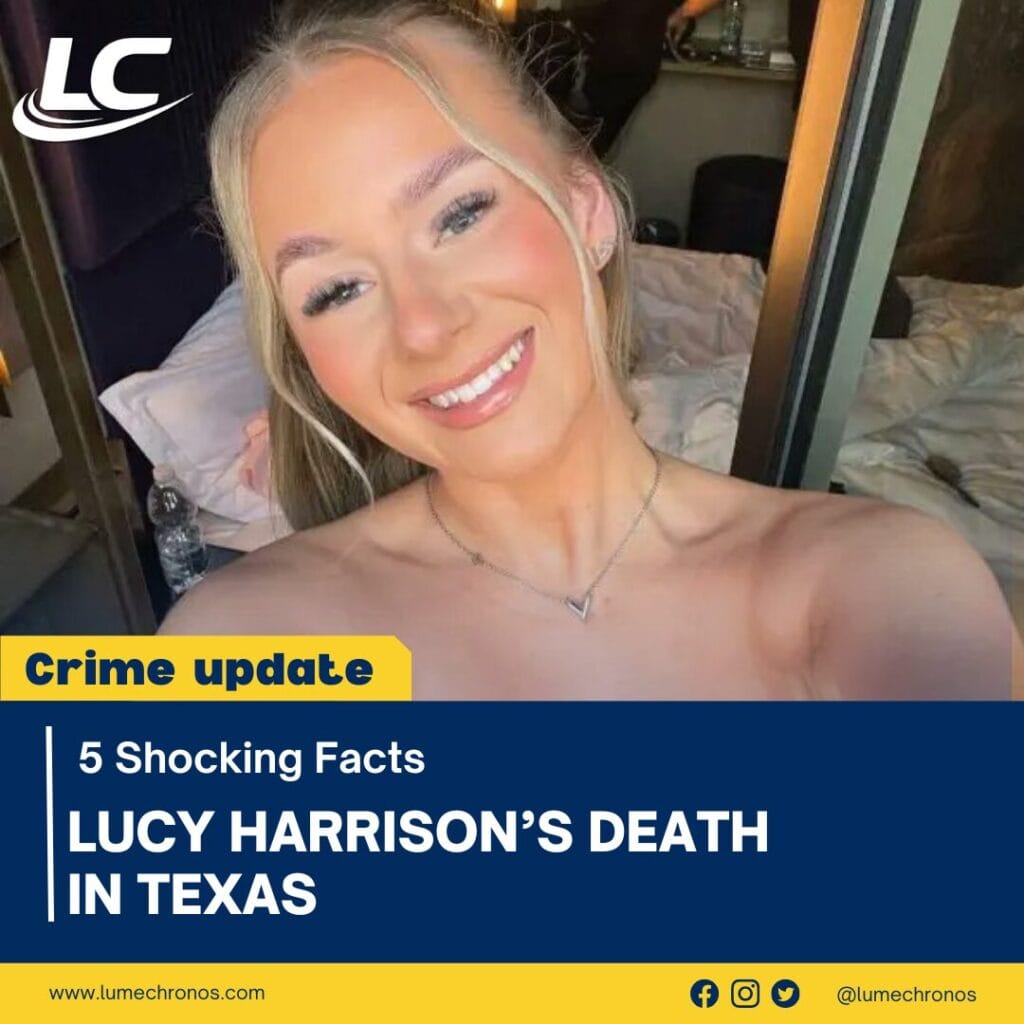
The tragic death of Lucy Harrison, a 23-year-old British woman from Warrington, Cheshire, has highlighted stark differences between American and British attitudes toward gun ownership, family conflict, and legal accountability. On January 10, 2025, Harrison was fatally shot in the chest by her father, Kris Harrison, at his home in Prosper, Texas, just half an hour before she and her boyfriend were scheduled to leave for the airport to return to the United Kingdom. This week, a coroner’s inquest in Cheshire heard testimony that revealed the shooting occurred after a heated political argument about Donald Trump, whose second presidential inauguration was scheduled for later that month.
The case has resonated across the Atlantic not only because of its tragic circumstances, but because it exposes fundamental questions about gun culture, political polarization, and how different legal systems handle deaths involving firearms. For many observers in the United Kingdom, where gun ownership is heavily restricted and firearm deaths are rare, the fact that no criminal charges were filed in Texas despite a young woman’s death seems incomprehensible. Understanding why requires examining the broader context of American gun laws, family dynamics shaped by political division, and the fundamental differences between the U.S. and U.K. legal systems.
What Happened That Morning
Lucy Harrison had traveled to Texas with her boyfriend, Sam Littler, for what was meant to be a holiday visit with her father and his family. Littler’s testimony at the Cheshire Coroner’s Court painted a picture of mounting tension throughout the visit. He described how Lucy would often become upset when her father discussed his gun ownership, a topic that made her uncomfortable given the stark differences between American and British attitudes toward firearms.
On the morning of January 10, as the couple prepared to depart for the airport, a significant argument erupted between Lucy and her father. The dispute centered on Donald Trump and, according to testimony, touched on issues of sexual assault and gun violence. Littler recounted that during the argument, Lucy asked her father a deeply personal question: how he would feel if she were sexually assaulted. The response she received was chilling. According to Littler’s testimony, Kris Harrison replied that he had two other daughters living with him, so it would not upset him that much. Lucy, visibly distressed by this response, ran upstairs to compose herself.
What happened next remains disputed in key details. According to Kris Harrison’s statement to the court, he and Lucy had been watching a news segment about gun crime on television when he mentioned that he owned a firearm and asked if she wanted to see it. When she said yes, they went into his bedroom where he kept a Glock 9mm semi-automatic handgun in the bedside cabinet. Harrison claimed he did not recall whether his finger was on the trigger when he removed the gun from its case. His statement read: “As I lifted the gun to show her I suddenly heard a loud bang. I did not understand what had happened. Lucy immediately fell.”
Sam Littler, who was in another part of the house, heard the gunshot and ran into the bedroom. His testimony described finding Lucy on the floor near the bathroom entrance, with Kris Harrison screaming what Littler characterized as “nonsense” and calling for his wife. Lucy died from the gunshot wound to her chest. The entire sequence of events, from political argument to fatal shooting, unfolded in less than an hour.
The Role of Alcohol and Prior Addiction
A significant factor in understanding the events of that morning involves Kris Harrison’s history with alcohol and his admission that he had been drinking on the day his daughter died. The inquest heard that Harrison had previously sought treatment at a rehabilitation facility for alcohol addiction. In his statement to the court, he acknowledged what he described as a “brief lapse” on January 10, explaining that he was emotional about Lucy leaving and had consumed approximately 500 milliliters of white wine over a period of two to three hours earlier in the day.
Evidence presented at the inquest supported his admission of drinking. Police officer Luciana Escalera, whose testimony was read to the court, noted that she detected the smell of alcohol on Harrison’s breath when she arrived at the scene after the shooting. Additionally, CCTV footage from a local 7-Eleven store showed that Harrison had purchased two 500-milliliter cartons of Chardonnay shortly before 1:00 PM that day, providing objective corroboration of his alcohol consumption.
The combination of alcohol consumption, emotional stress, a loaded firearm, and the aftermath of a heated argument created what many would consider an extremely dangerous situation. For observers familiar with firearm safety protocols, the decision to handle a weapon while under the influence of alcohol and in an emotionally charged state represents a fundamental violation of basic gun safety principles. However, understanding why this did not result in criminal charges requires examining how Texas law approaches such cases.
Why No Criminal Charges Were Filed in Texas
Perhaps the most bewildering aspect of this case for British observers is the legal outcome in Texas. Despite a young woman’s death under circumstances that involved a heated argument, alcohol consumption, and the handling of a loaded firearm, a grand jury in Collin County determined there was insufficient evidence to charge anyone in connection with Lucy Harrison’s death. To understand this decision, it’s necessary to examine how the American legal system, and Texas law in particular, approaches cases involving firearms.
In Texas, as in many American states, gun ownership for home defense does not require a license. The cultural and legal frameworks surrounding firearms in Texas reflect a deeply embedded tradition of gun ownership as both a constitutional right and a practical necessity for many residents. This creates a vastly different starting point than exists in the United Kingdom, where firearms are heavily regulated and gun ownership is relatively rare.
For criminal charges to be filed in a case like this, prosecutors would need to prove either that the shooting was intentional or that it resulted from criminal negligence. The grand jury system in Texas involves twelve citizens who review all available evidence in closed proceedings to determine whether there is probable cause to believe someone committed a felony. In this case, the grand jury examined whether Kris Harrison should be indicted for manslaughter or criminally negligent homicide.
The decision not to indict suggests that the grand jury concluded, based on the evidence presented, that they could not establish beyond the criminal standard that Harrison’s actions rose to the level of criminal negligence or that he intentionally fired the weapon. This is partly due to the high burden of proof required in criminal cases, but it also reflects how Texas law and culture approach accidental firearm discharges. In a state where millions of people own guns and where self-defense shootings are legally protected, the threshold for prosecuting what appears to be an accident is considerably higher than it might be in jurisdictions with stricter gun laws.
Understanding the UK Coroner’s Inquest
The ongoing inquest in Cheshire represents a distinctly British approach to investigating deaths, and it’s important to understand that a coroner’s inquest serves a different purpose than a criminal trial. An inquest is a fact-finding inquiry designed to establish who died, when they died, where they died, and how they came to die. Critically, an inquest does not determine criminal or civil liability; that is not its purpose. The coroner, Jacqueline Devonish, is tasked with examining the circumstances of Lucy Harrison’s death and reaching a formal conclusion about the cause and manner of death.
However, the proceedings this week revealed tensions about how the inquest is being conducted. Kris Harrison did not attend the inquest in person, but his legal team made an application for the coroner to recuse herself, claiming potential bias. His barrister, Ana Samuel, argued that the inquest was being conducted “in a manner more akin to a criminal investigation than a fact-finding inquiry” and suggested the coroner was “trying to catch Mr. Harrison out.” Lois Norris, representing Lucy’s mother Jane Coates, characterized this application as “an ambush by Mr. Harrison’s legal team” and pointed out that Harrison had 113 days to raise objections from the moment he was requested to submit a witness statement. The coroner refused to step down.
This legal maneuvering highlights the complex position of those involved in inquests. While the proceedings are not criminal trials, they can have significant consequences for reputation and can potentially lead to referrals for criminal prosecution or recommendations for changes in law or practice. For Kris Harrison, the inquest represents a public examination of his actions on the day his daughter died, even though he was not criminally charged in the United States.
The Trump Factor: Political Division and Family Conflict
The fact that this tragedy was precipitated by an argument about Donald Trump is not simply an incidental detail; it reflects broader patterns of political polarization that have intensified in the United States in recent years. Trump’s presidency and his continuing influence on American politics have been characterized by deep divisions, not just between different political parties, but within families and communities. For many Americans, political differences have become identity markers that go far beyond traditional policy disagreements.
Lucy Harrison’s mother described her daughter as someone who “loved to have debates about things that meant a lot to her.” The testimony suggests that Lucy was passionate about issues of justice and equality, particularly concerning sexual assault and gun violence. These topics have become flashpoints in American political discourse, with starkly different perspectives often correlating with support for or opposition to Trump. For Lucy, visiting her father in Texas meant encountering a political and cultural environment that was fundamentally different from what she experienced in the United Kingdom, where gun ownership is rare and Trump’s brand of politics is viewed quite differently.
The specific exchange that Littler recounted, where Lucy asked her father how he would feel if she were sexually assaulted, speaks to the nature of their disagreement. This was not an abstract political debate but a deeply personal attempt by Lucy to connect political positions to human consequences. Her father’s response, that it would not upset him much because he had other daughters, revealed a chasm in understanding and empathy that no amount of political discussion could bridge.
Contrasting Gun Cultures: The Atlantic Divide
To fully understand this case, one must recognize the profound differences in how the United States and the United Kingdom approach firearms. In the UK, handguns have been effectively banned since 1997 following the Dunblane school massacre. Gun ownership requires extensive licensing, background checks, and demonstrated legitimate purpose, typically limited to activities like sporting shooting. The result is that gun deaths in Britain are extremely rare, and the idea of keeping a loaded handgun in a bedside cabinet for home defense would strike most British people as both illegal and incomprehensible.
In Texas, by contrast, gun ownership is woven into the cultural and legal fabric of daily life. The state has some of the most permissive gun laws in America, and the Second Amendment right to bear arms is treated as sacrosanct by a significant portion of the population. Kris Harrison’s purchase of a Glock 9mm semi-automatic pistol for what he described as a “sense of security” for his family is entirely legal and, in many Texas communities, entirely normal. The fact that no license was required for this purchase underscores how different the regulatory environment is from the UK.
This cultural divide helps explain why Lucy Harrison found her father’s gun ownership so troubling, and why it had been a source of tension during her visits. For someone raised in Britain, where gun violence is exceptional rather than routine, the casual presence of a lethal weapon in a family home represents a completely foreign and potentially frightening reality. The testimony that she would become upset when her father discussed his gun ownership suggests she recognized the danger it represented, even if she could not have anticipated that it would ultimately claim her life.
A Life Cut Short: Remembering Lucy Harrison
Beyond the legal, political, and cultural questions raised by this case, at its heart is the loss of a young woman who by all accounts had her whole life ahead of her. Lucy Harrison worked as a buyer for the fashion brand Boohoo and had recently purchased her first home with her boyfriend Sam Littler just nine months before her death. Her mother, Jane Coates, described her as “a real force of life” who was “passionate about things” and cared deeply about issues of justice and equality.
In a joint tribute, her mother and Littler wrote: “Lucy was life. She lived it fiercely and fearlessly.” They added: “She was truly thriving in life and although this gives us great comfort, we are utterly heartbroken at the loss of our beautiful, gorgeous Luce.” These words paint a picture of someone who embraced life fully, who stood up for her beliefs, and who was loved deeply by those closest to her.
Kris Harrison, through his solicitors, issued a statement expressing remorse: “I fully accept the consequences of my actions, and there isn’t a day I don’t feel the weight of that loss, a weight I will carry for the rest of my life, and I know that nothing I say can ease the heartbreak this tragedy has caused. I cannot undo what happened, but I can honor Lucy by being the best father I can be to her sisters and by carrying her memory forward in everything we do.”
These expressions of grief and regret, however sincere, cannot change what happened that January morning. A 23-year-old woman who was supposed to be boarding a plane back to Manchester ended up in a Texas morgue instead, the victim of a lethal combination of political division, alcohol, easy access to firearms, and a tragic moment that cannot be undone.
The Epstein saga still shapes global conversations about power, secrecy, and accountability. In Unveiling the Epstein Files: Key Individuals Mentioned and Their Connections, we map out the network of high-profile names, their roles, and how their relationships intersected with Epstein’s operations — turning scattered headlines into a clear big-picture breakdown. If you want the full deep dive, tap in here: https://lumechronos.com/epstein-files-individuals-mentioned-connections/
What This Case Reveals About Contemporary Society
The Lucy Harrison case serves as a tragic illustration of several troubling trends in contemporary society. First, it demonstrates how political polarization has reached the point where it can destroy families and, in the most extreme cases, contribute to violence. The fact that an argument about Donald Trump’s presidency could escalate to the point where a father and daughter’s relationship became so strained speaks to the intensity of current political divisions.
Second, the case highlights the ongoing debate about gun ownership and safety in America. Even among gun rights advocates, there is general agreement about basic safety principles: firearms should be stored securely, should never be handled while under the influence of alcohol, and should never be displayed or handled during emotionally charged situations. The fact that all of these principles were violated in this case, yet no criminal charges resulted, raises questions about whether current laws adequately address the risks associated with widespread gun ownership.
Third, the case exposes the stark differences between American and British approaches to both firearms and legal accountability. For many in the United Kingdom, the fact that someone can fatally shoot another person under these circumstances without facing criminal prosecution seems to represent a fundamental failure of justice. For many in Texas and similar jurisdictions, the lack of prosecution simply reflects the high burden of proof required in criminal cases and the recognized possibility of tragic accidents in a society where guns are ubiquitous.
Finally, this case serves as a reminder of how easily family conflicts can escalate when firearms are readily available. Research has consistently shown that the presence of guns in homes increases the risk of fatal outcomes during domestic disputes, even when the initial conflict had nothing to do with the weapon itself. Lucy Harrison did not die because of a planned act of violence, but because a loaded gun was within arm’s reach during a moment of family conflict.
Looking Forward
The coroner’s inquest in Cheshire is expected to deliver its conclusions shortly, though the exact verdict remains to be seen. Possible conclusions could include unlawful killing, accidental death, or a narrative verdict that sets out the facts without assigning a specific legal category. Whatever conclusion is reached, it will not bring Lucy Harrison back or provide complete closure to her family and loved ones.
What this case can do, however, is serve as a cautionary tale about the dangers of political polarization, the risks of alcohol and firearms, and the profound differences in how societies approach questions of gun ownership and public safety. For those who knew Lucy Harrison, she will be remembered as someone who cared deeply about justice, who was not afraid to speak her mind, and whose life was tragically cut short. For the wider public, her death raises uncomfortable questions that deserve serious consideration, even if definitive answers remain elusive.
As political divisions continue to deepen and debates about gun control remain contentious, the Lucy Harrison case reminds us that these are not abstract policy questions but matters that affect real people’s lives in the most profound ways possible. Whether this tragedy will prompt any changes in behavior, policy, or attitudes remains to be seen, but it stands as a stark reminder of what can be lost when families are torn apart by political conflict and when deadly weapons are too easily accessible in moments of crisis.
This article is based on testimony and evidence presented at the Cheshire Coroner’s Court inquest, as reported by multiple news sources including ITV News, BBC, and others. The inquest remains ongoing at the time of publication.