




Introduction
Let’s be real—avocados have taken over the health world. From trendy brunch spots to your local grocery store, this creamy green fruit is everywhere. But here’s what everyone’s asking: Can eating avocado for weight loss and cholesterol control actually work, or is it just another overhyped superfood?
If you’ve scrolled through conflicting advice online, you’re not alone. Some fitness gurus swear avocados melt belly fat, while others warn that their high calorie content will derail your diet. And when it comes to cholesterol? The information about Avocado for weight loss and cholesterol gets even more confusing.
Here’s the deal: I’m cutting through the noise with real science, practical advice, and zero nonsense. By the end of this article, you’ll know exactly how avocados affect your body, whether they deserve a spot in your diet, and how to use them without sabotaging your health goals.
Ready? Let’s dig in.
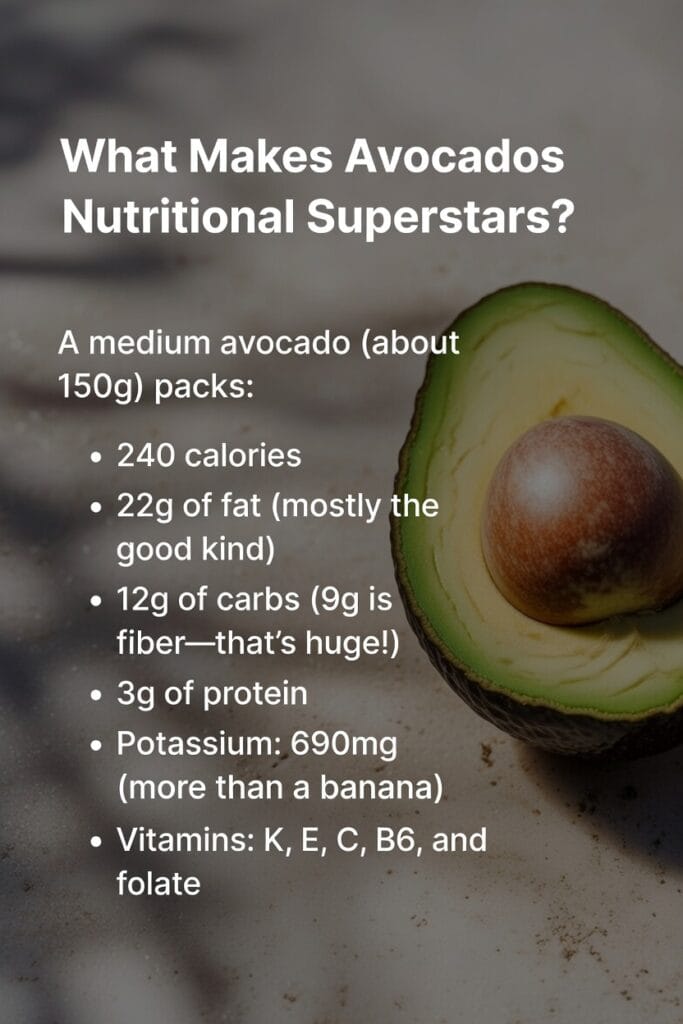
What Makes Avocados Nutritional Superstars?
Before we tackle Avocado for weight loss and cholesterol , you need to understand what you’re actually eating.
A medium avocado (about 150g) packs:
- 240 calories
- 22g of fat (mostly the good kind)
- 12g of carbs (9g is fiber—that’s huge!)
- 3g of protein
- Potassium: 690mg (more than a banana)
- Vitamins: K, E, C, B6, and folate
Here’s the part that freaks people out: 77% of an avocado’s calories come from fat. But hold on—this isn’t the trans fat hiding in processed junk food. We’re talking about monounsaturated fatty acids (MUFAs), particularly oleic acid, which is the same heart-healthy fat found in olive oil.
Think of it this way: not all fats are created equal. The fat in avocados is the kind your body actually needs.
Avocado for weight loss and cholesterol: Fact or Fiction?
This is where things get interesting. A high-fat food helping you lose weight? Sounds backwards, right?
How Avocados Support Weight Management
The science is actually pretty solid here. Multiple studies show that avocado for weight loss and cholesterol management can be effective, but it’s not magic—it’s biology.
1. They Keep You Full Longer
Avocados are packed with fiber and healthy fats, which slow down digestion. Translation? You feel satisfied for hours instead of raiding the snack drawer 30 minutes after eating.
A 2013 study published in the Nutrition Journal found that people who added half an avocado to their lunch reported 40% less desire to eat for hours afterward. That’s significant. so Avocado for weight loss and cholesterol is real.
2. They Reduce Cravings
When you eat nutrient-dense foods like avocados, your body gets what it needs. This means fewer wild cravings for sugar and junk food. Ever notice how eating a salad with avocado keeps you satisfied, while eating the same salad without it leaves you hungry? That’s the fat and fiber working together.
3. They May Boost Metabolism
Some research suggests that monounsaturated fats can support metabolic health and help your body use energy more efficiently. While avocados won’t turn you into a fat-burning machine overnight, they support overall metabolic function when combined with a balanced diet.
The Catch: Calories Still Matter
Here’s where people mess up: avocados are calorie-dense. If you’re eating two whole avocados daily on top of your regular meals, you might actually gain weight.
Smart serving sizes:
- Half an avocado (120 calories) as a meal addition
- Quarter avocado (60 calories) as a snack topping
Think of avocados as a replacement for less healthy fats (like mayo or butter), not an unlimited free-for-all.
Do Avocados Lower Cholesterol? The Science
This is where avocados really shine. The research on cholesterol is consistently positive. this should be help you to know that Avocado for weight loss and cholesterol is real or not.
Understanding Good vs. Bad Cholesterol
Quick refresher:
- LDL cholesterol (bad): Builds up in arteries, increases heart disease risk
- HDL cholesterol (good): Removes bad cholesterol from your bloodstream
- Total cholesterol: The combined number
You want lower LDL, higher HDL, and healthy total cholesterol.
What Research Shows
A comprehensive study in the Journal of the American Heart Association (2015) found that eating one avocado daily as part of a moderate-fat diet significantly lowered LDL cholesterol compared to other diets. Hence proved that Avocado for weight loss and cholesterol is possible.
Another study from Penn State University showed that avocados reduced small, dense LDL particles—the most dangerous type—more effectively than other heart-healthy diets.
Why it works:
The monounsaturated fats in avocados literally help your body process cholesterol better. They also contain beta-sitosterol, a plant compound that blocks cholesterol absorption in your intestines.
Plus, avocados are loaded with antioxidants and anti-inflammatory compounds that protect your arteries from damage.
Real-World Impact
For people with high cholesterol, adding avocados to a balanced diet (while cutting saturated fats and processed foods) can lead to measurable improvements within weeks. We’re talking 10-20 point drops in LDL for some people.
But—and this is important—avocados aren’t a cure-all. They work best as part of an overall healthy lifestyle. For more insights on maintaining balance in your health journey, platforms like LumeChronos emphasize the importance of holistic wellness approaches.
The Hidden Benefits You Didn’t Know About
Avocado for weight loss and cholesterol are just the beginning. Avocados offer some surprising perks:
Better Nutrient Absorption
Many vitamins (A, D, E, K) are fat-soluble, meaning your body needs fat to absorb them. Adding avocado to salads or veggie dishes helps you actually use those nutrients instead of flushing them down the toilet.
Blood Sugar Control
The fiber and healthy fats in avocados slow down sugar absorption, preventing spikes and crashes. This is huge for people managing diabetes or trying to avoid energy slumps.
Inflammation Reduction
Chronic inflammation drives everything from arthritis to heart disease. Avocados contain compounds like carotenoids and tocopherols that fight inflammation at the cellular level.
Skin and Hair Health
Those healthy fats and vitamin E? are in Avocado for weight loss and cholesterol .They support skin elasticity and hair strength from the inside out. It’s not just about topical treatments—what you eat matters.
Potential Risks and Who Should Be Careful
No food is perfect for everyone. Here’s when to pump the brakes why Avocado for weight loss and cholesterol:
1. Allergies
Avocado allergies exist, though they’re relatively rare. Symptoms can range from mild (itchy mouth) to severe (anaphylaxis). If you have latex allergies, you’re at higher risk due to cross-reactivity.
2. Medication Interactions
If you’re on blood thinners like warfarin, avocados’ high vitamin K content can interfere with your medication. Talk to your doctor about safe serving sizes.
3. Digestive Issues
Some people experience bloating or gas from the fiber content, especially if they’re not used to high-fiber foods. Start small and increase gradually.
4. Calorie Overload
Again—avocados are calorie-dense. Mindless eating can backfire. Measure your portions until you develop an eye for appropriate serving sizes.
How to Use Avocados for Maximum Benefits
Want results? Here’s how to do it right:
Daily Serving Guidelines
- For weight loss: ¼ to ½ avocado daily
- For cholesterol management: ½ to 1 avocado daily
- For maintenance: ½ avocado 4-5 times per week
Smart Combinations
Breakfast:
- Mashed avocado on whole grain toast with an egg
- Smoothie with ¼ avocado, spinach, and berries
Lunch:
- Salad with avocado, grilled chicken, and vinaigrette
- Avocado added to grain bowls or wraps
Dinner:
- Sliced avocado as a side with lean protein
- Avocado-based sauces instead of cream-based ones
Snacks:
- Avocado with cherry tomatoes and sea salt
- Veggie sticks with guacamole
What to Avoid
Don’t sabotage yourself with:
- Store-bought guacamole loaded with preservatives
- Deep-fried avocado (seriously, don’t)
- Pairing avocados with already high-calorie meals
For those managing busy schedules while prioritizing health, LumeChronos Shop offers resources that complement a balanced nutritional approach.
Comparing Avocados to Other Healthy Fats
How do they stack up?
| Food | Calories (per serving) | Healthy Fats | Fiber | Best For |
|---|---|---|---|---|
| Avocado (½) | 120 | High MUFA | 5g | Satiety, cholesterol |
| Olive Oil (1 tbsp) | 120 | High MUFA | 0g | Cooking, heart health |
| Nuts (1 oz) | 160-180 | Mixed fats | 3-4g | Snacking, protein |
| Salmon (3 oz) | 175 | Omega-3 | 0g | Brain health, protein |
The verdict: Avocados offer a unique combo of healthy fats, fiber, and nutrients that’s hard to beat for feeling full and managing cholesterol.
Key Takeaways of Avocado for weight loss and cholesterol
Let’s recap the essentials of Avocado for weight loss and cholesterol:
✅ Avocados can support weight loss by increasing satiety and reducing cravings—but portion control matters
✅ They effectively lower LDL cholesterol thanks to monounsaturated fats and plant sterols
✅ One avocado daily (or half) is the sweet spot for most people seeking health benefits
✅ They’re nutrient powerhouses that improve vitamin absorption and reduce inflammation
✅ Quality over quantity: Choose whole avocados over processed products
✅ Not a magic bullet: Avocados work best as part of a balanced diet and active lifestyle
Frequently Asked Questions
Q: Can I eat avocado every day?
Yes, most people can safely eat avocado daily. Stick to half an avocado if you’re watching calories, or a full one if you’re using it to replace other fats in your diet.
Q: Will avocados make me gain weight?
Not if you control portions. Avocados promote fullness, which can actually help with weight management. The problem is overeating them or adding them on top of already high-calorie meals.
Q: How long until I see cholesterol improvements?
Most studies show measurable cholesterol changes within 3-5 weeks of consistent avocado consumption, combined with an overall heart-healthy diet.
Q: Are frozen avocados just as healthy?
Yes! Frozen avocados retain most nutrients and are a convenient, budget-friendly option. Just check labels to ensure no added sugars or preservatives.
Q: Can avocados replace medication for high cholesterol?
Absolutely not. Avocados can support cholesterol management alongside medication and lifestyle changes, but never stop prescribed medications without consulting your doctor.
Q: What’s the best time to eat avocado?
Anytime works, but many people find them most satisfying at breakfast or lunch when you need sustained energy and appetite control.
Conclusion: Should You Add Avocados to Your Diet?
Here’s the bottom line: avocados deserve their health food reputation—but they’re not miracle workers.
If you’re looking to lose weight, control cholesterol, or just eat healthier, avocados are an excellent tool in your arsenal. so that the way we should recommended that Avocado for weight loss and cholesterol. They’re backed by solid science, incredibly versatile, and genuinely satisfying in ways that most “diet foods” aren’t.
But remember: food is just one piece of the puzzle. Managing your overall lifestyle—including tracking your wellness progress through platforms like LumeChronos.de—creates sustainable, long-term results.
Your action plan:
- Start with half an avocado daily, replacing less healthy fats in your current diet
- Monitor how you feel (energy, hunger, digestion)
- Get your cholesterol checked after 4-6 weeks if that’s your goal
- Adjust portions based on your results and activity level
The truth about avocados? They’re one of nature’s best-designed foods for modern health challenges. Use them wisely, and they’ll absolutely support your goals.
Ready to optimize your health journey? Start incorporating avocados strategically, stay consistent, and pay attention to how your body responds. Small, sustainable changes win every time.
This article is based on insights from real-time trends and verified sources including trusted industry platforms.