




Introduction
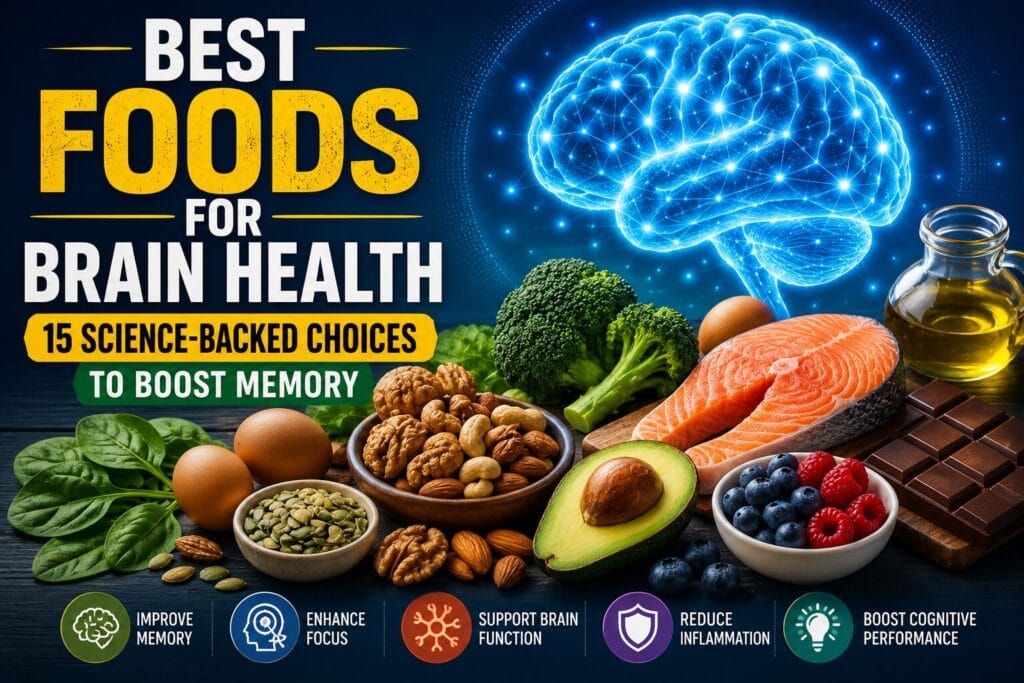
Your brain controls every thought, decision, emotion, and movement you make. Just like your heart and muscles, it requires the right nutrition to perform at its best. Choosing the best foods for brain health can improve memory, sharpen concentration, support learning, and even reduce the risk of age-related cognitive decline.
Scientific research continues to show that nutrition plays a vital role in maintaining healthy brain function throughout life. While no single food can prevent neurological diseases, eating a balanced diet rich in antioxidants, healthy fats, vitamins, and minerals helps protect brain cells and supports communication between neurons.
Whether you’re a student preparing for exams, a busy professional managing demanding workloads, or an older adult looking to preserve cognitive function, making smart food choices can have lasting benefits.
In this guide, you’ll discover the best foods that support brain health, understand why they work, and learn practical ways to include them in your daily meals. The recommendations are based on current nutritional science and are suitable for readers in both the United States and the United Kingdom.
Why Nutrition Matters for Brain Health
Your brain represents only about 2% of your body weight, yet it consumes approximately 20% of your daily energy. This makes nutrition one of the most important factors influencing cognitive performance.
A healthy diet helps:
- Build new brain cells
- Improve communication between neurons
- Reduce inflammation
- Protect against oxidative stress
- Maintain healthy blood flow to the brain
- Support neurotransmitter production
Over time, poor eating habits can negatively affect concentration, mood, and memory.
How Food Affects Memory and Focus
The nutrients you consume directly influence how your brain functions.
Healthy fats improve communication between brain cells.
Antioxidants protect neurons from damage caused by free radicals.
B vitamins support nerve health and energy production.
Protein provides amino acids needed to produce neurotransmitters like dopamine and serotonin.
Complex carbohydrates provide steady glucose, the brain’s preferred energy source.
When these nutrients are lacking, mental fatigue, brain fog, and reduced concentration may occur.
15 Best Foods for Brain Health
1. Fatty Fish
Examples include:
- Salmon
- Sardines
- Mackerel
- Trout
Fatty fish are among the richest sources of omega-3 fatty acids, especially DHA, which forms a major structural component of the brain.
Benefits
- Supports memory
- Improves learning ability
- Reduces inflammation
- Supports healthy aging
Example:
Many Americans and Britons now include grilled salmon once or twice weekly as part of heart-healthy and brain-friendly meal plans.
2. Blueberries
Blueberries contain powerful antioxidants called anthocyanins.
These compounds help reduce oxidative stress while improving communication between brain cells.
Benefits include:
- Better memory
- Improved learning
- Reduced inflammation
- Protection against cognitive decline
Fresh or frozen blueberries provide similar nutritional benefits.
3. Leafy Green Vegetables
Excellent choices include:
- Spinach
- Kale
- Swiss chard
- Broccoli
These vegetables provide:
- Vitamin K
- Folate
- Vitamin C
- Lutein
Research suggests people who regularly consume leafy greens may experience slower cognitive aging.
4. Walnuts
Walnuts resemble the human brain—and while appearance doesn’t determine nutrition, they’re genuinely one of the healthiest nuts for cognitive support.
They contain:
- Omega-3 fats
- Vitamin E
- Polyphenols
- Magnesium
Eating a handful several times each week may support long-term brain function.
5. Eggs
Eggs provide several nutrients linked to brain performance.
Key nutrients include:
- Choline
- Vitamin B12
- Folate
- Protein
Choline helps produce acetylcholine, a neurotransmitter involved in learning and memory.
For breakfast, eggs paired with whole-grain toast and vegetables create a balanced brain-friendly meal.
6. Dark Chocolate
Dark chocolate with at least 70% cocoa contains flavonoids that improve blood flow to the brain.
Potential benefits include:
- Better focus
- Improved mood
- Enhanced memory
- Reduced mental fatigue
Moderation remains important because chocolate also contains calories and added suger.
7. Avocados
Avocados are packed with heart-healthy monounsaturated fats, which support healthy blood circulation to the brain. Since the brain relies on a constant supply of oxygen-rich blood, healthy circulation is essential for optimal cognitive performance.
Key Nutrients
- Monounsaturated fats
- Vitamin K
- Folate
- Vitamin E
- Potassium
Benefits
- Improves concentration
- Supports healthy blood flow
- Helps maintain cognitive function
- May reduce inflammation
Example (USA & UK):
Many people enjoy avocado toast on whole-grain bread for breakfast or add sliced avocado to salads and sandwiches for a brain-friendly meal.
8. Pumpkin Seeds
Pumpkin seeds are small but incredibly nutrient-dense.
They contain:
- Zinc
- Magnesium
- Iron
- Copper
- Healthy fats
These nutrients support learning, memory, and communication between brain cells.
Brain Benefits
- Helps improve concentration
- Supports healthy nerve signaling
- Reduces oxidative stress
- Contributes to better mood
A handful of roasted pumpkin seeds makes an excellent afternoon snack.
9. Turmeric
Turmeric contains curcumin, a natural compound known for its anti-inflammatory and antioxidant properties.
Research suggests curcumin may:
- Improve memory
- Reduce inflammation
- Support mood
- Encourage the growth of new brain cells
Because curcumin is absorbed more effectively with black pepper, many recipes combine the two ingredients.
10. Green Tea
Green tea contains two important compounds:
- Caffeine
- L-theanine
Unlike coffee, green tea often provides a calmer, more sustained level of alertness.
Benefits
- Better attention
- Improved memory
- Increased focus
- Reduced mental fatigue
Many professionals in the USA and UK choose green tea during work hours for steady mental performance.
11. Oranges
One medium orange provides an entire day’s recommended Vitamin C intake.
Vitamin C helps protect brain cells from damage caused by free radicals.
Benefits include:
- Better cognitive function
- Immune support
- Healthy aging
- Protection against oxidative stress
Other excellent Vitamin C sources include strawberries, kiwi, bell peppers, and grapefruit.
12. Whole Grains
Examples include:
- Oats
- Brown rice
- Whole wheat bread
- Quinoa
Unlike refined carbohydrates, whole grains provide a slow and steady release of glucose.
This stable energy supply helps maintain concentration throughout the day.
Why They’re Important
- Sustained mental energy
- Better focus
- Improved productivity
- Reduced afternoon energy crashes
13. Beans and Lentils
Beans and lentils provide:
- Plant protein
- Fiber
- Iron
- Folate
- Magnesium
These nutrients support healthy blood flow and consistent energy levels.
Popular choices include:
- Black beans
- Kidney beans
- Chickpeas
- Lentils
They are affordable, nutritious, and widely available across the USA and UK.
14. Tomatoes
Tomatoes contain lycopene, a powerful antioxidant that helps protect brain cells.
Research suggests diets rich in antioxidants may lower the risk of age-related cognitive decline.
Fresh tomatoes, tomato soup, and homemade pasta sauce are all nutritious choices.
15. Extra Virgin Olive Oil
Extra virgin olive oil is one of the foundations of the Mediterranean diet.
Its healthy fats and antioxidants may help:
- Improve memory
- Reduce inflammation
- Protect neurons
- Support long-term cognitive health
Use olive oil instead of butter or highly processed cooking oils whenever possible.
The Mediterranean Diet and Brain Function
The Mediterranean diet consistently ranks among the healthiest eating patterns in the world.
It emphasizes:
- Fruits
- Vegetables
- Fish
- Olive oil
- Whole grains
- Nuts
- Legumes
Multiple long-term studies suggest that people following this dietary pattern often experience better cognitive performance and a lower risk of age-related memory decline.
Example
Instead of eating processed fast food for lunch, consider:
- Grilled salmon
- Mixed salad
- Olive oil dressing
- Whole-grain bread
- Fresh fruit
This meal delivers healthy fats, antioxidants, vitamins, minerals, and fiber that support both heart and brain health.
Foods That May Harm Brain Health
Healthy eating isn’t only about adding nutritious foods—it also involves limiting foods that may negatively affect brain function.
Try to reduce:
Sugary Drinks
High sugar intake may contribute to inflammation and reduced memory performance over time.
Highly Processed Foods
Examples include:
- Chips
- Fast food
- Instant noodles
- Processed meats
These foods are often high in unhealthy fats, sodium, and preservatives.
Excess Alcohol
Heavy alcohol consumption can impair learning, memory, and decision-making.
Moderation is essential.
Trans Fats
Often found in:
- Commercial baked goods
- Fried foods
- Packaged snacks
Trans fats are linked with poorer cardiovascular and brain health.
Sample One-Day Brain-Healthy Meal Plan
Breakfast
- Scrambled eggs
- Whole-grain toast
- Blueberries
- Green tea
Morning Snack
- Walnuts
- Orange
Lunch
- Grilled salmon
- Brown rice
- Spinach salad
- Olive oil dressing
Afternoon Snack
- Greek yogurt
- Pumpkin seeds
Dinner
- Grilled chicken
- Broccoli
- Quinoa
- Mixed vegetables
Evening Snack
- A few squares of dark chocolate (70% cocoa or higher)
Benefits of Eating the Best Foods for Brain Health
Regularly eating nutrient-rich foods can provide both short-term and long-term benefits.
Short-Term Benefits
- Better concentration
- Increased productivity
- Improved mood
- More stable energy
- Enhanced learning
Long-Term Benefits
- Supports healthy aging
- Protects memory
- May reduce cognitive decline risk
- Better cardiovascular health
- Lower inflammation
- Improved overall well-being
Real-World Example
A busy office worker in New York who replaces sugary snacks with walnuts, fruit, and green tea may experience steadier energy and fewer afternoon slumps.
Similarly, a family in London following a Mediterranean-style meal plan with fish, vegetables, olive oil, and whole grains can support both heart and brain health over time.
Common Mistakes to Avoid
Even if you’re eating healthy, a few common habits can reduce the benefits of a brain-friendly diet.
1. Relying on Supplements Instead of Whole Foods
Supplements can help when prescribed, but whole foods provide a combination of nutrients, fiber, and antioxidants that work together for better health.
2. Eating Too Much Processed Food
Ultra-processed foods often contain excessive sugar, unhealthy fats, and sodium, which may negatively affect cognitive function over time.
3. Skipping Breakfast
Your brain needs a steady supply of energy. A nutritious breakfast with protein, healthy fats, and whole grains can improve focus and productivity.
4. Not Drinking Enough Water
Even mild dehydration can affect memory, mood, and concentration. Aim to stay hydrated throughout the day.
5. Expecting Overnight Results
Brain health improves through consistent healthy eating habits over months and years—not after one meal.
Expert Tips for Better Brain Health
Nutrition experts recommend combining a healthy diet with positive lifestyle habits for the best results.
- Eat at least two servings of fatty fish each week.
- Include colorful fruits and vegetables every day.
- Choose whole grains instead of refined carbohydrates.
- Snack on nuts instead of sugary treats.
- Limit sugary drinks and processed foods.
- Exercise regularly to improve blood flow to the brain.
- Aim for 7–9 hours of quality sleep each night.
- Stay mentally active by reading, learning new skills, or solving puzzles.
- Manage stress through meditation, walking, or mindfulness.
- Drink enough water throughout the day.
Pros and Cons of a Brain-Healthy Diet
| Pros | Cons |
|---|---|
| Improves memory and concentration | Some foods (salmon, nuts) can be expensive |
| Supports healthy aging | Requires meal planning |
| Reduces inflammation | Results take time |
| Supports heart health | Fresh produce needs regular shopping |
| Helps maintain energy levels | Lifestyle changes require consistency |
| May reduce risk of cognitive decline | Healthy eating may initially feel challenging |
Comparison Table: Brain-Friendly Foods
| Food | Key Nutrient | Main Benefit |
| Salmon | Omega-3 | Memory and learning |
| Blueberries | Antioxidants | Protects brain cells |
| Walnuts | Healthy fats | Cognitive support |
| Eggs | Choline | Neurotransmitter production |
| Spinach | Vitamin K | Healthy brain aging |
| Green Tea | L-theanine | Better focus |
| Dark Chocolate | Flavonoids | Improved blood flow |
| Pumpkin Seeds | Zinc & Magnesium | Memory support |
| Olive Oil | Healthy fats | Reduced inflammation |
| Whole Grains | Complex carbohydrates | Steady mental energy |
Best Practices for Long-Term Brain Health
To maintain optimal cognitive function:
- Follow a Mediterranean-style eating pattern.
- Eat a variety of colorful fruits and vegetables.
- Include healthy fats in every meal.
- Choose lean proteins and fish regularly.
- Stay physically active.
- Get enough sleep every night.
- Avoid smoking.
- Limit alcohol consumption.
- Stay socially connected.
- Schedule regular health checkups.
Consistency is more important than perfection. Small daily improvements can lead to significant long-term benefits.
Conclusion
Choosing the best foods for brain health is one of the most effective ways to support memory, concentration, and overall cognitive performance. Foods rich in omega-3 fatty acids, antioxidants, vitamins, minerals, and healthy fats help protect brain cells while promoting healthy communication between neurons.
Simple dietary changes—such as eating more fatty fish, leafy green vegetables, berries, walnuts, eggs, whole grains, and olive oil—can contribute to better mental performance and long-term brain health. At the same time, reducing processed foods, sugary drinks, and trans fats can lower inflammation and support healthier aging.
Remember that nutrition is only one part of maintaining a healthy brain. Regular exercise, quality sleep, stress management, staying mentally active, and maintaining social connections all work together with a balanced diet to improve cognitive function.
Whether you’re a student, a busy professional, or an older adult looking to preserve memory, adopting healthy eating habits today can provide lasting benefits for years to come. By making informed food choices consistently, you’ll be investing not only in your brain but also in your overall health and quality of life.
Healthy eating is a lifelong journey, and every nutritious meal is a step toward a stronger, sharper, and healthier mind.