

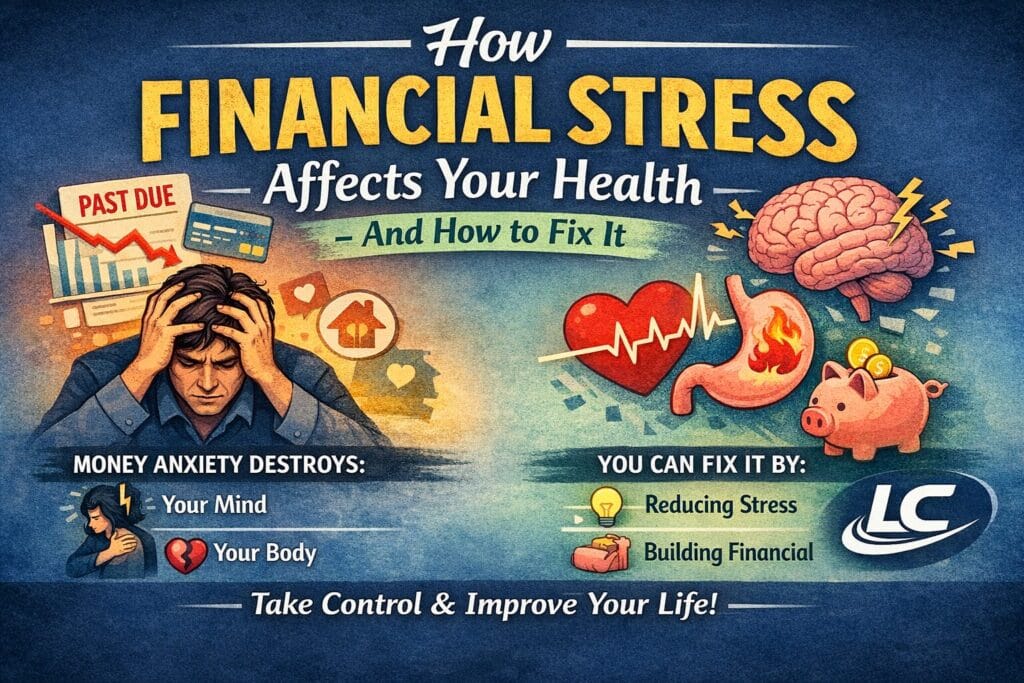
How Financial Stress Wrecks Your Body and Mind — And What You Can Actually Do About It
Introduction
You wake up at 2 a.m., staring at the ceiling. Not because of a nightmare — because of your credit card balance. Sound familiar?
Most people don’t talk about this openly, but financial stress is one of the most common — and most damaging — forms of chronic stress in modern life. According to the American Psychological Association, money consistently ranks as the top source of stress for Americans, year after year. And yet most health conversations skip right over it.
Here’s what makes it worse: financial stress doesn’t stay in your bank account. It moves into your body. It quietly raises your blood pressure, disrupts your sleep, weakens your immune system, and rewires how your brain handles decisions. People don’t connect the dots — they wonder why they’re always tired, always sick, always irritable. The answer is often sitting in their inbox with a subject line that reads “Payment Due.”
This article is going to walk you through exactly how financial stress affects your health, the science behind it, and — most importantly — what practical steps you can take to break the cycle. No vague advice. No empty optimism. Just real, grounded information that can actually help.
The Science Behind Financial Stress and Your Body
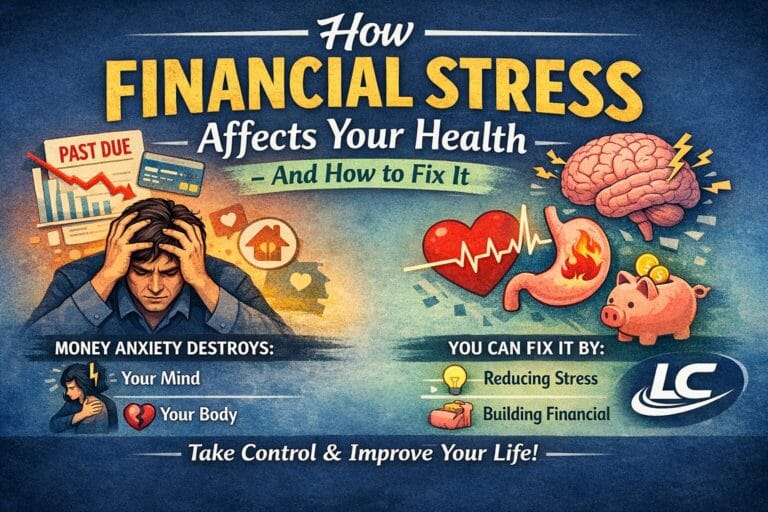
How Financial Stress Affects Your Health And ,Most people think of stress as a mental experience. But your body doesn’t separate “financial stress” from any other kind of threat. When you see a bill you can’t pay, your brain triggers the same fight-or-flight response it would if you were face-to-face with a predator.
Cortisol — The Hidden Culprit
Your adrenal glands release cortisol, your primary stress hormone, whenever your brain senses danger. In short bursts, cortisol is actually helpful — it sharpens focus and gives you energy. The problem is what happens when it never shuts off.
How Financial Stress Affects Your Health, thats Chronic financial worry keeps cortisol levels elevated for weeks, months, sometimes years. Sustained high cortisol has been linked to:
- Increased blood pressure
- Weakened immune response
- Disrupted sleep cycles
- Weight gain, particularly around the abdomen
- Memory and concentration problems
In practice, this means the person struggling with mounting debt isn’t just stressed — they’re physiologically compromised. Their body is running in emergency mode around the clock.
The Brain Under Money Pressure
Research from Princeton University found something striking: scarcity — the feeling of not having enough — actually reduces cognitive capacity. People worrying about finances have less mental bandwidth available for everything else. Decision-making suffers. Impulse control weakens. Long-term thinking becomes nearly impossible.
This creates a cruel irony: the stress of financial trouble makes it harder to think clearly about finances. You need your sharpest thinking exactly when financial stress is dulling it most.
Physical Health Conditions Linked to Financial Stress
Financial stress doesn’t just make you feel lousy. Over time, it contributes to real, diagnosable health problems. This isn’t speculation — there’s a growing body of research connecting economic hardship to physical illness.
Cardiovascular Problems
Studies have consistently shown that people with high levels of financial worry have elevated risk of heart disease. Chronic stress increases inflammation, raises blood pressure, and promotes behaviors like poor diet and inactivity — all known risk factors for heart attacks and strokes. A study published in JAMA Internal Medicine found that financial hardship was associated with significantly higher cardiovascular mortality.
Digestive Issues
Stress and the gut are deeply connected through the gut-brain axis. Many people under financial pressure experience irritable bowel syndrome (IBS), acid reflux, nausea, or appetite loss. These aren’t psychosomatic complaints — they reflect real physiological disruption. When your nervous system is in overdrive, digestion takes a back seat.
Sleep Disorders
Insomnia is one of the most reported symptoms of financial stress. Lying awake running through bills, loans, or worst-case scenarios keeps the nervous system activated when it should be winding down. Poor sleep then amplifies stress sensitivity the next day, creating a self-reinforcing cycle that’s genuinely hard to break without addressing the root cause.
Weakened Immunity
Chronic cortisol exposure suppresses immune function. People under prolonged financial stress tend to get sick more often, recover more slowly, and have a harder time fighting off common infections. During periods of economic hardship, people also tend to delay medical care — which compounds the problem significantly.
How Financial Stress Affects Mental Health
The mental health consequences of money stress are significant and often underestimated. In the US, nearly one in three adults reports that financial concerns are a “significant source” of emotional distress — and that number has trended upward with inflation and housing costs.
Anxiety and Constant Worry
Financial anxiety isn’t just ordinary worry. For many people, it becomes generalized anxiety that spills into every area of life — relationships, work performance, parenting. The brain becomes hypervigilant, scanning for threats constantly, which is exhausting.
Depression
There’s a well-documented link between financial hardship and clinical depression. Feelings of hopelessness about debt, job insecurity, or inability to provide for family can trigger depressive episodes. It runs in both directions too — depression makes it harder to manage finances, which creates more financial problems, which deepens the depression.
Relationship Strain
Money is one of the leading causes of relationship conflict and divorce in the US. Financial stress doesn’t just affect you individually — it creates friction, communication breakdown, and resentment between partners. Children in households with chronic financial stress also show elevated rates of anxiety and behavioral problems.
Most people miss this: the damage of financial stress isn’t contained to the person experiencing it. It radiates outward.
Behavioral Changes That Make Things Worse
Here’s where it gets complicated. Financial stress doesn’t just cause symptoms — it triggers behaviors that compound the original problem. Understanding these patterns is essential if you want to break the cycle.
Avoidance
One of the most common responses to financial stress is avoidance. People stop opening mail, ignore bank notifications, avoid conversations about money. This feels like relief in the moment but accelerates the underlying problem dramatically. Ignored debt grows. Missed payments hurt credit scores. Avoidance is expensive.
Emotional Spending
Stress activates reward-seeking behavior. Many people under financial pressure ironically spend more — small purchases that provide a hit of dopamine relief. This is sometimes called “retail therapy,” but in the context of financial stress, it’s a coping mechanism that backfires. It’s not a character flaw; it’s a stress response. But recognizing it is the first step to changing it.
Neglecting Health Basics
When money is tight, people skip doctor’s appointments, eat cheaper (often less nutritious) food, stop exercising, and cut back on sleep to work extra hours. These trade-offs feel necessary but accelerate health decline. The cost of neglecting health now almost always exceeds the cost of managing it — financially and physically.
How to Break the Financial Stress–Health Cycle
This is the section most articles skip. They tell you financial stress is bad, then leave you with platitudes. Let’s get specific.
Separate the Financial Problem from the Stress Response
The first move is recognizing that you have two problems, not one. You have the actual financial situation — bills, debt, income gap — and you have the stress response. Both need attention, but they need different approaches. You cannot think your way out of a cortisol spike, and you cannot meditate your way out of debt.
For the stress response, evidence-based interventions include:
- Mindfulness-based stress reduction (MBSR) — shown to lower cortisol in multiple clinical trials
- Regular aerobic exercise — one of the most effective cortisol regulators available, and free
- Sleep hygiene — treating sleep as non-negotiable, not a luxury
- Social connection — talking to someone you trust about financial worries reduces the shame component significantly
For stress management resources and practical tools, lumechronos.com offers well-researched guides on building resilience under pressure.
Get a Clear Picture of the Financial Reality
Avoidance makes everything feel worse. Most people find that once they sit down and write out exactly what they owe, what they earn, and what they spend, the reality — while often difficult — is less catastrophic than the fog of anxiety made it seem.
Simple steps:
- List every debt with the balance and interest rate
- Calculate your actual monthly income after tax
- List fixed expenses vs. discretionary spending
- Identify one specific, small action you can take this week
You don’t need to solve everything at once. You need enough clarity to take one step.
Access Support — It’s More Available Than People Think
Many Americans don’t know that nonprofit credit counseling is available for free or very low cost. The National Foundation for Credit Counseling (NFCC) connects people with certified counselors who help with debt management plans, budgeting, and negotiating with creditors. There are also federally backed assistance programs for housing, utilities, food, and healthcare that go underused because people aren’t aware of them or feel embarrassed to seek help.
If financial stress has crossed into mental health territory — persistent depression, anxiety that disrupts daily functioning, relationship breakdown — speaking with a licensed therapist is worth prioritizing. Many employers offer Employee Assistance Programs (EAPs) that include free counseling sessions.
Build Micro-Resilience While You Work on the Larger Problem
Waiting to feel better until your finances are fixed is a long wait. Building small daily habits that lower your baseline stress level makes the whole process more manageable:
- A 20-minute walk outside has measurable effects on cortisol and mood
- Reducing caffeine after noon helps significantly with financial-stress-related insomnia
- Limiting financial “doom scrolling” to a specific daily window rather than all day
- Keeping a simple gratitude practice — not as a cure, but as a counterweight
For practical wellness tools and resources that work alongside financial recovery, check out lumechronos.shop.
A Global Perspective on Financial Stress and Health
Financial stress is not uniquely American, but the US context has specific features worth understanding. Medical debt — which barely exists as a concept in most developed countries — is a major stressor for tens of millions of Americans. The link between employment and health insurance creates an additional layer of anxiety that doesn’t exist in universal healthcare systems.
Internationally, research from the UK, Germany, and Australia shows similar mind-body connections between financial hardship and health outcomes, though the specific stressors differ. People in countries with stronger safety nets still experience financial stress — housing costs, pension uncertainty, and cost-of-living pressures are global phenomena.
For a broader comparative view of financial wellness approaches across different countries, lumechronos.de offers useful global perspective.
Relevant content worth watching:
- Search YouTube: “How financial stress affects your body” — Dr. Rangan Chatterjee — a widely shared, credible breakdown
- TED Talk: “Why you should talk to strangers about money” — Tammy Lally — addresses money shame directly
- On Instagram and TikTok, search #financialwellness and #moneystress for community voices sharing real experiences
FAQ Section
Can financial stress actually make you physically sick? Yes, and this is well-supported by research. Chronic financial stress keeps your cortisol levels elevated, which suppresses immune function, disrupts sleep, raises blood pressure, and promotes inflammation. These aren’t just feelings — they’re physiological changes with real health consequences. Over time, unmanaged financial stress has been linked to increased risk of cardiovascular disease, type 2 diabetes, and anxiety disorders. The body doesn’t distinguish between financial threat and physical threat. It responds the same way.
What are the most common physical symptoms of financial stress? The most frequently reported symptoms include insomnia or disrupted sleep, tension headaches, fatigue, digestive issues (IBS, acid reflux, nausea), chest tightness, and frequent illness due to weakened immunity. Many people also experience changes in appetite — eating more or significantly less under financial pressure. If you recognize several of these and you’re also dealing with financial anxiety, the connection is likely real and worth addressing.
How does financial stress affect relationships? Money is consistently cited as a leading cause of conflict in romantic relationships and marriages in the US. Financial stress creates irritability, communication breakdown, and can trigger blame dynamics between partners. It also affects parenting — stressed parents are less emotionally available, and children pick up on household anxiety. Addressing financial stress openly as a couple, rather than in isolation, tends to significantly improve both the financial and relationship outcomes.
Is financial stress a mental health condition? Financial stress itself isn’t a diagnosis, but it frequently contributes to diagnosable mental health conditions including generalized anxiety disorder (GAD), major depressive disorder, and adjustment disorders. If financial worry is persistent, difficult to control, and interfering with daily functioning or relationships, speaking with a mental health professional is appropriate and often very helpful. Many people find that even a few sessions of therapy provide tools that change how they relate to financial uncertainty.
What’s the fastest way to reduce financial stress right now? The single most effective short-term intervention is clarity. Sit down, write out exactly what you owe and what you earn, and identify one small, concrete action you can take today. Avoidance amplifies anxiety. Action — even small action — reduces it. Pairing that with physical exercise (which directly lowers cortisol) and one honest conversation with someone you trust gives you a solid immediate foundation.
Does financial stress affect sleep, and why? Yes, significantly. Financial worry activates the sympathetic nervous system — the same system responsible for the fight-or-flight response. When this system is active at bedtime, it suppresses melatonin, elevates heart rate, and keeps the mind in a problem-solving loop. This makes falling asleep difficult and staying asleep harder. Sleep deprivation then lowers emotional resilience and rational thinking the next day, making financial decisions feel even more overwhelming. It’s a cycle, and improving sleep hygiene specifically is one of the most important interventions.
Are there free resources for people struggling with financial stress? Yes. The National Foundation for Credit Counseling (nfcc.org) connects Americans with certified nonprofit credit counselors at low or no cost. Many states have 211 helplines that connect people with local financial assistance programs. Employee Assistance Programs (EAPs) through employers often include free counseling. For mental health support specifically, the SAMHSA National Helpline (1-800-662-4357) provides free referrals. The resources exist — the barrier is most often awareness or shame, not availability.
Can improving your finances improve your health? Yes, and this is documented. Studies following people who receive debt relief or income support consistently show improvements in self-reported mental health, sleep quality, and physical wellbeing. The relationship between financial stability and health runs in both directions. Getting your financial situation more stable — even partially — tends to lower chronic stress levels in measurable ways. This is why financial wellness is increasingly being framed as a public health issue, not just a personal finance issue.
Key Takeaways
- Financial stress triggers a real physiological stress response — elevated cortisol, weakened immunity, disrupted sleep, and cardiovascular strain — not just emotional discomfort.
- The brain under financial pressure has genuinely reduced cognitive capacity, making it harder to solve the very problem causing the stress.
- Avoidance and emotional spending are common stress responses that make financial situations significantly worse over time.
- Breaking the cycle requires addressing both the stress response (exercise, sleep, mindfulness, social connection) and the financial situation (clarity, planning, professional help) — not one or the other.
- Free and low-cost financial counseling resources exist and are underused — awareness and shame are the main barriers, not availability.
- Financial stress affects relationships and children, not just the individual experiencing it — treating it as a household issue tends to produce better outcomes.
- Improving financial stability has measurable positive effects on physical and mental health — the relationship runs both ways.
Conclusion
Financial stress is a health issue. That’s not a metaphor — it’s physiology. The anxiety you feel about your bank account is moving through your body in real and measurable ways, and ignoring that connection doesn’t make either problem easier to solve.
The good news is that the cycle is breakable. Not all at once, and not without effort — but breakable. Getting clarity on your actual financial situation, accessing the support that’s available to you, and building small daily habits that lower your baseline stress level creates real forward momentum. You don’t need to have it all figured out. You need to take one step, then another.
If this article gave you something useful, share it with someone who might need it. Financial stress thrives in silence and shame — talking about it openly is itself a form of relief. And if you want to keep exploring tools and strategies for building financial and personal resilience, lumechronos.com and lumechronos.shop are good places to continue.
You’re not alone in this. And you’re more capable of navigating it than financial stress wants you to believe.
money stress and mental health
This article is based on insights from real-time trends and verified sources including trusted industry platforms.