
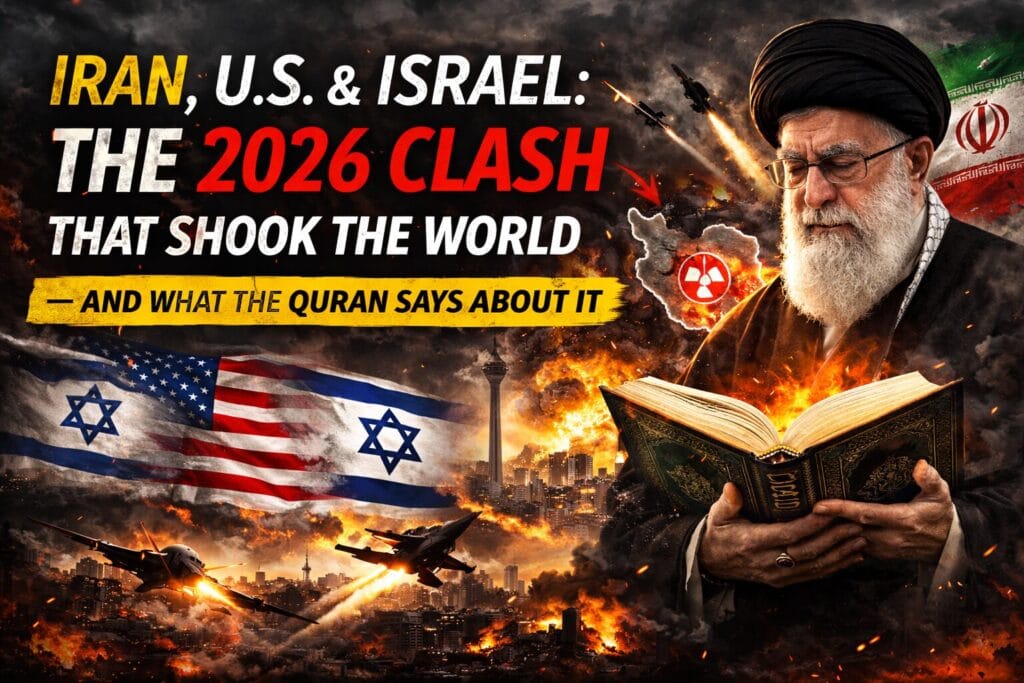
Introduction: The Morning Everything Changed
On the morning of Saturday, February 28, 2026, millions of Iranians woke up and went about their day — parents dropping children off at school, workers heading to offices, students commuting to universities. It was an ordinary morning in a country that had lived under extraordinary pressure for decades. Then the sky above Tehran turned to fire.
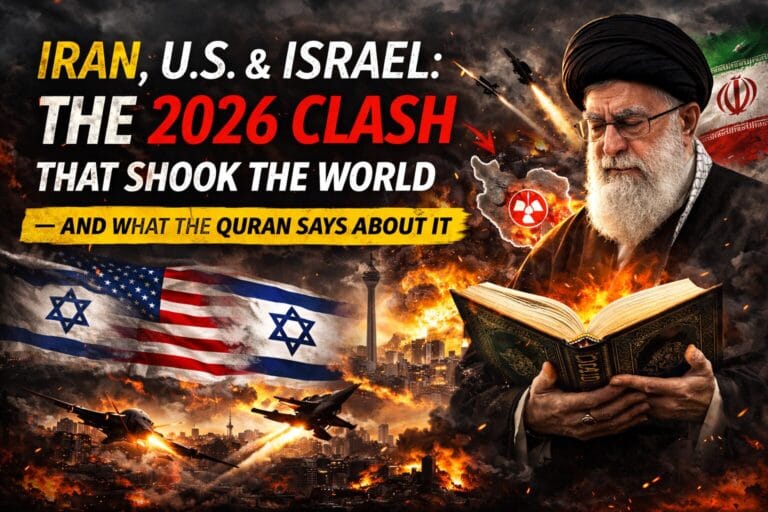
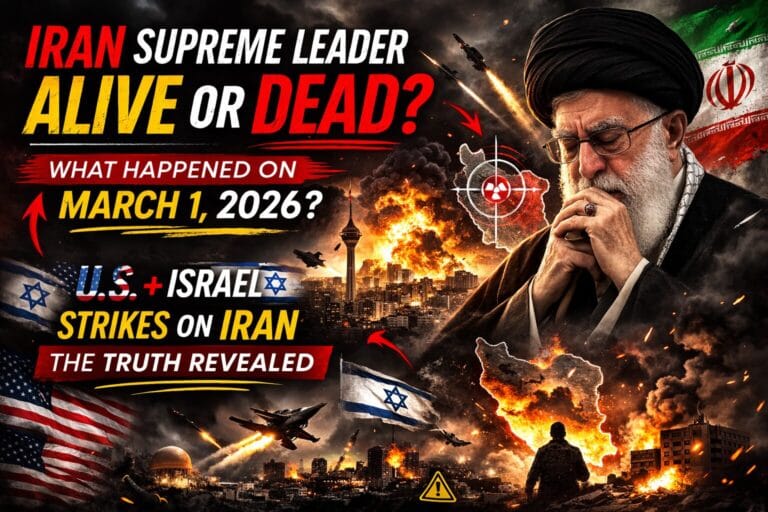
Within hours, the world learned that the United States and Israel had launched a coordinated military operation against Iran — the largest such assault in the region since the Iraq War. The operation carried two names: the US called it Operation Epic Fury, while Israel codenamed it Roaring Lion. Explosions rocked not just Tehran but Isfahan, Qom, Karaj, Kermanshah, and more. According to early reports confirmed by multiple international outlets, Iran’s supreme leader, Ayatollah Ali Khamenei, was killed in the strikes. 📺 Watch: First footage of the strikes on Tehran — Al Jazeera English
The tension between Iran, the US, and Israel did not erupt overnight. It grew out of decades of geopolitical rivalry, crippling sanctions, devastating proxy wars across Syria, Yemen, Lebanon, and Iraq, repeatedly collapsed nuclear negotiations, and rising desperation — on all sides. For years, analysts had warned that the relationship between Iran and the US was a tinderbox, and that Israel’s repeated calls for decisive action against Iran’s nuclear programme could eventually trigger open war. That warning became reality on February 28, 2026. 🔗 Background: The long road to conflict — Reuters
The Iran–US–Israel conflict of 2026 didn’t just shake the Middle East — it sent shockwaves through every Muslim-majority nation, every global stock market, and every diplomatic corridor from Washington to Beijing. World leaders scrambled to respond. Oil prices surged. Emergency sessions were called at the United Nations. And on social media, billions of people watched in real time as one of the most consequential military escalations in modern history unfolded. 🔗 UN Emergency Session response coverage — BBC News | 📺 Watch: UN Security Council emergency meeting — UN Web TV
Most people watching the news are asking the same questions: How did we get here? What is the full story behind the US and Israel’s decision to strike Iran? What does this mean for the region and the world? And for millions of Muslims across the globe, there is another urgent and deeply personal question — what does Islam actually say about all of this? What guidance does the Quran offer when entire nations are engulfed in war, when civilians suffer, and when justice seems impossibly far away? 🔗 Analysis: Why the US backed Israel’s strike on Iran — The Guardian
This article breaks it all down with honesty and care. We will walk through the full timeline of events from February 27, 2026 onward, explain the deeper historical and political background of the Iran–US–Israel standoff, cover the devastating human cost on the ground inside Iran, and then look carefully at what the Quran teaches about war, oppression, justice, and the moral responsibilities of nations. 📺 Watch: Full timeline of the Iran strikes explained — DW News | 🔗 Full coverage and live updates — Associated Press
No propaganda. No sloganeering. No tribal loyalties. Just clear facts, verified sources, and honest reflection on one of the most defining moments of our generation — a moment that will shape the relationship between Iran, the US, and Israel for years, perhaps generations, to come.
What Happened on February 27–28, 2026 — A Full Timeline of the Strikes
To understand what’s happening right now, you need to see the full picture in sequence. This wasn’t a sudden decision made overnight. It was a carefully planned escalation that had been building for months — possibly years.
The Days Before the Strikes
On February 6, 2026, Iran and the US began indirect nuclear negotiations in Muscat, Oman, mediated by the Omani foreign minister. Both sides called the talks “a good start” and agreed to continue. Al Jazeera Just weeks earlier, the ground in Iran was already shaking — not from bombs, but from mass protests.
Beginning in late December 2025, massive nationwide anti-government protests erupted across Iran, driven largely by economic crisis, the collapse of the rial, and soaring prices. The protests spread to over 100 cities, becoming the largest demonstrations since the 1979 revolution. Wikipedia The Iranian government responded with violent repression, and the international community — especially the US — was watching closely.
On January 13, 2026, Trump publicly told Iranians to “keep protesting” and suggested that help was on the way. The US began bolstering its military presence near Iran. Al Jazeera A second round of nuclear talks was scheduled in Geneva for late February. By all accounts, those talks ended without a breakthrough — and two days later, the bombs fell.
February 28, 2026: The Strikes Begin
At approximately 9:27 AM Tehran time, Iran’s Fars news agency reported a series of explosions in the capital. Several missiles struck University Street and the Jomhouri area, close to Iran’s Islamic Revolutionary Guard Corps headquarters. Al Jazeera
US President Donald Trump announced that the United States had launched a “major combat operation” with the stated aim of toppling the regime in Tehran, eliminating Iran’s nuclear and missile programs, and destroying its navy. Council on Foreign Relations
The initial attacks targeted key officials, military commanders, and facilities — including the compound of Supreme Leader Ali Khamenei, which satellite images showed was heavily damaged or destroyed. CBS News reported that 40 Iranian officials had been killed in the strikes. At around 5:30 PM Central European Time, the Red Crescent reported that 201 civilians had been killed and 747 injured in Iran. Wikipedia
Iran Fights Back
Iran’s response was swift and wide. The Iranian Revolutionary Guard Corps pledged revenge and announced it had launched attacks on 27 bases hosting US troops in the Middle East, as well as Israeli military facilities in Tel Aviv. Iran declared 40 days of national mourning. Al Jazeera
Iran’s retaliatory strikes targeted Israel and several Gulf states that host US military assets — Qatar, the UAE, Bahrain, Kuwait, and Saudi Arabia. Iran’s Foreign Ministry accused Israel and the US of violating the United Nations charter and pledged a harsh response. Al Jazeera
In practice, the fallout was immediate and global. Stock markets trembled. The Strait of Hormuz — through which roughly 20% of the world’s oil passes — experienced disruptions. Governments across Europe, Asia, and the Arab world scrambled to respond.
The Background You Need — How Did It Reach This Point?
Most people watching the news are confused because they’re seeing the final chapter without having read the earlier ones. The Iran-US-Israel conflict 2026 has roots that go back years.
From October 7, 2023, to the 2025 War
Everything accelerated after the October 7, 2023 Hamas attack on Israel and Israel’s subsequent war in Gaza. Iran-backed groups — Hamas, Hezbollah, the Houthis — were drawn into the broader conflict. Israel systematically degraded them one by one.
In June 2025, Israel launched major air strikes against Iranian nuclear and military facilities. Iran responded with large-scale missile and drone attacks on Israeli cities. On June 22, 2025, the US struck Iranian nuclear facilities at Natanz, Fordow, and Isfahan. After 12 days, a ceasefire took effect — Iran said at least 610 of its citizens were killed in that conflict. Al Jazeera
That 2025 war was supposed to be a warning. Instead, it became a prelude.
Nuclear Talks That Failed at the Finish Line
The last round of US-Iran nuclear talks ended in Switzerland on Thursday, February 26, 2026 — with Iran agreeing “never” to stockpile enriched uranium. The Omani foreign minister who mediated the talks said there had been “significant” progress. That progress, however, was not enough to prevent the US from taking military action two days later. CNN
This is the part that stunned many international observers. Talks were happening. Progress was being made. And then bombs fell anyway. The Washington Post reported that Trump’s decision to attack Iran came after Saudi Crown Prince Mohammed bin Salman and the Israeli government lobbied him repeatedly to make the move. Wikipedia
The Stated Goals of the Operation
President Trump said the campaign’s objectives included destroying Iran’s missile capabilities, targeting Iran’s navy, and disrupting Iran-backed armed groups in the region. He addressed the Iranian public, saying the country “will be yours to take” — framing the operation as support for Iranian civilians against their government. Council on Foreign Relations
Critics, however, were quick to point out the contradiction: bombing a country in the name of liberating its people.
The Human Cost and Regional Fallout — Who Is Suffering?
War is always most brutal at the human level. While governments trade statements, ordinary people bleed.
An Israeli strike hit an elementary school for girls in Minab, a city in the Hormozgan province of southern Iran, killing at least 40 people, according to Iran’s state-run IRNA news agency. Al Jazeera The image of children being pulled from rubble circulated online within hours, drawing condemnation from human rights organizations worldwide.
In the UAE, one person was killed in Abu Dhabi after Iranian missiles were intercepted. Qatar’s Defence Ministry said it had successfully thwarted a number of attacks. Explosions were also reported in Bahrain and Kuwait. Al Jazeera
On the US side, American Central Command stated it had suffered no combat-related casualties, and that damage to US military installations had been minimal. CNN But that calculus can change quickly in an escalating conflict.
The Strait of Hormuz — the narrow waterway that carries roughly one-fifth of the world’s oil — was disrupted. The clashes disrupted traffic in the Strait of Hormuz, a crucial shipping route located between the Persian Gulf and the Gulf of Oman. CNN For ordinary people paying grocery bills and fuel prices around the world, this conflict is already beginning to hurt in ways they may not yet realize.
For a deeper look at how global events shape everyday economic life, the analytical guides at lumechronos.com provide helpful context on geopolitical risk and its downstream effects.
The World’s Reaction — Who Said What, and Why It Matters
The international response to the Iran-US-Israel conflict 2026 has been a study in division.
Oman, the main mediator in the US-Iran negotiations, expressed dismay at the outbreak of violence. Its foreign minister said the conflict would not serve US interests or global peace, and urged Washington “not to get sucked in” further. Al Jazeera
The EU urged “maximum restraint” while French President Emmanuel Macron called for an urgent meeting of the UN Security Council, warning the conflict carried “serious consequences” for international peace and security. Al Jazeera
EU security analysts warned that the crisis risked “a dangerous nuclear proliferation cascade” if diplomacy continued to collapse. Wikipedia
Inside the US, bipartisan lawmakers raised concerns about the legal basis for military action, citing the need for updated authorizations and clearer definitions of US objectives. Wikipedia
Iran’s own foreign minister, Abbas Araghchi, told NBC News: “This is a war of choice by the United States, and they have to pay for that.” Council on Foreign Relations
What’s striking about this moment is that almost no major world power outside of Israel expressed unequivocal support for the strikes. That diplomatic isolation — even if it has no immediate military consequence — matters for long-term stability. You can explore comparative geopolitical frameworks and how different nations process international law through resources at lumechronos.de.
What Does the Quran Say? Islam’s Teaching on War, Justice, and Peace
This is a question millions of Muslims around the world are asking right now. And it deserves a careful, honest answer — not a political one.
It’s important to say upfront: the Quran doesn’t endorse any particular nation-state or government. It speaks to principles — justice, mercy, restraint, and the protection of human life — that apply universally.
On War and Its Conditions
The Quran does not prohibit war entirely. It recognizes that human society is imperfect and that oppression is real. But it places strict conditions on when fighting is permissible and how it must be conducted.
The most foundational principle is in Surah Al-Baqarah (2:190): “Fight in the cause of Allah against those who fight you, but do not transgress limits. Indeed, Allah does not love those who transgress.”
The word “transgress” here is key. Classical Islamic scholars — including Ibn Kathir and Al-Tabari — interpreted this to mean that even in war, there are lines that must not be crossed: civilians may not be targeted, crops may not be burned, places of worship may not be destroyed, and women and children may not be harmed. These rules predate modern international humanitarian law by over a thousand years.
On Killing Civilians and Children
The killing of civilians — including the children in that school in Minab — is addressed clearly in Surah Al-Maida (5:32): “Whoever kills a soul — unless for a soul or for corruption in the land — it is as if he had killed all mankind. And whoever saves one — it is as if he had saved all mankind.”
This verse applies regardless of which side does the killing. It is not a verse that can be selectively applied to one nation or religion. The sanctity of human life, in Islamic ethics, is absolute and non-negotiable.
On Oppression and Standing Against Injustice
The Quran is also deeply sympathetic to those who are oppressed. Surah An-Nisa (4:75) asks: “And what is the matter with you that you fight not in the cause of Allah and the oppressed among men, women, and children?” — a verse that Muslim scholars have historically used to justify standing with the weak against the powerful.
At the same time, the Quran consistently warns against allowing righteous anger to become cruelty. Surah Al-Maida (5:8) says: “And do not let the hatred of a people prevent you from being just. Be just — that is closer to righteousness.”
On Peace and Its Pursuit
Perhaps most directly relevant to the current crisis is Surah Al-Anfal (8:61): “And if they incline to peace, then incline to it and rely upon Allah. Indeed, it is He who is the Hearing, the Knowing.”
This verse makes peacemaking not just permissible but preferred — even recommended — when the other side shows willingness. The nuclear talks that were happening just days before the strikes represent exactly that kind of opening. Many Muslim scholars and theologians would argue that abandoning those talks for bombs raises serious ethical questions under Islamic principles.
The Broader Islamic Ethical Framework
Islam does not view geopolitics through a simple “Muslim vs. non-Muslim” lens. It views the world through a lens of justice and injustice. A Muslim leader who kills his own people unjustly is condemned by the same texts as a foreign power that bombs civilians. The Quran’s framework is not tribal — it is moral.
For further reading on Islamic ethics, history, and global perspectives on faith and modernity, the educational resources at lumechronos.com offer thoughtfully curated guides.
What Happens Next? The Scenarios the World Is Watching
Predicting the future in a conflict this volatile is genuinely difficult. But there are a few clear scenarios that analysts and policymakers are discussing.
The first is a ceasefire and negotiated settlement — the optimistic scenario. Iran’s foreign minister expressed that Iran was “certainly interested in de-escalation.” Council on Foreign Relations If back-channel diplomacy holds and major players like Oman, Qatar, and the EU can bring both sides to the table, a pause in hostilities is possible. But it requires political will that currently seems in short supply.
The second scenario is continued escalation. If US military personnel are killed in Iranian retaliatory strikes, the administration would face significant pressure to strike Iran again. Council on Foreign Relations Each exchange raises the stakes and narrows the window for diplomacy.
The third scenario involves Iran’s internal politics. With Khamenei killed and the country already shaken by months of protests, a political transition inside Iran is underway. Whether that transition leads to a more moderate government — or to chaos and fragmentation — will shape the region for decades.
The fourth, most alarming scenario involves nuclear weapons. EU security analysts warned the crisis risks a “dangerous nuclear proliferation cascade.” Wikipedia If Iran concludes that only a nuclear deterrent can protect it from regime change, the world faces a far more dangerous future.
Most people following this conflict want one thing: it to end. And it can — but not through the logic of pure force alone.
❓ FAQ Section — People Also Ask
Q1: What exactly happened on February 28, 2026, in Iran? On February 28, 2026, the United States and Israel launched a coordinated military operation against Iran, codenamed “Operation Epic Fury” and “Roaring Lion” respectively. Airstrikes hit Tehran and multiple other Iranian cities, killing Supreme Leader Ali Khamenei and reportedly 40 senior Iranian officials. Iran’s Red Crescent reported over 200 civilian deaths in the first hours. Iran retaliated with missile strikes on Israel and US military bases across the Gulf region, including in Qatar, Bahrain, Kuwait, and the UAE. It was the most serious US-Iran military confrontation in modern history.
Q2: Why did the US and Israel attack Iran in 2026? The US stated that its goals were to eliminate Iran’s nuclear and missile programs, destroy Iran’s navy, and remove what it called an existential threat to the region. President Trump framed the strikes as protecting American people and supporting Iranian civilians. However, critics — including the Iranian foreign minister and some US lawmakers — pointed out that the attacks came just two days after nuclear talks showed “significant progress,” raising serious questions about whether diplomacy was genuinely exhausted before military action was taken.
Q3: What does the Quran say about war between nations? The Quran permits war only under strict conditions — primarily when a community is under aggression or oppression. Even then, it prohibits targeting civilians, children, women, places of worship, and non-combatants. Key verses include Al-Baqarah (2:190), which prohibits transgressing limits in warfare, and Al-Maida (5:32), which equates killing an innocent person with killing all of humanity. The Quran also strongly encourages peacemaking, with Al-Anfal (8:61) urging Muslims to accept peace when the other party inclines toward it.
Q4: What does Islam say about killing civilians in war? In Islamic jurisprudence, killing civilians — particularly women, children, and non-combatants — is strictly forbidden, regardless of the circumstances or the religion of those killed. This principle is derived directly from Quranic verses and reinforced by the Prophet Muhammad’s instructions to his commanders. Many Muslim scholars today cite these teachings when condemning violence against civilians, whether by state militaries or by non-state armed groups.
Q5: How did Iran retaliate to the US-Israel strikes? Iran launched retaliatory missile and drone strikes against 27 US military bases across the Middle East, as well as military targets in Israel. Countries including Qatar, the UAE, Bahrain, Kuwait, and Saudi Arabia were struck by Iranian missiles, most of which were intercepted. Iran declared 40 days of national mourning and described all American and Israeli assets in the region as “legitimate targets.” The IRGC pledged that retribution would continue until its demands for justice were met.
Q6: Were nuclear talks between Iran and the US happening before the strikes? Yes — and that’s one of the most confusing and contested aspects of this conflict. The US and Iran held indirect nuclear talks in Muscat on February 6, 2026. A second round concluded in Geneva just two days before the strikes, with Iran reportedly agreeing to stop stockpiling enriched uranium. The Omani mediator described the progress as “significant.” Critics of the US decision argue that attacking Iran while negotiations were progressing undermined international law and diplomatic good faith.
Q7: What does the Quran say about oppression and standing against it? The Quran has some of its most powerful language around the topic of oppression (dhulm). Surah An-Nisa (4:75) calls on believers to stand with the oppressed. Surah Al-Hashr (59:19) warns those who forget justice that they will ultimately harm themselves. At the same time, the Quran consistently reminds that the response to oppression must not itself become oppression — Surah Al-Maida (5:8) commands justice even toward enemies. Islamic scholars across traditions — Sunni, Shia, and others — use these texts to argue both for resistance to injustice and against cycles of retaliatory cruelty.
Q8: What are the risks of the Iran-US-Israel conflict escalating further? The risks are real and multi-layered. The most immediate is the possibility of US casualties in Iranian retaliatory strikes, which would likely trigger a new wave of US attacks. The broader risk is a regional war pulling in Gulf states, Lebanon, Iraq, and potentially others. The deepest risk, as EU analysts have noted, is nuclear — if Iran concludes that nuclear weapons are the only way to deter future attacks, global non-proliferation efforts could collapse. The conflict also carries serious economic risks through oil supply disruption via the Strait of Hormuz.
🧾 Key Takeaways
The most important thing to understand about this conflict is that it didn’t happen in a vacuum — it is the product of years of failed diplomacy, proxy wars, domestic unrest in Iran, and political calculations made in Washington and Jerusalem that the rest of the world is now living with. The killing of civilians — including children in a school in Minab — is condemned by international law and by the core moral teachings of Islam alike.
The Quran does not offer a simple political verdict on who is “right” in this conflict; it offers a moral framework that calls every actor to account. The nuclear talks that were quietly making progress represent the path not taken, and the world’s best hope now lies in whether cooler heads can find a way back to that table. For ordinary Iranians — caught between a repressive government, an economic crisis, and now foreign bombs — this moment is not a political abstraction; it is a daily survival.
Conclusion: The World Needs More Than Weapons Right Now
What’s happening between Iran, the United States, and Israel in 2026 is a crisis unlike anything the Middle East has seen in decades. It is messy, dangerous, and heartbreaking. And it raises questions that go far beyond military strategy — about justice, about human dignity, and about the kind of world we want to live in.
The Quran’s teachings don’t belong to any government or army. They belong to conscience. And conscience — wherever it lives — is calling for restraint, for the protection of civilians, for the return to dialogue, and for the recognition that lasting security cannot be built on bombs alone.
If you found this article useful, please share it with someone trying to understand what’s happening. Explore our deeper educational guides at lumechronos.com for context on global conflicts and their historical roots. For tools that help you navigate geopolitical information more effectively, visit lumechronos.shop. And for a European and global perspective on international law and humanitarian issues, check out lumechronos.de.
Have a perspective to add? Drop your thoughts in the comments below — this is a conversation the world needs to have.
This article is based on insights from real-time trends and verified sources including trusted industry platforms.