




Introduction
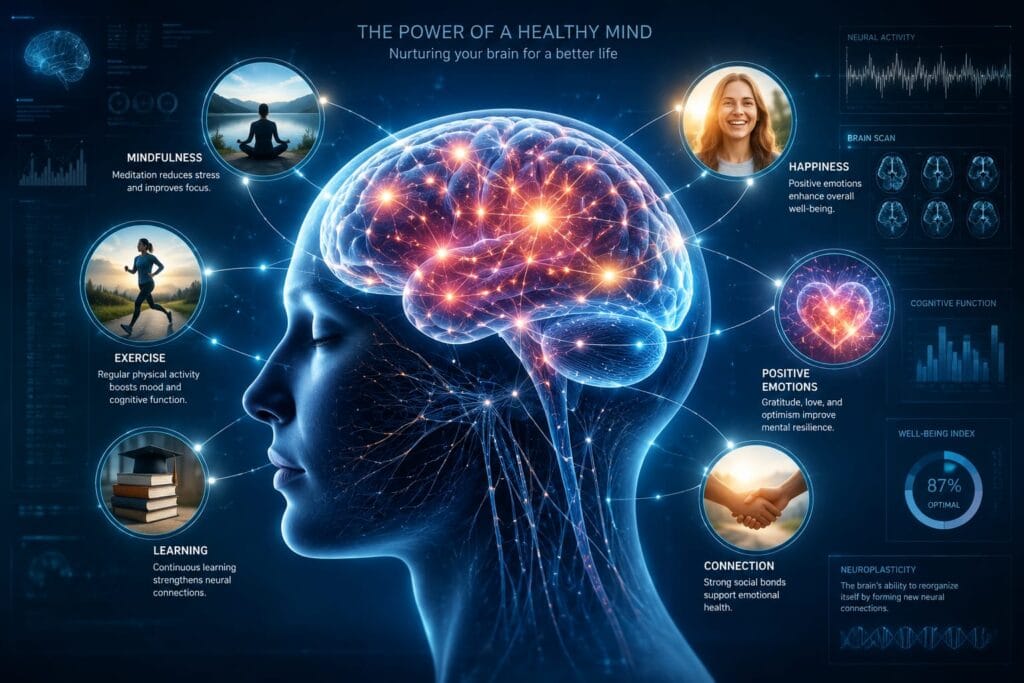
For decades, scientists believed that the human brain stopped developing after childhood. Once neural connections were formed, they were thought to remain relatively fixed throughout life. Modern neuroscience has completely changed that understanding. Today, researchers know that the brain can continuously adapt, reorganize, and create new neural pathways—a remarkable ability known as neuroplasticity.
Understanding neuroplasticity explained is essential for anyone interested in personal growth, mental health, and long-term happiness. Neuroplasticity allows people to learn new skills, recover from setbacks, develop healthier habits, and even reshape thought patterns that contribute to stress and negativity.
In both the United States and the United Kingdom, growing awareness of mental wellness has increased interest in neuroscience-backed methods for improving happiness. Studies suggest that positive habits such as gratitude, mindfulness, exercise, and meaningful social connections can physically influence brain structure over time.
But can you truly rewire your brain for happiness? The answer is more complex than a simple yes or no. While happiness is influenced by genetics, environment, and life circumstances, neuroplasticity gives individuals the power to strengthen neural pathways associated with positive emotions and resilience.
This guide explores the science behind neuroplasticity, practical techniques for brain rewiring, and how you can use this knowledge to create a happier and healthier life.
What Is Neuroplasticity?
Neuroplasticity refers to the brain’s ability to change its structure and function in response to experiences, learning, and environmental influences.
Simply put, the brain is not hardwired. Instead, it continuously adapts based on what you think, feel, and do repeatedly.
Types of Neuroplasticity
Structural Plasticity
Changes occur in the physical structure of the brain as new neural connections develop.
Functional Plasticity
The brain reallocates functions from damaged areas to healthy regions when necessary.
Synaptic Plasticity
Strengthening or weakening of communication between neurons based on repeated activity.
How Neuroplasticity Works
Your brain contains approximately 86 billion neurons. These neurons communicate through electrical and chemical signals.
Whenever you:
- Learn something new
- Practice a skill
- Form a habit
- Experience emotions
- Repeat a behavior
Neural pathways become stronger.
This concept is often summarized as:
“Neurons that fire together, wire together.”
Repeated positive experiences strengthen beneficial neural networks, while repeated negative thoughts reinforce stress-related pathways.
The Connection Between Neuroplasticity and Happiness
Happiness is not merely an emotion—it involves complex brain systems.
Several brain regions contribute to happiness:
- Prefrontal cortex
- Amygdala
- Hippocampus
- Reward system
When people consistently engage in positive behaviors, these areas become more efficient at supporting emotional well-being.
Why Negative Thinking Becomes Automatic
If someone spends years worrying, criticizing themselves, or focusing on negative outcomes, the brain becomes highly efficient at those patterns.
The good news?
Neuroplasticity means these patterns can change.
With practice, new pathways focused on optimism, gratitude, and resilience can become stronger than old negative patterns.
Scientific Evidence Supporting Brain Rewiring
Research in neuroscience has repeatedly demonstrated that experiences physically alter brain structure.
Mindfulness Studies
Brain imaging studies have shown that regular meditation can increase gray matter density in areas associated with emotional regulation and self-awareness.
Learning New Skills
Adults learning a new language or musical instrument often show measurable brain changes within months.
Exercise Research
Aerobic exercise promotes the production of Brain-Derived Neurotrophic Factor (BDNF), a protein that supports neuron growth and connectivity.
Positive Psychology Findings
Research suggests gratitude practices can activate neural circuits linked to reward and positive emotions.
Practical Ways to Rewire Your Brain for Happiness
Practice Gratitude Daily
Gratitude shifts attention away from problems toward positive experiences.
Try:
- Writing three things you’re grateful for each day
- Thanking people more often
- Keeping a gratitude journal
Exercise Regularly
Physical activity improves:
- Mood
- Memory
- Cognitive performance
- Stress resilience
Recommended activities include:
- Walking
- Running
- Cycling
- Swimming
Build Strong Social Connections
People with supportive relationships tend to experience greater life satisfaction.
Examples include:
- Family gatherings
- Community involvement
- Volunteering
- Meaningful friendships
Learn New Skills
Challenging your brain creates new neural pathways.
Examples:
- Learning Spanish
- Playing guitar
- Coding
- Photography
Practice Mindfulness
Mindfulness helps interrupt automatic negative thinking patterns.
Simple techniques include:
- Deep breathing
- Guided meditation
- Body scans
- Mindful walking
Improve Sleep Quality
Sleep plays a critical role in memory consolidation and brain repair.
Aim for:
- 7–9 hours nightly
- Consistent sleep schedule
- Reduced screen exposure before bed
Real-World Examples
Example 1: Workplace Stress in London
A marketing manager in London experiences chronic stress and burnout.
By implementing:
- Daily mindfulness
- Regular exercise
- Gratitude journaling
They gradually strengthen neural pathways associated with calmness and emotional regulation.
Example 2: Career Transition in New York
A professional switching careers learns data analytics.
Through continuous learning and practice, neuroplasticity helps the brain adapt to new challenges and opportunities.
Example 3: Retirement in Manchester
A retiree joins local community groups and learns painting.
These activities promote social engagement and cognitive stimulation, supporting emotional well-being.
Benefits of Neuroplasticity
Mental Health Benefits
- Reduced stress
- Better emotional control
- Increased resilience
- Enhanced optimism
Cognitive Benefits
- Improved memory
- Faster learning
- Greater creativity
- Better problem-solving
Physical Benefits
- Recovery after injury
- Improved coordination
- Enhanced brain health
Lifestyle Benefits
- Stronger relationships
- Better productivity
- Higher confidence
- Greater life satisfaction
Common Mistakes People Make
Expecting Instant Results
Brain rewiring requires consistency and patience.
Focusing Only on Positive Thinking
Action matters more than wishful thinking.
Ignoring Physical Health
Poor sleep, inactivity, and unhealthy diets can limit neuroplasticity.
Giving Up Too Soon
New neural pathways strengthen gradually through repetition.
Multitasking Excessively
Constant distractions make it harder for the brain to build strong connections.
Expert Tips for Lasting Results
Start Small
Choose one habit and practice it consistently.
Use Habit Stacking
Attach a new habit to an existing routine.
Example:
After morning coffee, write one gratitude note.
Track Progress
Journaling helps reinforce positive behaviors.
Focus on Consistency
Small daily actions outperform occasional intense efforts.
Challenge Yourself
Growth occurs when the brain encounters new experiences.
Pros and Cons of Brain Rewiring
| Pros | Cons |
|---|---|
| Improves mental well-being | Requires time and consistency |
| Supports learning | Progress can be gradual |
| Enhances resilience | Results vary between individuals |
| Encourages healthy habits | Old patterns may return |
| Can improve cognitive performance | Requires ongoing effort |
Neuroplasticity vs Fixed Mindset
| Neuroplasticity Approach | Fixed Mindset Approach |
|---|---|
| Abilities can improve | Abilities are permanent |
| Embraces learning | Avoids challenges |
| Learns from mistakes | Fears failure |
| Focuses on growth | Focuses on limitations |
| Encourages adaptability | Resists change |
Best Practices for Maximizing Neuroplasticity
- Exercise consistently
- Sleep 7–9 hours per night
- Practice gratitude daily
- Learn new skills regularly
- Reduce chronic stress
- Meditate frequently
- Maintain healthy relationships
- Eat a nutrient-rich diet
- Read and challenge your mind
- Stay curious throughout life
Conclusion
Understanding Neuroplasticity Explained provides powerful insight into how the human brain changes throughout life. Rather than being fixed, the brain constantly adapts based on experiences, behaviors, and thought patterns.
While no single technique guarantees permanent happiness, scientific evidence shows that individuals can influence the neural pathways associated with positive emotions, resilience, and mental well-being. Through consistent habits such as gratitude, mindfulness, exercise, quality sleep, and lifelong learning, people can gradually strengthen brain networks that support a happier outlook.
The process is not immediate. Neuroplasticity requires repetition, patience, and commitment. However, the long-term rewards can be significant, including improved emotional regulation, stronger cognitive function, better relationships, and increased life satisfaction.
Ultimately, happiness is not solely determined by genetics or circumstances. Thanks to neuroplasticity, every person has the opportunity to shape their mental landscape and create healthier patterns of thinking. By applying the principles of Neuroplasticity Explained, you can take meaningful steps toward rewiring your brain for a more fulfilling and positive life.