




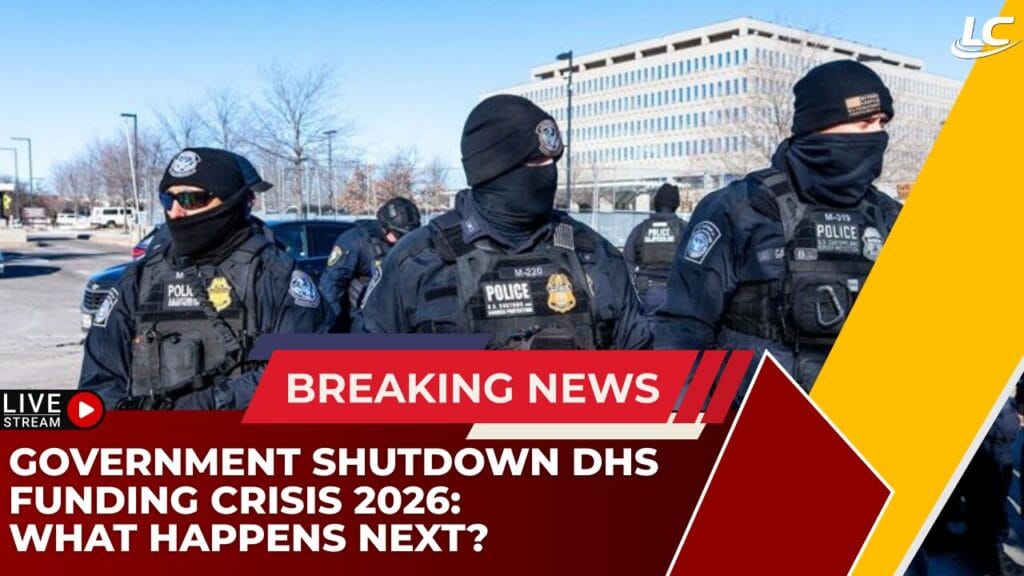
The clock is ticking: Congress has passed FY2026 funding for most federal agencies, but the Department of Homeland Security (DHS) is only funded through a brief two-week extension. With DHS’s budget set to expire on Feb. 13, 2026, Americans are asking: why is DHS funding still unresolved, and what would a shutdown mean? The answer lies in a fierce policy battle over immigration enforcement reforms, sparked by two recent shootings by federal agents. We’ll explain how this budget impasse unfolded, which agencies would be affected, and what comes next – from security impacts to federal worker pay. This is the definitive guide to today’s DHS funding showdown.
Most of the federal government is fully funded through September 2026, but Congress deliberately excluded DHS from that bill. In early February 2026, President Trump signed a consolidated appropriations act that covered agencies like Defense, Education, and Health & Human Services through fiscal year-end. However, lawmakers removed the full DHS appropriation to allow more time for negotiation. Instead, Congress granted DHS a short continuing resolution (CR) funding through Feb 13. In other words, 95% of the government’s FY2026 budget is locked in, and only DHS remains on a two-week stopgap.
Why single out DHS? Democrats demanded major reforms to Immigration and Customs Enforcement (ICE) and Border Patrol policies after the fatal shootings of two U.S. citizens in Minneapolis. Among their “exceedingly commonsense” demands are things like requiring ICE agents to wear active body cameras, forbidding masks during operations, and using judicial warrants for arrests. Many Republicans (including Speaker Mike Johnson) called these measures impractical – for example, Johnson argued we “don’t have enough judges” for universal warrants. The resulting impasse forced Congress to break out DHS as a separate issue.
As a result, DHS funding is now a ticking time bomb. Lawmakers have just days to strike a deal. If Congress fails to pass a full-year DHS bill by Feb. 13, the department’s operations (outside those funded by fees or prior laws) will effectively halt, even while the rest of government stays open. In practice, this impasse does matter – a shutdown of DHS would immediately impact many agencies you rely on, even though some functions (like ICE enforcement) would continue on existing funds. In the sections below we break down the stakes: which programs would stop, how this ties to immigration policy, and what it means for national security and federal workers.
For more foundational money mindset shifts, explore our guide at Lume Chronos , where we break down the behavioral economics of spending.
1. FY2026 Appropriations: Why DHS Is Still on a Short Leash
Congress usually passes 12 appropriations bills for each fiscal year, but for FY2026 lawmakers bundled most agencies into a single spending package. In early February 2026, the House and Senate approved a consolidated appropriations bill (roughly $1.2 trillion) that funds everything except DHS through Sept. 30, 2026. This omnibus was aimed at ending the weekend-long partial shutdown that began Jan. 31, 2026 – a shutdown triggered when a previous continuing resolution lapsed without full funding. President Trump signed it on Feb. 3, 2026, reopening all agencies that had shut down or were about to.
However, to facilitate negotiation on immigration reform, Congress agreed not to finalize DHS funding yet. The Senate removed the DHS spending title from the package, effectively decoupling it from the rest. Instead, lawmakers tacked on only a two-week DHS extension (a mini continuing resolution) through Feb. 13. As one policy update explains, “over 95% of the Federal government [is] now funded for FY2026, [and] attention turns to DHS funding” because Democrats and Republicans remain at odds.
This stopgap means DHS is on borrowed time. Lawmakers from both parties must negotiate on or before Feb. 13, or face another lapse. Senate appropriators have even held emergency hearings on “potential DHS shutdown impacts”. In Congress, bipartisan talks have sputtered since the weekend, with leaders like Senate Appropriations ranking member Chris Murphy warning that another shutdown is “nearly guaranteed”. In short, the government is funded – except for DHS. That setting is what makes this situation confusing and urgent for everyday people.
For background on how U.S. appropriations normally work, see our guide to federal budgeting. Congress typically funds agencies annually, but temporary funding (like continuing resolutions) is often used to avoid shutdowns when disagreements arise.
2. Which Agencies Lose Funding (and Which Keep Running)
If DHS funding does expire on Feb. 13, it’s not true that “everything stops.” But several critical agencies would be curtailed. Key DHS components include:
- TSA (Transportation Security Administration) – Screens airline passengers and baggage at airports nationwide. A shutdown would furlough thousands of TSA agents, leading to longer lines and flight delays. (Under a 2013 shutdown, travelers endured massive wait times. In 2026, TSA leadership has warned of severe travel disruptions.)
- Coast Guard – Carries out maritime safety, search and rescue, and port security. A funding lapse would ground many Coast Guard operations, which could threaten safety at sea and weaken drug interdiction efforts.
- Customs and Border Protection (CBP) – Controls entry at U.S. borders and ports. CBP is partially fee-funded, but many border agents and inspectors would lack pay, hampering new inspections. Routine border patrol on federally funded posts might pause. (Notably, pre-funded operations like ICE deportations and certain border surveys would continue, but active missions would suffer.)
- Federal Emergency Management Agency (FEMA) – Manages disaster response (hurricanes, wildfires, floods). Without funding, FEMA cannot open new disaster assistance programs or reimburse states for recent disasters. Its disaster relief fund, already down to about $7 billion in late Jan, would dwindle further. FEMA could continue ongoing operations, but new disaster aid and reimbursements would be delayed.
- U.S. Secret Service (USSS) – Protects the President, vice president, and visiting leaders. A lapse could mean furloughing many Secret Service staff and limiting protection details.
- Cybersecurity and Infrastructure Security Agency (CISA) – Defends federal networks and critical infrastructure. CISA staff would be furloughed, potentially slowing response to cyber threats.
- Other DHS Offices – E.g. DHS Office of Intelligence and Analysis, DHS management offices – many would shut down or go unpaid.
In short, most non-fee-funded DHS operations would effectively stop. By contrast, some DHS functions would keep going:
- ICE (Immigration & Customs Enforcement) – Because Congress pre-funded ICE in 2025, ICE detention and removal operations have about $75+ billion secured. That means ICE personnel would continue working (with pay delayed), even if other DHS branches shut down.
- USCIS (Citizenship & Immigration Services) – Handles green cards, visas, asylum processing. USCIS is fee-funded, so it would continue processing applications during a shutdown.
- Border Inspection at Ports of Entry – Passport control and immigration inspections at airports and land borders are fee-funded or have carryover money, so immigration entry checks would proceed.
- SEVIS (Student/Exchange Visitor Info System) – The visa tracking system used by schools and states would keep running.
- SAVE (Systematic Alien Verification for Entitlements) – The database used to verify immigration status (for things like driver’s licenses) is expected to remain up during a shutdown.
An ABC News summary notes that TSA, Coast Guard, Secret Service, FEMA and CISA “would be impacted” in a DHS funding lapse, whereas ICE “would not be impacted” on operations (thanks to its prior funding). And a Fragomen law alert confirms: USCIS would continue processing applications… border inspections would remain, ICE enforcement activities and the SEVIS system would continue even if DHS funding ends. In other words, the big-ticket immigration programs (ICE/CBP enforcement, USCIS services) survive short-term, but the “homeland security” agencies serving Americans daily (airport security, disaster response, maritime safety, cyber defense) would be crippled.
In practice: If DHS funding runs out, air travelers may see chaos at airports, coastal communities would lose search-and-rescue assets, and disaster victims would wait longer for aid. Lawmakers on both sides say these stakes are why they’re scrambling to avoid a lapse.
3. Immigration Reforms at the Heart of the Budget Fight
At its core, the DHS funding crisis is driven by policy disagreements over immigration enforcement. In January 2026 two U.S. citizens (Renee Good and Alex Pretti) were fatally shot by federal agents in Minneapolis. Democrats seized on these tragedies to demand sweeping reforms on how ICE and Border Patrol operate. They insist any DHS spending bill include measures such as mandatory body cameras for agents, a ban on face masks during arrests, stronger warrant requirements, and an overall code of conduct for all DHS law enforcement. Senate Minority Leader Chuck Schumer bluntly told colleagues, “What Democrats want is exceedingly commonsense”.
Republicans have resisted these demands. Speaker Mike Johnson (R-La.) argued that requiring warrants for immigration arrests would “take too long” and admitting agents without masks or visible IDs would put them at “further danger”. Other GOP lawmakers say Democrats are using a DHS funding bill as leverage for unrelated immigration reforms. For example, some ultra-conservatives even tried to attach strict voter-ID language to the spending package, before dropping it.
Behind the scenes, both parties are digging in. Democrats point out that ICE and CBP were recently massively funded by last summer’s giant spending bill (dubbed the “One Big Beautiful Bill Act”). In that July 2025 act, Congress approved roughly $170 billion for border security and deportations, pushing ICE’s ten-year budget over $100 billion.
Civil liberties groups note that huge funding boost came without new accountability measures. Representative Marie Gluesenkamp Perez (D-WA) has emphasized that ICE already “was prefunded… to the tune of $75 billion” in 2025, so a shutdown wouldn’t stop deportations – it would mostly stall oversight. Perez warned that during a shutdown “ICE [would] have… cover to stop responding to Congressional inquiries,” since many enforcement agents would be working without new legislative oversight.
On the other hand, administration officials have been quick to act on parts of the demand. On Feb. 2, 2026, DHS Secretary Kristi Noem announced that all Homeland Security officers in Minneapolis would be issued body cameras immediately, with plans to expand nationwide as funding allows. But Democrats say that action alone is not enough – they want legislative guarantees. Senate Democrats, led by Schumer, publicly vowed to block any DHS funding extension unless their list of reforms is included.
In short, the DHS funding fight has become a proxy for the larger immigration debate. Progress depends on bridging this divide. Will Congress accept some reforms and pass DHS funding? Or will continued resistance force the department to shut down? The answer will come soon.
4. National Security and Public Services on the Line
Beyond immigration policy, a DHS shutdown would have broad national security implications. DHS was created after 9/11 to safeguard the homeland; now its core missions would be scaled back. For example:
- Airline Security: No active TSA funding means fewer screeners. Flights could face extreme delays or cancellations if screenings slow down. Airports might have to close security checkpoints. (Airlines and travel groups warn that even a short shutdown could “paralyze” the travel system.)
- Border Control: While some CBP personnel remain funded, a lapse would undermine new border operations. Ports of entry may reduce hours or divert agents elsewhere. In the worst case, unfunded border stations could leave gaps in our official entry points – complicating trade and tourism.
- Maritime Defense: Coast Guard cutters could be docked. Drug interdiction, search-and-rescue, and ice-breaking missions could halt. Coast Guard officials stress that even one storm or disaster at sea would be riskier without funding.
- Cybersecurity: DHS houses CISA, the agency defending federal networks from hacks. A shutdown would idle CISA staff, possibly delaying responses to cyberattacks. In our digital age, even a temporary outage could embolden adversaries.
- Disaster Response: FEMA’s power to deploy aid would be reduced. The agency might stop approving new grants or reimbursements. With a natural disaster always looming (hurricane, wildfire season, etc.), states fear being left in limbo. As one analysis notes, “without a fresh infusion of cash from Congress,” FEMA might restrict disaster payouts even as urgent needs rise.
- Protective Services: The Secret Service and U.S. Coast Guard (yes, double-listed as defense and DHS) protect VIPs and coasts, respectively. Both would see personnel furloughed. In theory, essential protection continues, but force levels would shrink.
U.S. Capitol Police and other non-DHS agencies remain funded, but DHS’s civilian roles intersect with public safety. For instance, a DHS shutdown could slow vetting of visa applicants and travelers, at a time of global unrest.
By contrast, some national-security tasks would press on. ICE and ICE-funded deportations would continue as noted, and border inspections at airports/land ports (immigration checks) would carry on. These continuations do keep some security functions alive. But many essential services – from “boots on the ground” counterterrorism teams (some DHS-run) to domestic counter-drug efforts – would be hobbled.
Lawmakers are acutely aware. Senate Majority Leader John Thune warned that “a lot of important agencies won’t go funded” if one side holds out. Both parties have even considered carving out separate funding bills for FEMA or other DHS sub-agencies to prevent total collapse. Representative Rosa DeLauro (D-Conn.), ranking member on Appropriations, urged funding “those bureaus separately” to “avoid any disruption to public services”. These piecemeal plans highlight the damage at stake: homeland security is on the chopping block unless a compromise is found.
Quick reality check: Even if DHS itself closed, many homeland missions would limp on under federal law – but at reduced capacity. Officials say they would try to maintain core defenses. However, every hurricane without prompt FEMA funding or every unscreened traveler is a reminder of what hangs in the balance.
5. Federal Workers and DHS Shutdown: Pay, Furloughs, and Frontlines
One very practical concern is paychecks for federal employees. In past shutdowns, non-essential DHS staff have been furloughed (sent home without pay), while “excepted” employees (essential functions) have worked unpaid. Those furloughed do not work during the lapse, and those who do work wait to be paid until later.
By law, everyone eventually gets paid. An Office of Personnel Management (OPM) guidance makes clear: federal employees “who did not receive pay because of the lapse” are owed retroactive pay as soon as funding resumes. The 2025 shutdown memo stresses agencies must process back pay “as soon as possible after the lapse ends”. So TSA agents, FEMA coordinators and others would see those missed paychecks added to future paychecks.
However, the interim is tough. Frontline workers like TSA screeners and air marshals are typically considered essential, so they continue working but with no pay until retroactive disbursement. This can cause real hardship: even a two-week gap hits families unprepared. In 2019, many transportation workers reported using credit cards or cash savings to get by during just over a month of shutdown.
Some lawmakers have highlighted this. Rep. DeLauro pointed out that separate funding for unaffected DHS parts would “avoid … missed paychecks for federal workers”. But as long as negotiations drag on, many DHS employees remain in limbo. Even with guaranteed back pay, the uncertainty can hurt morale and retention.
In practice, TSA, FEMA, Coast Guard and CISA staff would mostly not show up to work (on furlough), while ICE, CBP, and USCIS staff would keep working (unpaid) as noted. Other agencies like the Federal Air Marshal Service (DHS law enforcement) and FEMA’s core response teams would likely stay on duty. For anyone working inside DHS, pay resumes only when Congress reconvenes with a final bill.
If you’re not a DHS employee but rely on DHS services (travel, visa processing, etc.), remember that some services will continue: airlines still fly, US-VISIT checks still run, and visas/green cards still get approved. But safety nets (flood aid, aviation security) could weaken temporarily.
6. Lessons from Past Shutdowns (and the One Big Bill)
This is not the first time Congress has grappled with a DHS funding fight, and history shows how high the stakes can be. In late 2018-early 2019, a 35-day shutdown – the longest ever – began over border wall funding. That hiatus halted many DHS operations (TSA long delays, Coast Guard reserve call-ups, etc.) and cost the economy ~$11 billion. Congress ultimately resolved it with a short-term deal. The message: even a partial DHS shutdown can grind normal life to a halt if prolonged.
More recently, FY2025 appropriations also flirted with lapse. Notably, last summer Congress agreed to an enormous reconciliation package (H.R.1) called the “One Big Beautiful Bill Act.” This law, passed July 4, 2025, drastically reshaped the budget. It locked in huge sums – about $150 billion – for border enforcement and deportations. ICE’s budget was boosted from roughly $10 billion to over $100 billion by 2029. Critics pointed out that this massive spending increase came with no new restrictions on agent behavior. That in turn fueled today’s debate: opponents say “more money” should have come with “more oversight.”
Another example: when early fiscal 2026 funding first lapsed on Oct 1, 2025 (the start of the year), a brief shutdown occurred. DHS was technically part of that shutdown, but key services persisted. In fact, a note by immigration lawyers observes that during the Oct 2025 lapse, immigration processing continued uninterrupted despite the shutdown. That resilience hints that DHS can limp along in a short shutdown – but not indefinitely or without consequences.
Overall, history suggests likely outcomes: Congress tends to “blink” just before critical deadlines. Given that negotiators have already agreed to a CR once, many expect a similarly last-minute solution. Some strategists predict a short gap in funding (say, one to two weeks of shutdown) before a new bill passes. Others warn that, if one side digs in, the shutdown could last longer. The only certainty is uncertainty: even experts are divided until lawmakers act.
Need-to-know: In past shutdowns, federal agencies have taken “emergency” measures to keep vital functions alive. For example, law enforcement and military missions (including the Coast Guard) often continued using carryover funds or fee revenue. But congressional oversight and service expansions (hiring, new grants) paused. The “lessons learned” right now are: (1) give Congress more time – or (2) risk a self-inflicted interruption.
7. Global Perspective: Other Countries Avoid Shutdowns
It’s worth noting that this kind of funding standoff is uniquely American. In most other democracies, government budgets work differently so that core services don’t simply stop. For example, many European parliamentary systems allow an outgoing government to continue using existing funds until a new budget passes. In France and Belgium, lawmakers have even passed “rollover” laws so that state functions keep running when budgets are delayed. Germany’s Basic Law mandates that the previous budget can temporarily carry over, preventing abrupt halts.
In practice, if Congress doesn’t find a solution, the U.S. will stand out as an exception. Our budgeting system (with separate appropriations bills) means we can shut down agencies, whereas others ensure continuity by design. For more on how other nations handle budget impasses, see our LumeChronos global budget comparison – it highlights alternative rules that keep governments funded through disputes.
FAQ (People Also Ask)
What happens if DHS funding is not extended beyond February 13? Many DHS functions would pause, but others continue. Critically, USCIS (immigration services) operates on fees and would keep processing applications, and Border Patrol/ICE enforcement would run on prior funds. Checkpoints and visa processing at airports and land borders would stay open. However, agencies like TSA, FEMA, Coast Guard, Secret Service and CISA would be furloughed or have to cease new activity. Systems like E-Verify (employer visa checks) would likely shut down, while the SAVE status-verification system would stay online. In short: border/immigration processing largely continues, but “homeland security” services are halted until Congress acts.
Which DHS agencies would shut down if funding lapses? The Department of Homeland Security comprises many agencies beyond ICE and CBP. If funding lapses, expect TSA screeners, FEMA disaster responders, Coast Guard crews, Secret Service, CISA cybersecurity staff and many support offices to be furloughed. These agencies would have no new money to operate. On the other hand, ICE, CBP’s existing border patrol, and fee-funded USCIS and inspection services would not shut down immediately because they already have funding or fees.
Why are Democrats demanding changes to ICE and Customs policies before approving DHS funding? Two U.S. citizens were killed by federal immigration agents in January 2026, sparking outrage. In response, Democratic leaders insisted that any funding bill include reforms to DHS law enforcement. Their conditions include mandatory body cameras for agents, barring masks during operations, and requiring judicial warrants for certain arrests. Democrats describe these demands as “commonsense” oversight. Republicans counter that the demands are impractical (e.g. requiring warrants nationwide would take too long). Thus, funding has become tied to this policy debate – neither side is budging without concessions.
How are federal workers paid during a DHS shutdown? In the event of a shutdown, most DHS employees would be furloughed (kept home without pay), while “essential” employees continue working. Importantly, federal law requires that all workers eventually receive back pay. An OPM memo states that anyone “who did not receive pay because of the lapse” must be given retroactive pay “as soon as possible after the lapse ends”.
That means any unpaid paychecks will show up later. The disruption is still painful: e.g. a TSA agent might work for two weeks without pay and get a double paycheck after funding is restored. To avoid this, some lawmakers (like Rep. DeLauro) have proposed funding parts of DHS (like FEMA) separately, so at least some workers can keep getting paid.
What is a Continuing Resolution (CR) and how does it relate here? A continuing resolution is a temporary funding law. Rather than funding DHS for a full year, Congress passed a short-term CR covering DHS through Feb. 13, 2026. This CR is what keeps DHS operating in the meantime. If Congress can’t agree on full-year funding by Feb. 13, it could pass another CR to extend DHS even longer (which Senate GOP Leader Thune said he might do as soon as Feb 10). Essentially, CRs buy more time to negotiate. The Feb 13 CR reflects that deal: it funds DHS at current levels for just two weeks, forcing lawmakers to revisit DHS soon.
What was the “One Big Beautiful Bill Act” and how does it factor in? The One Big Beautiful Bill Act was a massive budget-reconciliation law passed in July 2025. Among other things, it gave huge increases to border enforcement: roughly $170 billion for border security and deportations, and ICE’s budget jumped from ~$10B to over $100B by 2029. In effect, ICE already received an enormous funding boost last year. Critics (including some Democrats today) say that money should have come with accountability. They argue that because ICE was “pre-funded” with about $75B, the real leverage for reform is through the current appropriations process. So the legacy of that big bill is fueling the current DHS funding standoff.
Key Takeaways
- Most of government is funded, DHS is not. Congress approved FY2026 spending for all departments except DHS, which got only a two-week extension through Feb. 13. The DHS budget remains unsettled due to political disagreements.
- Immigration policy is the holdup. Democrats want strict new limits on ICE/Border Patrol (body cameras, no masks, warrant rules) in response to recent shootings. Republicans call these demands impractical. This deadlock has stalled a final DHS funding bill.
- Critical agencies face shutdown. Without funding, TSA agents, Coast Guard crews, FEMA responders, Secret Service staff and other DHS workers would be furloughed. Flights could be delayed, disaster aid would slow, and ports might cut back. The coastal and homeland security missions would be weakened.
- Some functions continue. Immigration and customs enforcement operations will keep running using prior appropriations. USCIS visa processing (fee-funded), border inspections, and ICE removals won’t pause. But this means the shutdown’s pain falls on other agencies and on Congressional oversight.
- Federal employees get paid eventually. All federal workers (furloughed or working) earn retroactive pay after a shutdown. Nevertheless, working a pay period without a paycheck is a hardship for many. Lawmakers have proposed narrower bills (e.g. separate FEMA funding) to avoid service disruptions.
- Another shutdown is likely short-term. Most analysts expect at least a brief DHS shutdown in mid-February if no deal is reached. Congress could then pass another stopgap or final bill. Keeping informed on internal proposals (e.g. via our budget guides at LumeChronos) is wise.
- Learn from others: The U.S. approach is unusual. Other democracies typically ensure essential functions continue during budget fights. For example, some European governments automatically roll over spending to avoid gaps. For more on this global contrast, see our international budget comparison.
Conclusion + Next Steps
The DHS funding fight of February 2026 is a high-stakes showdown with real-world consequences. In this article we unpacked why DHS is on a razor’s edge: a debate over ICE enforcement reforms has held up a full-year budget, leaving agencies like TSA, FEMA and the Coast Guard vulnerable. We also showed which services keep running (USCIS, ICE, border checks) and reminded readers how federal pay works during lapses.
Practical advice: Stay tuned through trusted news and official sources as Feb. 13 approaches. If you’re a traveler, monitor TSA updates. If you work for DHS or rely on it, plan for potential delays (e.g. in government services or aid). You can also reach out to your representatives with feedback on what matters most – many are listening to constituents on immigration and security issues right now.
We encourage you to learn more about the U.S. budgeting process (see our internal budget guides) and how this dispute compares globally (see our international perspective). Share this article with friends or colleagues who need to know what a DHS shutdown would really mean. Let us know your thoughts in the comments – collaboration and civic engagement are key in times like this.
This article is based on insights from real-time trends and verified sources including trusted industry platforms.