




Introduction
Electricity bills have become a major household expense in both the USA and UK. With rising energy prices, many families are searching for practical ways to reduce electricity bills without sacrificing comfort. The good news is that small changes in daily habits, appliance usage, and home efficiency can create noticeable savings.
Learning how to reduce electricity bills is not only about using less power; it is about using energy smarter. Simple actions such as upgrading lighting, improving insulation, adjusting heating and cooling settings, and choosing energy-efficient appliances can help lower monthly costs.
For example, many US households spend hundreds of dollars each year on unnecessary energy waste, while UK families often struggle with high heating and electricity costs during colder months.
This guide explains proven energy-saving strategies that work for modern homes. Whether you live in a small apartment, a family house, or a rented property, these tips can help you cut electricity costs and build better energy habits.
1. Understand Your Electricity Usage First
Before trying to reduce electricity bills, you need to understand where your energy is going.
Many homeowners are surprised to discover that a few appliances consume most of their electricity.
Common high-energy devices include:
- Air conditioners
- Electric heaters
- Water heaters
- Dryers
- Refrigerators
- Gaming computers
- Old appliances
Perform an Energy Audit
An energy audit helps identify waste.
You can:
- Check your electricity statement
- Use smart energy monitors
- Track daily consumption
- Compare seasonal usage
In the USA, many utility companies provide free or low-cost energy audits. UK homeowners can also use energy-saving assessments to find inefficient areas.
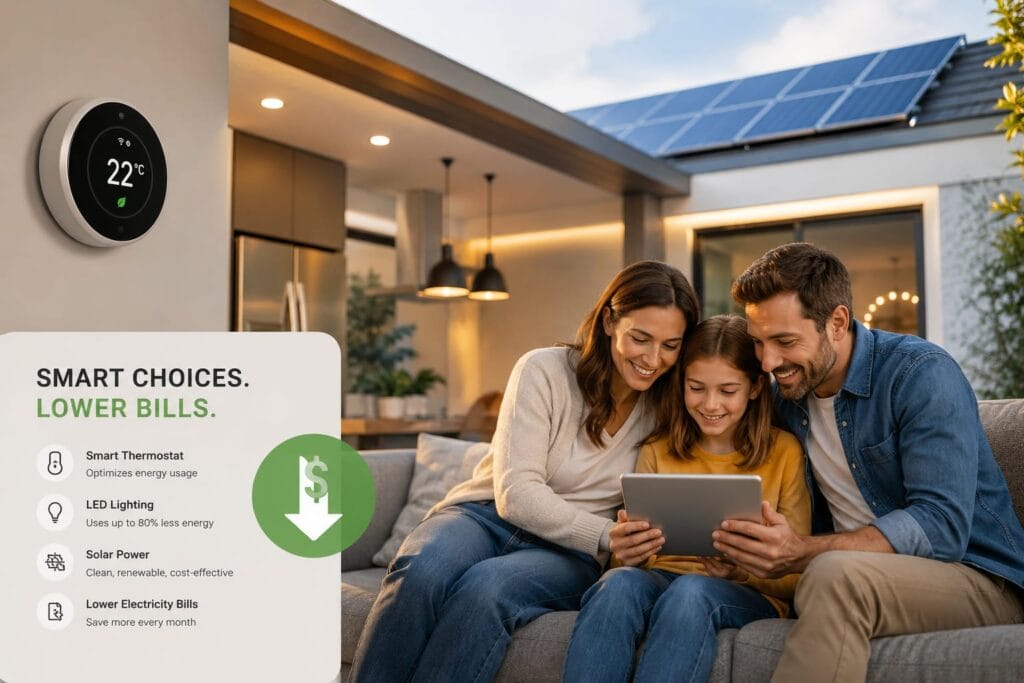
2. Switch to LED Lights
One of the easiest ways to reduce electricity bills is replacing traditional bulbs with LED lighting.
LED bulbs:
- Use less electricity
- Last much longer
- Produce less heat
- Require fewer replacements
A home replacing old incandescent bulbs with LEDs can significantly reduce lighting costs.
Best Practice
Replace the most-used lights first:
- Kitchen lights
- Living room lights
- Bedroom lights
- Outdoor lighting
3. Install a Smart Thermostat
Heating and cooling often represent one of the biggest energy expenses.
A smart thermostat automatically adjusts temperature based on your routine.
Benefits:
- Reduces unnecessary heating
- Prevents cooling empty rooms
- Learns your schedule
- Can be controlled remotely
For US homes, especially in areas with extreme summers or winters, smart temperature control can create meaningful savings.
UK households can benefit by controlling heating schedules more efficiently.
4. Improve Home Insulation
Poor insulation causes energy waste.
During winter:
- Warm air escapes
- Heating systems work harder
During summer:
- Cool air escapes
- Air conditioners run longer
Improve insulation by:
- Sealing windows
- Adding roof insulation
- Using weather stripping
- Blocking drafts
A properly insulated home stays comfortable while using less electricity.
5. Reduce Heating and Cooling Costs
Heating and cooling systems consume a large amount of power.
Ways to save:
- Keep thermostat settings reasonable
- Clean air filters regularly
- Close unused room vents
- Use ceiling fans
- Maintain HVAC systems
Example:
A family that reduces unnecessary heating by adjusting temperature settings can lower annual energy costs.
6. Choose Energy-Efficient Appliances
Old appliances often consume much more electricity than modern energy-efficient models.
When buying appliances, look for:
- Energy efficiency ratings
- Low power consumption
- Smart features
- Eco modes
Common appliances to upgrade:
- Refrigerator
- Washing machine
- Dishwasher
- Air conditioner
- Microwave
USA & UK Example
Many households save money by replacing older appliances with newer efficient models that use less electricity while providing the same performance.
7. Stop Phantom Energy Loss
Many devices continue using electricity even when turned off.
This is called phantom energy or standby power.
Examples:
- TVs
- Chargers
- Game consoles
- Computers
- Smart devices
Solution:
Use:
- Smart plugs
- Power strips
- Timers
Turn off devices completely when not in use.
8. Use Smart Power Management
Smart technology can help control electricity consumption.
Useful tools:
- Smart plugs
- Smart switches
- Energy monitoring apps
- Smart appliances
These tools allow you to:
- Track usage
- Find waste
- Automate devices
- Reduce unnecessary electricity consumption
9. Save Electricity in the Kitchen
The kitchen contains several high-energy appliances.
Ways to save:
Refrigerator Tips
- Keep temperature settings correct
- Clean coils regularly
- Avoid leaving the door open
- Do not overload it
Cooking Tips
- Use microwave for small meals
- Use pressure cookers
- Match pot size with burner
- Cover food while cooking
Small habits reduce daily energy waste.
10. Reduce Water Heating Costs
Water heating can increase electricity bills significantly.
Save energy by:
- Taking shorter showers
- Fixing leaks
- Lowering water heater temperature
- Using efficient shower heads
In colder climates like parts of the UK and northern USA, water heating becomes a major household expense.
11. Consider Solar Energy
Solar panels can reduce dependence on the electricity grid.
Benefits:
- Lower electricity bills
- Renewable energy source
- Long-term savings
- Increased home value
Solar may require upfront investment, but many homeowners consider it a long-term financial strategy.
Pros and Cons of Reducing Electricity Usage
| Pros | Cons |
|---|---|
| Lower monthly bills | Some upgrades require investment |
| Saves energy | Requires lifestyle changes |
| Helps environment | New appliances may cost more |
| Improves efficiency | Solar installation can be expensive |
| Better financial control | Requires monitoring habits |
Benefits of Reducing Electricity Bills
Reducing electricity usage provides several benefits:
1. Lower Monthly Expenses
The biggest advantage is saving money every month.
2. Environmental Benefits
Using less electricity reduces energy demand and carbon emissions.
3. Better Home Efficiency
Energy-saving improvements make homes more comfortable.
4. Increased Savings Over Time
Small monthly savings can become significant yearly savings.
Example:
Saving $30 monthly can equal:
$360 yearly
$1,800 in five years
Common Mistakes That Increase Electricity Bills
Avoid these mistakes:
Leaving Lights On
Unused lights waste electricity.
Ignoring Old Appliances
Older appliances often cost more to operate.
Poor Temperature Control
Extreme heating or cooling increases bills.
Not Maintaining Equipment
Dirty filters and poor maintenance reduce efficiency.
Charging Devices Continuously
Chargers can consume unnecessary standby power.
Expert Tips to Reduce Electricity Bills
Experts recommend:
- Monitor your monthly usage
- Upgrade inefficient appliances
- Use natural sunlight
- Maintain heating systems
- Turn off unused electronics
- Improve insulation
- Use smart technology
A combination of multiple small changes usually creates the biggest results.
Electricity Saving Comparison Table
| Method | Cost | Savings Potential |
|---|---|---|
| LED bulbs | Low | Medium |
| Smart thermostat | Medium | High |
| Solar panels | High | Very High |
| Insulation | Medium | High |
| Smart plugs | Low | Medium |
| Efficient appliances | High | High |
Best Practices for Saving Electricity
Follow these habits:
- Check your electricity bill monthly
- Replace inefficient bulbs
- Use appliances wisely
- Avoid standby power
- Maintain heating and cooling systems
- Improve insulation
- Choose energy-efficient products
- Use smart technology
Conclusion
Learning how to reduce electricity bills is one of the smartest ways to improve your household finances. With rising energy costs in the USA and UK, saving electricity has become more important than ever.
The best approach is not a single solution but a combination of small improvements. Switching to LED lighting, using smart thermostats, improving insulation, reducing standby power, and choosing efficient appliances can make a noticeable difference.
Many people think reducing electricity bills requires major lifestyle changes, but simple daily habits often create meaningful savings. Turning off unused devices, controlling heating and cooling, and monitoring energy consumption are easy steps anyone can follow.
For homeowners, investments like insulation upgrades and solar energy can provide long-term benefits. Renters can also save money through simple actions such as using efficient lighting and reducing unnecessary electricity use.
By making smarter energy choices today, households can lower costs, reduce waste, and create a more sustainable future. Start with small changes, track your progress, and gradually build energy-saving habits that last.
This article is based on insights from real-time trends and verified sources including the U.S. Department of Energy, ENERGY STAR, and other trusted industry resources.