




Introduction
Managing money doesn’t have to be stressful. Whether you’re saving for your first home, paying off debt, or simply trying to stop overspending, using monthly budget template ideas can make your financial life much easier.
A well-designed budget template helps you understand exactly where your income goes every month. Instead of guessing how much you’ve spent on groceries, rent, subscriptions, or entertainment, you can track every dollar or pound with confidence.
According to multiple consumer finance surveys, households that regularly monitor their monthly spending are significantly more likely to achieve savings goals and avoid unnecessary debt. In both the USA and the UK, rising living costs have made budgeting one of the most valuable personal finance habits.
This guide covers the best monthly budget template ideas for individuals, couples, families, freelancers, students, and small business owners. Whether you prefer Excel, Google Sheets, printable planners, or budgeting apps, you’ll find practical solutions to organize your finances and build long-term financial stability.
Table of Contents
- Why Monthly Budget Templates Matter
- Key Elements Every Budget Template Should Include
- Best Monthly Budget Template Ideas
- Printable vs Digital Budget Templates
- Budget Templates for Different Lifestyles
- Common Budgeting Mistakes
- Benefits of Budget Templates
- Expert Budgeting Tips
- Pros and Cons
- Comparison Table
- Best Practices
- Frequently Asked Questions
Why Use a Monthly Budget Template?
Creating a budget from scratch every month wastes time. A reusable template allows you to:
- Track income automatically
- Categorize expenses
- Monitor savings
- Reduce unnecessary spending
- Prepare for unexpected bills
- Reach financial goals faster
Instead of wondering where your money disappeared, you’ll know exactly how much went toward essentials and discretionary spending.
For both American and British households, budgeting has become increasingly important due to inflation, higher utility costs, and increasing housing expenses.
What Should Every Monthly Budget Template Include?
A useful budget template should be simple enough to update but detailed enough to provide meaningful insights.
Income Section
Include every source of income:
- Salary
- Freelance work
- Business income
- Rental income
- Side hustles
- Government benefits
- Investment income
Example (USA)
| Income Source | Amount |
|---|---|
| Salary | $4,200 |
| Freelance | $600 |
| Investments | $120 |
| Total | $4,920 |
Example (UK)
| Income Source | Amount |
|---|---|
| Salary | £3,000 |
| Freelance | £350 |
| Dividends | £90 |
| Total | £3,440 |
Fixed Expenses
These remain mostly unchanged each month.
Examples include:
- Mortgage
- Rent
- Internet
- Insurance
- Car payment
- Council Tax (UK)
- Property Tax (USA)
- Childcare
Tracking fixed expenses helps you understand your minimum monthly financial obligations.
Variable Expenses
These fluctuate every month.
Common examples include:
- Groceries
- Fuel
- Dining out
- Entertainment
- Shopping
- Utilities
- Clothing
- Medical costs
Many households underestimate variable spending, making this section one of the most important parts of any budget template.
Savings Section
Every effective budget should include savings as a planned expense rather than an afterthought.
Categories include:
- Emergency fund
- Retirement
- Vacation fund
- Home deposit
- Investment account
- Children’s education
- Holiday savings
Financial experts often recommend paying yourself first by transferring savings immediately after receiving your paycheck.
Debt Payments
If you’re paying off debt, your template should include:
- Credit cards
- Student loans
- Car loans
- Personal loans
- Mortgage
- Buy Now Pay Later payments
Tracking debt separately allows you to measure progress month by month.
25 Best Monthly Budget Template Ideas
1. Simple Monthly Budget Template
Perfect for beginners.
Sections include:
- Income
- Bills
- Savings
- Remaining balance
This minimalist approach works well for individuals who are new to budgeting.
2. Zero-Based Budget Template
Every dollar (or pound) receives a specific purpose.
Formula:
Income − Expenses − Savings = £0 or $0
This doesn’t mean you spend everything—it means every amount is assigned intentionally.
Best for:
- Families
- Debt payoff
- Financial discipline
3. 50/30/20 Budget Template
A popular budgeting framework:
- 50% Needs
- 30% Wants
- 20% Savings
Example:
Monthly Income: $5,000
Needs: $2,500
Wants: $1,500
Savings: $1,000
This method is especially popular among young professionals.
4. Family Budget Template
Designed for households with multiple income sources.
Includes:
- Children’s expenses
- School fees
- Grocery planning
- Utilities
- Insurance
- Family entertainment
- Vacation planning
Families often find this template useful because it provides a complete picture of shared finances.
5. Student Budget Template
Students typically have limited income and unique expenses.
Categories include:
- Tuition
- Books
- Transportation
- Food
- Rent
- Part-time income
- Scholarships
Using a budget template during university helps reduce financial stress and encourages better spending habits.
6. Monthly Household Budget Worksheet
Ideal for homeowners and renters alike.
Track:
- Housing costs
- Utilities
- Repairs
- Groceries
- Household supplies
- Internet
- Streaming subscriptions
- Pet expenses
This template is one of the most versatile options because it adapts easily to different family sizes and living arrangements.
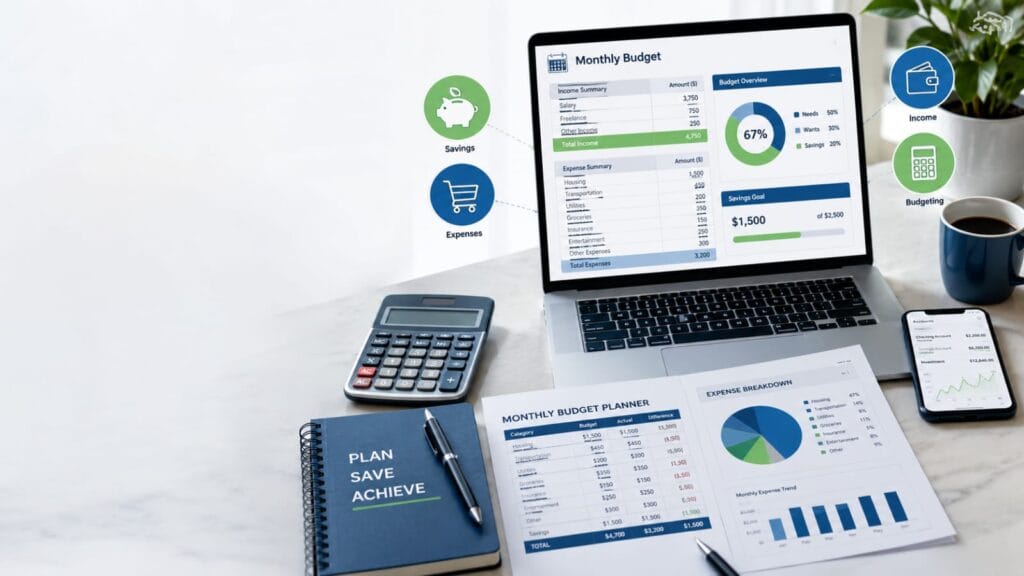
7. Monthly Expense Tracker Template
If your biggest challenge is overspending, an expense tracker is one of the most effective tools.
Track daily spending in categories such as:
- Groceries
- Dining Out
- Coffee
- Fuel
- Shopping
- Entertainment
- Healthcare
- Miscellaneous
At the end of the month, compare planned spending versus actual spending to identify areas for improvement.
8. Google Sheets Budget Template
Ideal for users who want access from any device.
Features
- Cloud storage
- Automatic calculations
- Easy sharing with family members
- Real-time collaboration
- Free to use
Perfect for couples managing household finances together.
9. Excel Budget Template
Microsoft Excel remains one of the most powerful budgeting tools.
Advantages include:
- Advanced formulas
- Charts and graphs
- Conditional formatting
- Pivot tables
- Custom categories
This option is excellent for users who enjoy analyzing financial data.
10. Printable Monthly Budget Template
Many people prefer writing expenses by hand.
Printable planners help users:
- Stay focused
- Reduce screen time
- Build budgeting habits
- Keep financial records organized
They work especially well for visual learners.
11. Paycheck Budget Template
Instead of budgeting monthly, allocate every paycheck.
Include:
- Current paycheck
- Bills due before next payday
- Savings
- Debt payments
- Spending money
This approach prevents running out of money before the next paycheck.
12. Weekly Budget Template
Perfect for controlling impulse purchases.
Weekly reviews make it easier to adjust spending before the month ends.
13. Biweekly Budget Template
Ideal for employees paid every two weeks.
Helps balance expenses like:
- Rent
- Utilities
- Insurance
- Groceries
without disrupting cash flow.
14. Cash Envelope Budget Template
Based on dividing spending money into envelopes.
Common categories:
- Groceries
- Fuel
- Entertainment
- Dining
- Clothing
Once an envelope is empty, spending stops until the next budgeting period.
15. Debt Payoff Budget Template
Created specifically for reducing debt faster.
Track:
- Balance
- Interest rate
- Minimum payment
- Extra payment
- Remaining balance
This helps users stay motivated by seeing progress each month.
16. Savings Goal Template
Useful for goals such as:
- Emergency fund
- Holiday travel
- Buying a house
- New car
- Wedding
- Education
Break large goals into manageable monthly contributions.
17. Emergency Fund Budget Template
Unexpected expenses happen.
Track savings specifically for:
- Medical emergencies
- Job loss
- Car repairs
- Home maintenance
Financial experts often recommend saving three to six months of essential living expenses.
18. Freelancer Budget Template
Freelancers often have irregular income.
Include:
- Client payments
- Taxes
- Software subscriptions
- Marketing
- Business expenses
- Estimated monthly income
Budgeting conservatively helps manage income fluctuations.
19. Small Business Budget Template
Track:
- Revenue
- Payroll
- Office expenses
- Marketing
- Taxes
- Equipment
- Profit
Useful for startups and small business owners.
20. Couple’s Budget Template
Designed for shared finances.
Separate sections include:
- Partner A income
- Partner B income
- Shared bills
- Individual spending
- Savings goals
Transparency reduces financial disagreements.
21. Vacation Budget Template
Plan for:
- Flights
- Hotels
- Food
- Shopping
- Activities
- Emergency spending
This prevents overspending while traveling.
22. Holiday Budget Template
Useful for Christmas, Thanksgiving, Eid, birthdays, and other celebrations.
Track:
- Gifts
- Decorations
- Food
- Travel
- Charity donations
Planning early avoids holiday debt.
23. Retirement Budget Template
Estimate:
- Pension income
- Investments
- Healthcare costs
- Housing
- Daily living expenses
Helps retirees maintain financial stability.
24. Subscription Tracker Template
Many households forget recurring subscriptions.
Track services like:
- Streaming platforms
- Gym memberships
- Software
- Cloud storage
- Music subscriptions
Cancel unused services to save money.
25. Annual Budget Planner
Provides a full-year financial overview.
Monitor:
- Monthly income
- Expenses
- Savings
- Investments
- Net worth
Ideal for long-term financial planning.
Printable vs Digital Budget Templates
| Feature | Printable | Digital |
|---|---|---|
| Easy to customize | Limited | Excellent |
| Automatic calculations | No | Yes |
| Mobile access | No | Yes |
| Charts and graphs | No | Yes |
| Requires internet | No | Sometimes |
| Best for | Beginners | Advanced users |
Real-World Example (USA)
Sarah lives in Texas and earns $5,000 per month.
Her monthly budget:
| Category | Amount |
|---|---|
| Rent | $1,450 |
| Utilities | $240 |
| Groceries | $500 |
| Insurance | $350 |
| Transportation | $300 |
| Entertainment | $250 |
| Savings | $900 |
| Debt Payments | $450 |
| Miscellaneous | $560 |
By using a monthly budget template, Sarah reduced unnecessary spending by nearly $300 per month, allowing her to build an emergency fund within a year.
Real-World Example (UK)
James from Manchester earns £3,300 monthly.
His budget includes:
| Category | Amount |
|---|---|
| Mortgage | £1,000 |
| Council Tax | £180 |
| Utilities | £220 |
| Food | £380 |
| Transport | £160 |
| Savings | £600 |
| Entertainment | £260 |
| Miscellaneous | £500 |
Tracking his finances helped him consistently save for a home renovation project.
Budgeting Statistics & Facts
- Around 60% of adults report following some form of monthly budget.
- Households that track expenses regularly tend to save more consistently than those that do not.
- Subscription services and dining out are among the most commonly underestimated monthly expenses.
- Budgeting apps and digital spreadsheets continue to grow in popularity across both the USA and the UK.
- Financial planners commonly recommend reviewing and updating your budget at least once each month to reflect changes in income or expenses.
Benefits of Monthly Budget Templates
Using a monthly budget template offers several advantages:
- Better control over personal finances
- Increased monthly savings
- Reduced financial stress
- Easier debt management
- Improved spending awareness
- Helps achieve long-term financial goals
- Simplifies bill payments
- Encourages disciplined financial habits
- Prevents overspending
- Makes emergency planning easier
Common Budgeting Mistakes
Avoid these common pitfalls:
- Forgetting annual or irregular expenses
- Setting unrealistic savings goals
- Ignoring small daily purchases
- Not tracking cash spending
- Failing to review the budget monthly
- Underestimating grocery costs
- Forgetting subscription renewals
- Not budgeting for emergencies
- Giving up after one bad month
Expert Tips
Financial experts recommend:
- Pay yourself first by saving before spending.
- Review your budget every month.
- Automate savings whenever possible.
- Build an emergency fund before investing aggressively.
- Keep discretionary spending within your planned limits.
- Separate wants from needs.
- Use budgeting apps or spreadsheets consistently.
- Review subscriptions every three months.
- Set measurable financial goals.
- Celebrate budgeting milestones to stay motivated.
Pros and Cons
| Pros | Cons |
|---|---|
| Better money management | Requires consistency |
| Increases savings | Initial setup takes time |
| Reduces debt | Can feel restrictive |
| Tracks expenses | Needs regular updates |
| Helps achieve financial goals | Requires financial discipline |
Comparison Table
| Template Type | Best For | Difficulty |
|---|---|---|
| Simple Budget | Beginners | Easy |
| Family Budget | Households | Medium |
| Zero-Based Budget | Debt payoff | Medium |
| Expense Tracker | Overspenders | Easy |
| Excel Budget | Advanced users | Medium |
| Google Sheets | Collaboration | Easy |
| Printable Budget | Paper planners | Easy |
| Freelancer Budget | Self-employed | Medium |
| Annual Budget | Long-term planning | Medium |
| Savings Template | Goal setting | Easy |
Best Practices
To get the most value from your monthly budget template:
- Record every source of income.
- Update expenses weekly instead of waiting until month-end.
- Categorize spending accurately.
- Compare planned vs. actual expenses.
- Set realistic savings targets.
- Prepare for unexpected costs with an emergency fund.
- Review financial goals every quarter.
- Keep your budget simple and easy to maintain.
- Use charts or graphs to visualize spending patterns.
- Adjust your budget whenever your financial situation changes.
Conclusion
Using monthly budget template ideas is one of the simplest yet most effective ways to improve your financial health. Whether you prefer a printable worksheet, a Google Sheets planner, or an Excel spreadsheet, the right template helps you monitor income, control expenses, and build consistent savings habits.
Budgeting isn’t about restricting yourself—it’s about making informed decisions with your money. By tracking spending, setting clear financial goals, and reviewing your progress regularly, you can reduce financial stress and gain greater confidence in managing your finances.
Whether you’re a student, a family, a freelancer, or planning for retirement, there’s a budget template that fits your needs. Start with a simple layout, customize it over time, and make budgeting a monthly habit. With patience and consistency, you’ll be better prepared for unexpected expenses, achieve your savings goals faster, and enjoy greater financial stability in both the short and long term.