




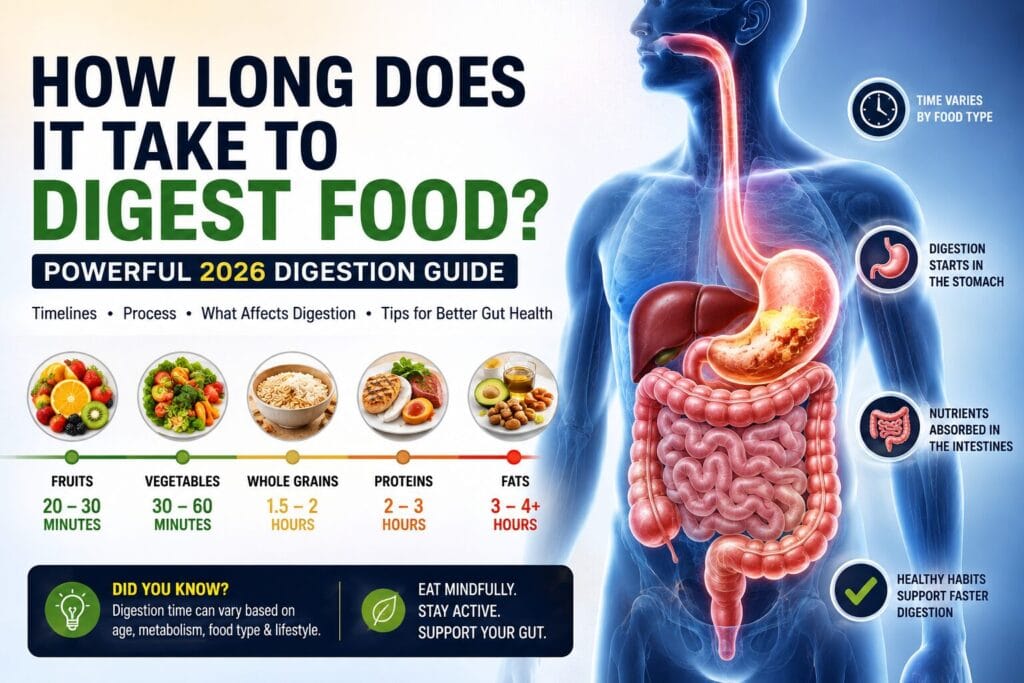
How Long Does It Take to Digest Food? A Complete Guide to Digestion Times
Have you ever wondered how long does it take to digest food after a meal? Social media charts claim a banana digests in 30 minutes, an apple in 40 minutes, brown rice in one hour, and foods like eggs, almonds, chicken, cheese, and steak take several hours. How long does it take to digest food is not a simple stopwatch question. The human digestive system is complex, involving organs, enzymes, muscles, and juices. Different foods process differently based on meal size, fiber, fat, protein, hydration, activity, and individual health. So how long does it take to digest food in reality? Let’s explore the full process.
What Is Digestion?
How long does it take to digest food begins with understanding digestion itself. Digestion breaks food into smaller components for energy, growth, and repair. How long does it take to digest food starts the moment you chew. Teeth break food while saliva starts carbohydrate breakdown. After swallowing, food travels through the esophagus to the stomach. There it mixes with digestive juices into a semi-liquid. It then moves to the small intestine for most nutrient absorption. Remaining material enters the large intestine, where water and electrolytes are absorbed and waste is prepared for elimination. Digestion is a continuous journey, not food simply disappearing from the stomach. Understanding this helps answer how long does it take to digest food accurately.
How Long Does Food Take to Digest?
How long does it take to digest food has no single answer that fits every food or person. On average, food takes several hours through the stomach and small intestine. Mayo Clinic notes food generally takes about six hours through the stomach and small intestine, with material spending longer in the large intestine. Claims like “this food digests in 30 minutes” should be treated cautiously.
A food may start breaking down quickly, but that does not mean the entire process finishes in that time. How long does it take to digest food overall can range from many hours to a couple of days depending on the individual and meal composition. For a clear visual explanation of the full timeline, watch this helpful YouTube video: How Long Does It Take To Digest Food? A Journey Into Your Gut.
Banana Digestion
How long does it take to digest food like a banana is often listed as 30 minutes in viral charts. Bananas contain carbohydrates, natural sugars, water, and fiber, and their soft texture makes them easy to chew. Saying a banana always takes exactly 30 minutes is an oversimplification. How long does it take to digest food from a banana depends on ripeness, portion size, accompanying foods, and your digestive system. A banana alone may feel light, while one eaten with protein and fat becomes part of a longer-lasting meal. The nutrients are processed gradually rather than on a fixed timer.
How Long Does an Apple Take to Digest?
How long does it take to digest food such as an apple is commonly claimed as 40 minutes online. Apples provide carbohydrates, water, and dietary fiber, including fiber in the skin. There is no universal scientific rule that every apple digests completely in 40 minutes. How long does it take to digest food from an apple involves gradual processing: some nutrients absorb in the small intestine while certain fibers continue to the large intestine for gut bacteria interaction. Think of components processed at different stages instead of a rigid 40-minute clock.
Brown Rice and Digestion
How long does it take to digest food like brown rice is often shown as about one hour. Brown rice is a whole grain with more fiber than white rice because the bran and germ remain. Fiber affects digestion and intestinal movement and can increase feelings of fullness. How long does it take to digest food containing brown rice depends on quantity, preparation method, other foods eaten with it, and individual digestive function. The one-hour figure is a simplified estimate, not a precise biological measurement.
What About Avocado?
How long does it take to digest food such as avocado is sometimes listed at around two hours. Avocado differs from bananas and apples because of its significant fat content, plus fiber, vitamins, and minerals. Dietary fat can slow stomach emptying, which is why avocado-containing meals often feel more filling. How long does it take to digest food with avocado has a physiological basis in fat’s effect on emptying, yet an exact two-hour rule does not apply to everyone. For more on avocado’s benefits, explore our related guide: Avocado for Weight Loss and Cholesterol Control.
Eggs and Protein Digestion
How long does it take to digest food like eggs is frequently claimed at approximately 2.5 hours. Eggs offer high-quality protein along with fat and other nutrients. Protein digestion starts in the stomach and continues in the small intestine, where enzymes break proteins into amino acids for absorption. How long does it take to digest food when eggs are involved depends on the whole meal rather than one food alone. Eggs with vegetables and whole grains create a different situation than eggs eaten by themselves. Pairing protein thoughtfully supports overall nutrition—see our Full Day High-Protein Meal Plan for practical ideas.
Almonds and Other Nuts
How long does it take to digest food such as almonds is sometimes stated as around three hours. Almonds contain protein, healthy fats, fiber, vitamins, and minerals. The combination of fat and fiber makes nuts more filling than many carbohydrate-focused foods. How long does it take to digest food from almonds is not fixed for every person. Nutrients are processed and absorbed gradually as they travel through the system rather than on a separate almond timer.
Chicken and Steak
How long does it take to digest food like chicken or steak is often placed at about 3.5 hours in popular graphics. Both are rich in protein; steak may contain more fat depending on the cut. Protein digestion begins in the stomach with acid and enzymes, then continues in the small intestine. How long does it take to digest food containing these meats varies with cooking method, portion size, fat content, and accompanying foods. Protein- and fat-rich meals can stay in the stomach longer than lighter carbohydrate meals, but exact times differ widely.
What About Cheese?
How long does it take to digest food such as cheese is commonly listed at approximately 3.5 hours. Cheese contains protein and fat, with composition varying by type. Its fat and protein content can make meals feel filling. How long does it take to digest food when cheese is included is better viewed as a simplified estimate than a universal scientific number. Different cheeses behave differently, and individual responses vary.
Why Do Some Meals Feel Heavier?
How long does it take to digest food explains why some meals leave you full longer. Fat can slow stomach emptying and prolong fullness. Protein contributes to satiety and requires multiple digestion stages. Fiber is not fully digested like many carbohydrates and reaches the large intestine, where gut bacteria interact with it. Larger portions take more time than small snacks. Most meals combine carbohydrates, proteins, fats, and fiber, so assigning one time to a single ingredient rarely reflects the complete meal. How long does it take to digest food is therefore shaped by the overall combination.
Digestion vs. Elimination: They Are Not the Same Thing
How long does it take to digest food is often confused with complete elimination. Food does not enter the stomach, finish digesting, and leave the body immediately. The stomach breaks food down and controls release into the small intestine. The small intestine handles most nutrient digestion and absorption. Material then moves to the large intestine for further water and electrolyte absorption. Remaining waste is eventually eliminated. This full journey takes much longer than stomach processing alone. How long does it take to digest food from start to finish can span many hours to a couple of days.
What Can Affect Your Digestion Time?
How long does it take to digest food differs for everyone. Influencing factors include meal size, fiber intake, fat content, protein content, hydration, physical activity, individual metabolism, stress, sleep patterns, certain medications, and digestive conditions. Because of these variables, no exact minutes or hours apply universally to any food. How long does it take to digest food for you depends on your unique combination of these elements. Quality sleep also supports gut function—learn more in our guide 5 Hours vs 8 Hours Sleep.
How Can You Support Healthy Digestion?
How long does it take to digest food does not need constant calculation. Focus instead on habits that support overall digestive health. Eat a balanced diet with fruits, vegetables, whole grains, protein sources, and healthy fats. Get enough fiber from fruits, vegetables, beans, whole grains, nuts, and seeds to support normal bowel function. Drink adequate fluids for digestive function and healthy bowel movements.
Chew food properly—digestion begins in the mouth. Stay active, as regular physical activity benefits digestive function. Avoid obsessing over whether a food is “fast” or “slow.” How long does it take to digest food matters less than the overall nutritional pattern of your diet. For practical healthy eating ideas, check 5 Healthy Eating Tips That Actually Change How You Feel and 10 Powerful Steps to Good Health. Liver health also connects to digestion—see Best Drinks to Support Liver Health Naturally.
When Should You Pay Attention to Digestive Problems?
How long does it take to digest food should not become the focus when symptoms persist. Occasional bloating, gas, or bowel changes can have many causes. Persistent or concerning symptoms—significant abdominal discomfort, ongoing digestive problems, or unexplained changes—should not be blamed solely on a food’s supposed digestion time. Discuss them with a healthcare professional. How long does it take to digest food varies, but ongoing issues deserve proper evaluation.
Final Thoughts
How long does it take to digest food is popularly illustrated by viral charts showing bananas at 30 minutes, apples at 40 minutes, brown rice at one hour, avocado at two hours, eggs at 2.5 hours, almonds at three hours, and chicken, steak, and cheese at 3.5 hours. These numbers introduce the idea that different foods behave differently. However, they should not be treated as scientifically fixed times. Digestion is a complex, multi-stage process throughout the gastrointestinal tract.
Nutrients are absorbed at different points, and the overall journey can take many hours or longer. Instead of asking whether a banana takes exactly 30 minutes or steak exactly 3.5 hours, ask whether your overall diet provides the nutrients, fiber, fluids, and variety your body needs. Understanding digestion helps you make smarter choices without treating your system like a stopwatch. How long does it take to digest food is best answered by focusing on balanced habits rather than precise timers. For another visual overview of the digestion timeline, watch How Long Does Your Body Take to Digest Food?.
LumeChronos Health Disclaimer This article is intended for general educational and informational purposes only. It should not be considered medical advice or a substitute for consultation with a qualified healthcare professional. Individual digestion can vary, and anyone with persistent or concerning digestive symptoms should seek appropriate professional advice.