


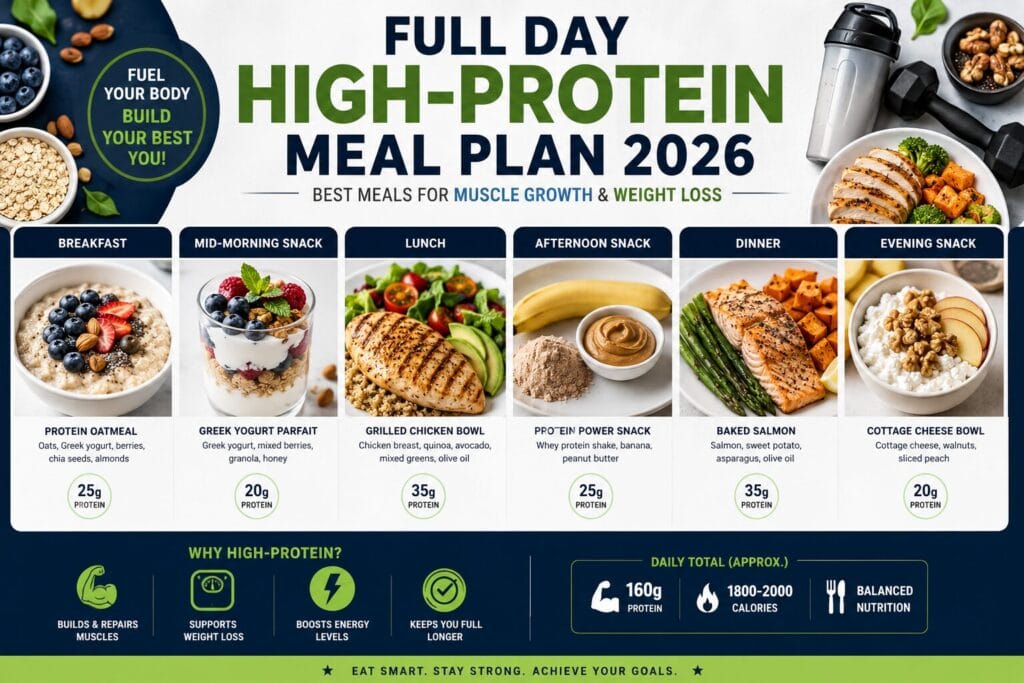
Full Day High-Protein Eating Plan: A Complete Guide to Building Muscle, Losing Fat, and Staying Healthy
Protein is one of the most important nutrients for maintaining good health. Whether your goal is to lose weight, build muscle, improve energy levels, or simply eat healthier, a high-protein meal plan can make a significant difference.
This full day high-protein eating plan is a simple yet balanced example of how you can consume protein throughout the day. It combines lean meats, dairy products, vegetables, healthy fats, and complex carbohydrates to provide long-lasting energy while supporting muscle recovery and overall wellness.
In this guide, we’ll explain each meal, its benefits, nutritional value, and how you can customize it according to your dietary needs. For more science-backed nutrition ideas that also support cognitive function, check out our guide on the best foods for brain health.
Why Protein Is So Important
Protein plays several vital roles in the human body. It helps:
- Build and repair muscles
- Support healthy bones
- Strengthen the immune system
- Produce hormones and enzymes
- Keep you feeling full for longer
- Increase metabolism slightly through digestion
Unlike simple carbohydrates that digest quickly, protein provides sustained energy and helps reduce unnecessary snacking. A consistent high protein diet is one of the most effective tools for both muscle growth and sustainable fat loss.
Breakfast: A Strong Start to Your Day
Foods Included
- Scrambled Eggs
- Greek Yogurt
- Mixed Berries
- Turkey Bacon
A protein-rich high protein breakfast helps stabilize blood sugar levels and keeps hunger under control throughout the morning.
Scrambled Eggs Eggs are among the most nutritious foods available. They provide high-quality protein, Vitamin B12, Vitamin D, choline, and healthy fats. Two to three eggs can provide around 12–18 grams of protein.
Greek Yogurt Greek yogurt contains almost twice the protein of regular yogurt. Benefits include supporting gut health, rich calcium content, high probiotics, and excellent muscle recovery support. Choose plain Greek yogurt to avoid added sugar.
Mixed Berries Blueberries, strawberries, and raspberries provide antioxidants, fiber, Vitamin C, and natural sweetness. They pair perfectly with Greek yogurt and High-Protein Meal Plan.
Turkey Bacon Turkey bacon is generally lower in fat than traditional pork bacon while still offering protein. Choose lower-sodium varieties when possible.
Lunch: Lean Protein and Healthy Carbs
Foods Included
- Grilled Chicken
- Quinoa
- Vegetables
- Avocado
Lunch should provide long-lasting energy without making you feel sluggish.
Grilled Chicken Breast Chicken breast is one of the best lean protein sources. Benefits include around 30 grams of protein per serving, low saturated fat, support for muscle growth, and ease of preparation. Avoid deep frying for maximum health benefits.
Quinoa Quinoa is considered a complete High-Protein Meal Plan because it contains all nine essential amino acids. It also provides fiber, magnesium, iron, and complex carbohydrates that help maintain energy levels throughout the afternoon.
Fresh Vegetables Vegetables add vitamins, minerals, fiber, and antioxidants. Include spinach, cucumber, tomatoes, broccoli, carrots, or leafy greens.
Avocado Avocados are rich in healthy monounsaturated fats, potassium, fiber, and Vitamin E. Healthy fats improve heart health and increase satiety.
For practical everyday strategies that complement this high-protein approach, see our 5 Healthy Eating Tips That Actually Change How You Feel.
Evening Snacks: Smart Protein Choices
Foods Included
- Protein Shake
- Cottage Cheese
- Almonds
- Beef Jerky
Healthy snacks help maintain energy between High-Protein Meal Plan and prevent overeating at dinner.
Protein Shake Protein shakes are convenient after workouts or during busy schedules. Popular options include whey protein, plant protein, and casein protein. Choose products with minimal added sugar.
Cottage Cheese Cottage cheese is rich in casein protein, which digests slowly. Benefits include overnight muscle recovery support, high calcium content, low carbohydrates, and longer-lasting fullness.
Almonds Almonds provide healthy fats, Vitamin E, magnesium, protein, and fiber. A small handful is usually enough.
Beef Jerky Beef jerky offers a portable protein option. However, check nutrition labels because some brands contain high amounts of sodium and added sugar.
Dinner: Recovery and Nutrition
Foods Included
- Steak
- Salmon
- Vegetables
- Sweet Potato
Dinner should support recovery while providing essential vitamins and minerals.
Lean Steak Lean beef contains high-quality protein, iron, zinc, and Vitamin B12. These nutrients help support muscle recovery and oxygen transport. Choose lean cuts and moderate portion sizes.
Salmon Salmon is one of the healthiest fish available. Benefits include omega-3 fatty acids, protein, Vitamin D, and selenium. Eating fatty fish two to three times per week supports heart and brain health.
Vegetables Dinner vegetables may include broccoli, green beans, Brussels sprouts, or asparagus. These provide fiber, vitamins, and antioxidants while keeping calorie intake reasonable.
Sweet Potato Sweet potatoes contain complex carbohydrates, fiber, potassium, and Vitamin A. They replenish energy without causing rapid blood sugar spikes.
Quality sleep is essential for the muscle recovery this meal plan supports. If you struggle with nighttime waking, read our practical guide: Why You Wake Up at 3 AM Every Night (And How to Fix It).
Benefits of Following This High-Protein Meal Plan
A balanced high-protein meal plan may help:
- Support muscle growth
- Promote healthy weight management
- Reduce hunger
- Improve metabolism
- Stabilize blood sugar
- Enhance recovery after exercise
- Maintain lean body mass during weight loss
For visual guidance on how experts structure their eating, watch this helpful video: How To Eat To Build Muscle & Lose Fat (Lean Bulking Full Day Of Eating) by Jeff Nippard.
Can This Meal Plan Help With Weight Loss?
Yes—provided you maintain an appropriate calorie intake.
Protein increases fullness, making it easier to avoid overeating. Pairing protein with vegetables, healthy fats, and complex carbohydrates creates balanced meals that support sustainable weight management.
Remember, weight loss depends on overall calorie balance, physical activity, sleep, and consistency. Pair this eating plan with short, effective training sessions such as our 10-Minute Home Workouts for Busy Professionals or the Home Leg Workout 2026.
Can Vegetarians Follow This Plan?
Absolutely.
Vegetarian protein alternatives include: Tofu, tempeh, lentils, chickpeas, beans, Greek yogurt, cottage cheese, eggs, edamame, and protein powders.
These foods can replace meat while still providing ample protein for a successful high protein diet.
Tips for Success
- Include protein in every meal.
- Drink plenty of water throughout the day.
- Fill half your plate with vegetables.
- Choose whole grains over refined carbohydrates.
- Limit sugary drinks and ultra-processed foods.
- Exercise regularly, including strength training.
- Aim for 7–9 hours of quality sleep each night.
These habits align closely with our broader recommendations in 10 Proven Tips for Achieving Good Health Today.
For another practical perspective on structuring meals for fat loss, check out this video: The BEST Meal Plan to Lose Fat Faster by ATHLEAN-X.
Foods to Limit
Even on a high-protein diet, moderation is important. Limit:
- Sugary beverages
- Fried foods
- Highly processed snacks
- Excess sodium
- Processed meats
- Excessive sweets
Focus on whole, minimally processed foods whenever possible.
Frequently Asked Questions
How much protein do adults need daily? Protein needs vary based on age, activity level, and health status. Many adults benefit from approximately 0.8–1.2 grams of protein per kilogram of body weight when following a high-protein meal plan, while athletes and people engaged in strength training may require more to fully support the goals of a high-protein meal plan. A well-designed high-protein meal plan helps meet these higher needs consistently throughout the day.
Is eating too much protein harmful? For most healthy people, moderate increases in protein intake through a balanced high-protein meal plan are generally safe. Individuals with kidney disease or certain medical conditions should consult a healthcare professional before making major dietary changes or starting any intensive high-protein meal plan.
Should I eat protein after exercise? Yes. Consuming protein after resistance or endurance exercise can support muscle repair and recovery, especially when combined with adequate overall nutrition.
Are protein shakes necessary? Not necessarily. Whole foods should be your primary source of protein. Protein shakes can be a convenient option when it’s difficult to meet your daily protein needs through food alone.
Final Thoughts
A well-balanced high-protein meal plan doesn’t have to be complicated. By combining lean proteins like eggs, chicken, salmon, and steak with nutrient-rich foods such as vegetables, berries, quinoa, sweet potatoes, nuts, and dairy, you can create satisfying meals that support muscle health, weight management, and overall wellness.
The key isn’t just eating more protein—it’s choosing a variety of nutritious foods, controlling portion sizes, staying active, and maintaining healthy lifestyle habits. With consistency, this simple full day high-protein eating plan can become a sustainable foundation for long-term health and fitness.