




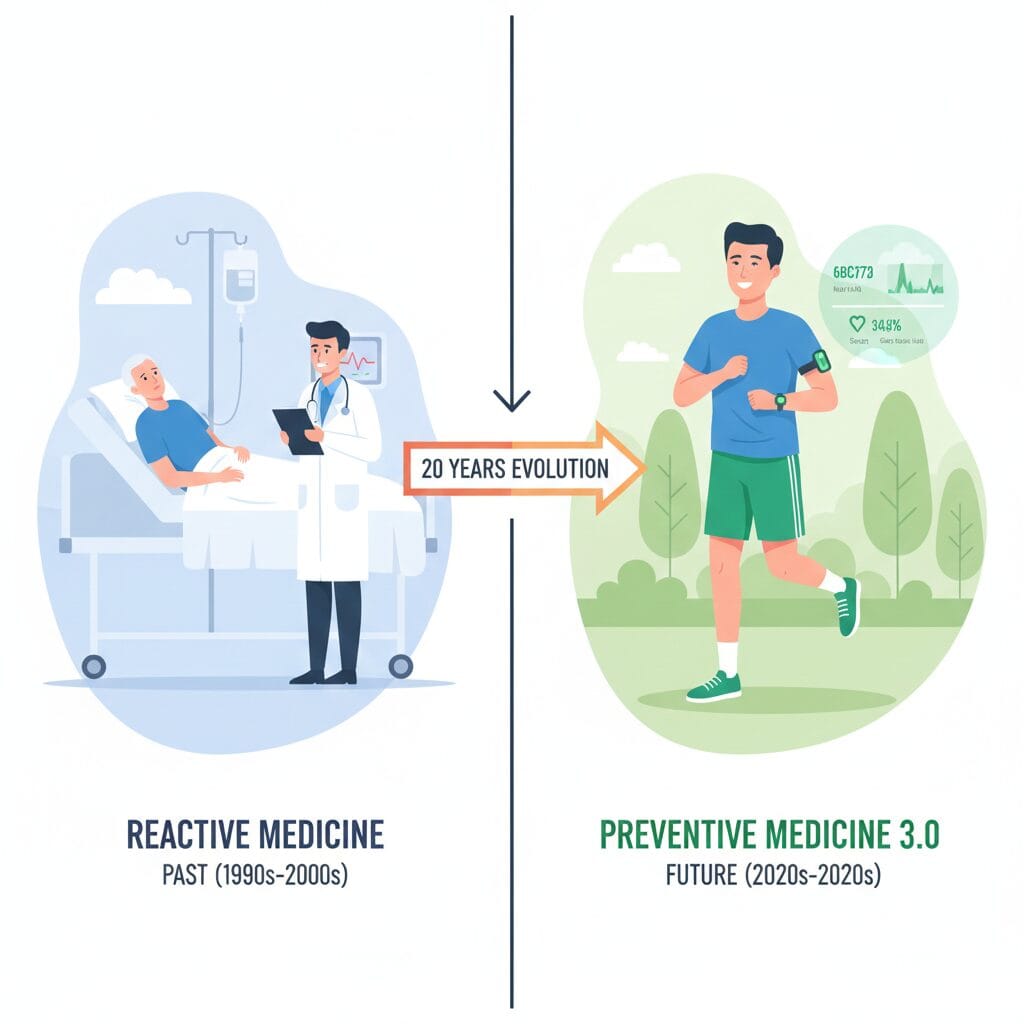
Most people wait until something breaks before they fix it. Your car gets a strange noise, you call a mechanic. Your phone screen cracks, you head to the repair shop. But what about your body? By the time most Americans see a doctor for heart disease, diabetes, or cognitive decline, the damage has already been quietly building for decades.
This reactive approach to health is exactly what Peter Attia, a Stanford and Johns Hopkins-trained physician specializing in longevity medicine, believes is fundamentally broken. And he’s not alone. Millions of readers, podcast listeners, and patients are now turning to a completely different framework—one that treats your body like an athlete in training rather than a machine waiting to fail.
If you’ve heard the term “healthspan” thrown around lately, or seen viral clips about VO2 max and strength testing, chances are Peter Attia’s work is behind it. His bestselling book Outlive: The Science and Art of Longevity has sold over 1.5 million copies. His podcast, The Peter Attia Drive, has surpassed 100 million downloads. And in late 2025, his appearance on CBS’s 60 Minutes introduced mainstream America to his prevention-first philosophy.
But who exactly is Peter Attia? What makes his approach different? And more importantly, what can everyday people learn from Peter Attia’s strategies—even if they’ll never afford his six-figure concierge practice? Let’s explore what’s driving this longevity revolution and why it matters for anyone who wants to stay sharp, strong, and independent well into their 80s and beyond.
Who Is Peter Attia? From Surgical Residency to Longevity Pioneer
Peter Attia was born on March 19, 1973, in Toronto, Ontario, to Coptic Egyptian immigrant parents. His path to becoming one of the most influential voices in longevity medicine wasn’t straightforward. In fact, it involved abandoning the traditional medical career he’d spent years building.
After earning a Bachelor of Science in mechanical engineering and applied mathematics from Queen’s University in 1996, Peter Attia attended Stanford University School of Medicine, graduating in 2001. He then began what should have been a prestigious career path: a general surgery residency at Johns Hopkins Hospital in Baltimore, followed by research at the National Institutes of Health investigating cancer immunotherapy for melanoma.
Then something unexpected happened. With just two years remaining in his residency, Attia quit and became a management consultant at McKinsey & Company.
Why would someone abandon years of elite medical training? The answer came when he became a father. After the birth of his first child and learning he was at risk of developing diabetes nearly 20 years ago, Attia’s entire perspective shifted: “All I could think about was, ‘Oh my God, like, I wanna have as much time as possible on this planet with this baby'”.
That personal crisis became professional transformation. Attia realized that traditional medicine was failing at the thing that mattered most to him: keeping people healthy and functional for as long as possible. In 2014, he founded Early Medical, a private clinic in Austin, Texas, dedicated entirely to what he calls Medicine 3.0.
Today, Attia has fewer than 75 patients who pay six-figure annual fees—closer to $100,000 than $500,000. But his influence extends far beyond that exclusive practice. Through his book, podcast, and public appearances, he’s helping reshape how millions think about aging, prevention, and what it really means to live well.
Understanding Medicine 3.0: The Prevention Revolution
Traditional medicine—what Peter Attia calls Medicine 2.0—is brilliant at acute care. If you have a heart attack, modern hospitals can save your life. If you break a bone, surgeons can fix it. But when it comes to chronic diseases that develop slowly over decades, the system waits until you’re already sick before taking action.
Medicine 3.0 flips this entire model on its head.
What Makes Medicine 3.0 Different?
Peter Attia frames Medicine 3.0 around four core shifts: prevention over treatment, personalization beyond trial averages, explicit risk calculation, and equal focus on healthspan (quality of life) as on lifespan (quantity of years).
Think of it this way: Medicine 2.0 asks “How do we treat this disease?” Medicine 3.0 asks “How do we prevent this person from getting the disease in the first place?” The difference isn’t subtle—it’s revolutionary.
As Attia puts it: “We have reached the limits of medicine 2.0 capacity, and if longevity is something we are aspiring for, we need a new strategy”. That strategy involves intervening decades before symptoms appear, using detailed testing to understand individual risk, and treating the body as a complex system that requires ongoing optimization.
The Four Horsemen of Chronic Disease
In Peter Attia’s framework, there are four major threats to healthspan that Medicine 3.0 targets aggressively:
- Atherosclerotic cardiovascular disease (heart attacks and strokes)
- Cancer
- Neurodegenerative diseases (Alzheimer’s and dementia)
- Metabolic dysfunction (Type 2 diabetes and metabolic syndrome)
These aren’t random killers. They’re predictable outcomes of processes that begin in midlife—or earlier. The goal of Medicine 3.0 is to identify your specific risks and intervene while you still have time to change the trajectory.
For more insights on building preventive health strategies, resources like Lume Chronos provide educational frameworks that align with this proactive mindset.
The Marginal Decade: Why Your 70s and 80s Matter Most
One of Peter Attia’s most powerful concepts is the “marginal decade”—the final 10 to 15 years of life when quality can decline precipitously.
Peter Attia explains that the marginal decade typically runs from age 75 to 85, when healthspan and quality of life hang in the balance. During his 60 Minutes interview, he stated bluntly: “At 75, both men and women fall off a cliff”.
Here’s the reality: over 90% of American seniors suffer from at least one chronic disease by the time they reach their 70s. Many can’t climb stairs, carry groceries, or play with their grandchildren without pain or exhaustion. This isn’t just about adding years to your life—it’s about adding life to your years.
What Does a Good Marginal Decade Look Like?
Attia doesn’t want his patients to merely survive their final decade. He wants them to thrive. That means being able to:
- Get up off the floor without assistance
- Carry heavy objects (like luggage or groceries)
- Maintain balance and avoid falls
- Engage mentally and emotionally with loved ones
- Travel, play, and pursue meaningful activities
These aren’t luxury goals. They’re the basic functions that determine whether you spend your final years independent and engaged or dependent and declining.
The key insight? Your marginal decade is shaped long before it arrives—the physical strength, aerobic capacity, and emotional resilience you build in your 40s, 50s, and 60s determine how well you age.
The Testing That Reveals Your Longevity Blueprint
One of the most distinctive features of Peter Attia’s approach is his emphasis on comprehensive testing. Peter Attia’s patients undergo two days of intense physical evaluation that resembles a high-performance athlete’s assessment more than a routine doctor visit.
What Tests Does Peter Attia Use?
VO2 Max Testing
According to Peter Attia: “Your VO2 max is more strongly correlated with your lifespan than any other metric I can measure. It predicts your risk of death from any cause, even more than your blood pressure, cholesterol or smoking status”.
VO2 max measures how efficiently your body uses oxygen during intense exercise. A 2018 study in JAMA Network Open analyzing more than 120,000 adults found that those with high VO2 max levels had significantly lower all-cause mortality. In plain English: people who can use oxygen efficiently tend to live longer, healthier lives.
DEXA Scans
Peter Attia calls it “almost criminal negligence” that most people skip DEXA scans until age 65. These scans measure bone density, lean muscle mass, total body fat, and visceral fat (the dangerous kind that surrounds your organs).
Why does this matter? Because knowing your body composition reveals whether you’re losing muscle mass (sarcopenia), accumulating dangerous visceral fat, or losing bone density—all of which accelerate aging and increase injury risk.
Strength and Stability Assessments
Can you deadlift your body weight? Can you perform a single-leg balance test with your eyes closed? These aren’t gym challenges—they’re predictors of future independence.
As Attia told 60 Minutes: “I think this is the neglected part of medical testing, is how fit are you, how strong are you, how well do you move? And in many ways, these tests are even more predictive of how long you’re going to live than what I might get out of your bloodwork”.
Advanced Blood Panels
Standard cholesterol tests miss crucial details. Attia’s patients get comprehensive panels including:
- ApoB (a more accurate predictor of heart disease than LDL)
- Lp(a) (a genetic risk factor for cardiovascular disease)
- ApoE genotype (influences Alzheimer’s risk)
These biomarkers reveal individual risk profiles that standard tests simply can’t capture.
If you’re interested in tracking health metrics and building sustainable routines, tools available at Lume Chronos Shop can support data-driven wellness approaches.
Exercise: The Most Powerful Longevity Drug
If there’s one thing Peter Attia emphasizes more than anything else, it’s exercise. He calls exercise “the best drug” for longevity, and his personal commitment backs it up: Peter Attia himself exercises about 10 hours per week, with a mix of cardio for fat burning, intense intervals for VO2 max, and weightlifting to maintain strength and muscle mass.
The Centenarian Decathlon
Peter Attia developed a framework called the Centenarian Decathlon—a list of physical tasks you want to be able to do at age 90 or 100. These might include:
- Carrying two heavy grocery bags up a flight of stairs
- Getting up off the floor without using your hands
- Playing with your great-grandchildren
- Hiking with friends
- Traveling independently
The twist? If you want to do these things at 90, you need to train for them now. Just as an athlete prepares for competition, you need to build a physical capacity reserve that will sustain you through decades of natural decline.
Zone 2 Training for Metabolic Health
Zone 2 training involves moderate-intensity cardiovascular exercise where you can still hold a conversation but are working hard enough to improve mitochondrial function and fat oxidation. This isn’t about getting abs or running marathons—it’s about building metabolic resilience.
Strength Training for Muscle and Bone
After age 30, adults lose 3-8% of muscle mass per decade without resistance training. This accelerates after 60. Loss of muscle isn’t just aesthetic—it’s a predictor of mortality, metabolic dysfunction, and loss of independence.
Peter Attia recommends compound movements like squats, deadlifts, and rows that build functional strength across multiple muscle groups.
Common Exercise Mistakes to Avoid
- Doing only cardio: You need strength training to maintain muscle and bone density
- Skipping mobility work: Flexibility and stability prevent injuries
- Starting too aggressively: Building capacity takes years, not months
- Ignoring recovery: Rest and sleep are when adaptation happens
For a global perspective on wellness practices and longevity science, Lume Chronos DE offers comparative insights from international health systems.
Nutrition: Protein, Balance, and Individual Needs
Unlike some longevity influencers who promote extreme diets, Peter Attia’s nutritional philosophy is surprisingly moderate. The focus isn’t on magic foods or elimination diets—it’s on fundamentals that support muscle, metabolic health, and sustainable eating.
Protein: The Often-Overlooked Macronutrient
Peter Attia emphasizes the importance of eating a sufficient amount of protein and ensuring adequate intake of vitamins and minerals from food.
Most people—especially as they age—don’t eat enough protein to maintain muscle mass. Peter Attia typically recommends 0.7-1 gram of protein per pound of body weight, depending on activity level and goals. This isn’t bodybuilder territory; it’s maintenance nutrition for people who want to stay strong.
Energy Balance Matters More Than Diet Trends
Chronic overeating drives metabolic dysfunction, obesity, and chronic disease. But undereating can lead to muscle loss and hormonal problems. The goal is finding your personal energy balance—enough food to fuel activity and recovery without excess that leads to fat accumulation.
What About Supplements?
Peter Attia advises asking yourself what the benefits of your current supplements are and whether you can actually measure those benefits. He’s skeptical of most supplements and emphasizes getting nutrients from whole foods first.
He’s also transparent about changing his mind based on evidence—for instance, he openly discussed having stopped taking rapamycin, a drug many biohackers promote, showing he’s willing to adjust as science evolves.
Nutrition Mistakes to Avoid
- Extreme restriction: Cutting entire food groups without medical necessity
- Chasing fads: Jumping from diet to diet based on trends
- Ignoring protein: Especially common in older adults
- Not personalizing: What works for others may not work for you
Sleep and Emotional Health: The Overlooked Pillars
Physical performance gets attention. Nutrition gets headlines. But Peter Attia insists that sleep and emotional health are equally critical.
Sleep: Your Body’s Repair System
Peter Attia recommends practicing good sleep hygiene by waking up at the same time every day, aiming for about eight hours of sleep per night, and having a wind-down routine before bed that doesn’t include looking at your phone.
Poor sleep accelerates cognitive decline, increases inflammation, disrupts metabolic function, and undermines recovery from exercise. It’s not optional—it’s foundational.
Emotional Health: Life Without It Isn’t Rewarding
As Peter Attia states: “Life without emotional health is really not that rewarding”.
He tells patients: “By working hard on our physical health, we can reduce the rate of decline. But if we’re being deliberate and active on our emotional health, it can actually improve”.
This includes managing stress, cultivating relationships, working through past trauma, and maintaining purpose and meaning. Multiple studies have shown the connection between longevity and having strong relationships with others.
Peter Attia has been open about his own work with therapists and emotional health, demonstrating that even high-performing individuals need support in this area. He suggests challenging your inner critic by recording voice memos or journaling when you’re being hard on yourself, speaking as if you’re talking to a friend.
Can You Apply Medicine 3.0 Without Six Figures?
The elephant in the room: Peter Attia’s practice costs hundreds of thousands of dollars annually and serves fewer than 75 people. So what can the rest of us do?
The good news is that Peter Attia himself emphasizes that 80% of his program—including altering nutrition, exercise routine, and sleep—does not require a physician.
Affordable Testing Options
While you can’t replicate every test Peter Attia uses, many are becoming more accessible:
- VO2 max testing: Many fitness centers and university labs offer testing for $100-200
- DEXA scans: Available at imaging centers for $50-150
- Advanced lipid panels: Ask your doctor about ApoB and Lp(a) testing
- Strength assessments: Work with a qualified personal trainer
Building Your Own Longevity Protocol
Start with the basics that don’t cost anything:
- Walk daily and gradually increase duration and intensity
- Start resistance training with bodyweight exercises or basic equipment
- Prioritize 7-9 hours of sleep by creating a consistent schedule
- Eat adequate protein at each meal
- Build meaningful relationships and address emotional health
- Track basic metrics like resting heart rate and body weight
The principles are free. The implementation takes effort, not money.
Critics and Controversies: What Science Says
Not everyone is sold on Peter Attia’s approach. During his 60 Minutes appearance, critics called his methods “hocus pocus”.
Valid Concerns
Access and Inequality: The most sophisticated version of Medicine 3.0 is available only to the wealthy, potentially widening health disparities.
Overmedicalization: Some argue that obsessive health optimization can create anxiety and diminish quality of life.
Limited Long-Term Data: Many of Peter Attia’s specific interventions lack decades-long randomized controlled trials in humans.
Attia’s Response
His reply to critics was revealing: in four years at Stanford Medical School, he received zero hours of training on exercise and zero hours on nutrition. He argues that the pillars that most affect healthspan are precisely the ones most doctors overlook.
While individual interventions need more study, the broad strokes—exercise, nutrition, sleep, metabolic health—have overwhelming scientific support. The question isn’t whether these things matter; it’s how to implement them effectively at the individual level.
Key Takeaways: What You Need to Remember
- Start now, not later: The marginal decade is determined by actions you take today
- Exercise is non-negotiable: It’s the single most powerful longevity intervention
- Test what matters: VO2 max, strength, and body composition reveal more than standard bloodwork
- Prevent, don’t just treat: Medicine 3.0 targets disease decades before symptoms appear
- Balance all pillars: Exercise, nutrition, sleep, and emotional health work together
- Personalize your approach: Population averages don’t tell your individual story
- You don’t need millions: The core principles are accessible to everyone
Frequently Asked Questions
Who is Peter Attia and what does he do?
Peter Attia is a Stanford and Johns Hopkins-trained physician who founded Early Medical, a longevity-focused practice in Austin, Texas. He’s the author of the bestselling book Outlive: The Science and Art of Longevity and hosts The Peter Attia Drive podcast. His work focuses on preventing chronic disease and extending healthspan through what he calls Medicine 3.0—a prevention-first approach emphasizing exercise, metabolic health, and early intervention.
What is Medicine 3.0?
Medicine 3.0 is Attia’s framework for healthcare that prioritizes prevention over treatment, personalization over population averages, and healthspan (quality of life) as much as lifespan (quantity of years). Unlike traditional medicine that waits for disease symptoms to appear, Medicine 3.0 involves comprehensive testing and aggressive intervention decades before chronic diseases typically develop. The goal is to delay or prevent the “Four Horsemen” of chronic disease: cardiovascular disease, cancer, neurodegenerative disease, and metabolic dysfunction.
What is the marginal decade?
The marginal decade refers to the final 10-15 years of life, typically from ages 75 to 85, when quality of life and physical independence often decline sharply. Peter Attia’s philosophy centers on optimizing this period by building physical capacity, metabolic health, and emotional resilience decades earlier. The decisions you make in your 40s, 50s, and 60s largely determine whether your marginal decade is spent thriving independently or struggling with disability.
How much does Peter Attia’s practice cost?
Attia’s Early Medical practice serves fewer than 75 patients who pay six-figure annual fees, which he has stated are “much closer to $100,000 than $500,000.” However, Attia has emphasized that approximately 80% of his longevity protocol—including exercise, nutrition, and sleep optimization—can be implemented without physician supervision and at minimal cost. His book, podcast, and public appearances aim to make these principles accessible to everyone.
What is VO2 max and why does it matter?
VO2 max measures the maximum amount of oxygen your body can use during intense exercise, typically expressed in milliliters of oxygen per kilogram of body weight per minute. Peter Attia calls it the single strongest predictor of longevity, more correlated with lifespan than blood pressure, cholesterol, or smoking status. Higher VO2 max indicates better cardiovascular fitness and is associated with significantly lower all-cause mortality. It can be improved through Zone 2 training and high-intensity interval training.
What does Peter Attia eat?
Peter Attia’s nutritional philosophy emphasizes adequate protein intake (typically 0.7-1 gram per pound of body weight), balanced calorie consumption without chronic overeating or undereating, and sufficient vitamins and minerals from whole foods. He’s skeptical of extreme diets and most supplements, preferring personalized approaches based on individual metabolic needs. His focus is on sustainable eating patterns that support muscle maintenance and metabolic health rather than following trendy elimination diets.
How much does Peter Attia exercise?
Peter Attia exercises approximately 10 hours per week with a mixed approach: moderate-intensity cardio for fat burning and metabolic health (Zone 2 training), high-intensity intervals to improve VO2 max, and resistance training to maintain strength and muscle mass. This level of commitment reflects his professional focus on longevity, though he emphasizes that individuals should work up to their optimal exercise volume gradually based on current fitness and goals.
Can I benefit from Medicine 3.0 without expensive testing?
Yes. While comprehensive testing provides detailed individual data, the core principles of Medicine 3.0 are accessible to everyone. Start with regular exercise combining cardio and strength training, prioritize 7-9 hours of quality sleep, eat adequate protein at meals, and work on emotional health through therapy or self-reflection. Many basic tests like body composition, resting heart rate, and strength assessments can be done affordably or for free. The key is consistent implementation of evidence-based fundamentals.
Final Thoughts: Building Your Longevity Practice
Peter Attia isn’t promising immortality. He’s not selling miracle supplements or secret biohacks. What he offers is something more valuable: a roadmap for making your final decades as vibrant and independent as possible.
The reality is that most of us will face a marginal decade. The question is what that decade will look like. Will you spend it traveling, playing with grandchildren, and pursuing passions? Or will you struggle with mobility, chronic pain, and dependence on others?
The answer depends on choices you make today. Not tomorrow. Not next year. Today.
Start by moving more. Build strength gradually. Prioritize sleep. Eat enough protein. Work on your emotional health. Get basic testing to understand your individual risk profile. These aren’t radical interventions—they’re evidence-based fundamentals.
Medicine 3.0 isn’t about perfection. It’s about progress. It’s about treating your future self with the same care you’d give someone you love. Because that’s exactly who your future self is: someone who will either thank you or wish you’d started sooner.
The marginal decade is coming for all of us. The only question is whether we’ll meet it as athletes in training or spectators watching from the sidelines.
- for video visit https://youtu.be/lRj_BbFq-Qk?si=LpYQq04RIzxwDQa1
What will you choose?
For more resources on building sustainable health practices and understanding wellness from multiple perspectives, explore the educational content at Lume Chronos, discover practical tools at Lume Chronos Shop, and review global health insights at Lume Chronos DE.
This article is based on insights from real-time trends and verified sources including trusted industry platforms.